


Fallout has come back with a nod and a wink to gamers, starting the first episode of Season 2 at the Starlight Drive-In, one of the most recognizable sites from “Fallout 4.” The beat lands as a plot point and a postcard from the Commonwealth, the new season telegraphing right off that it’s leaning harder into franchise game geography.
Starlight Drive-In recreated with retro-futurist detail
Lucy and The Ghoul pass through a deserted outdoor theater that has been arrested in time with the bombs’ striking it: rows of ’50s or early ’60s cars, a screen ravaged by weather, a sunbaked snack bar.
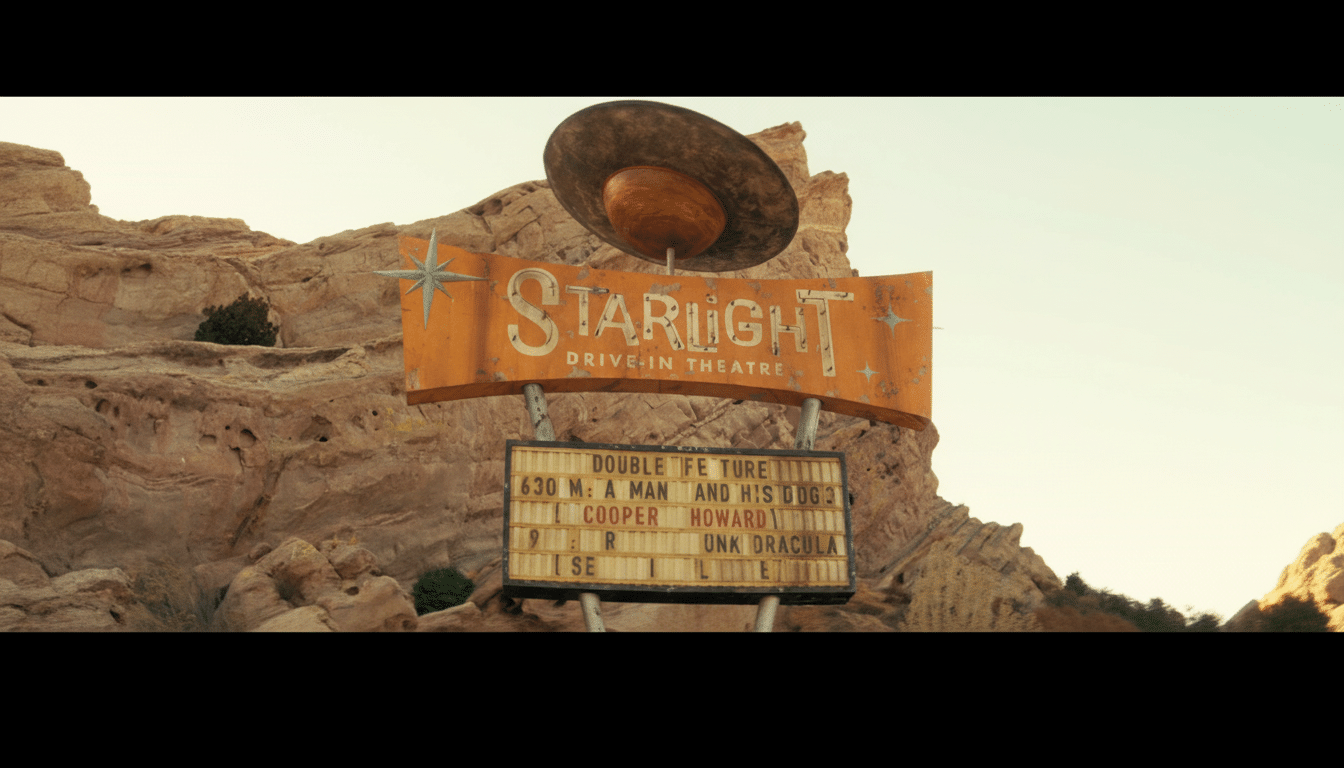
Production designer Howard Cummings and crew re-create the series’ retro-futurist Americana with surgical accuracy, down to the tilted marquee touting A Man and His Dog 3 (sly callout to pre-war star Cooper Howard’s film career), among other classic creature features.
It’s not a paint-by-numbers recreation of the game space, but you can’t miss it: the cracked tarmac, the beat-up speaker poles and a shape that reads “Starlight” to anyone who has wasted hours picking aluminum cans out of it.
The sequence is a combination of practical builds and smart CG augmentation, allowing texture and scale to do the world-building.
Why players favor Starlight Drive-In for early settlements
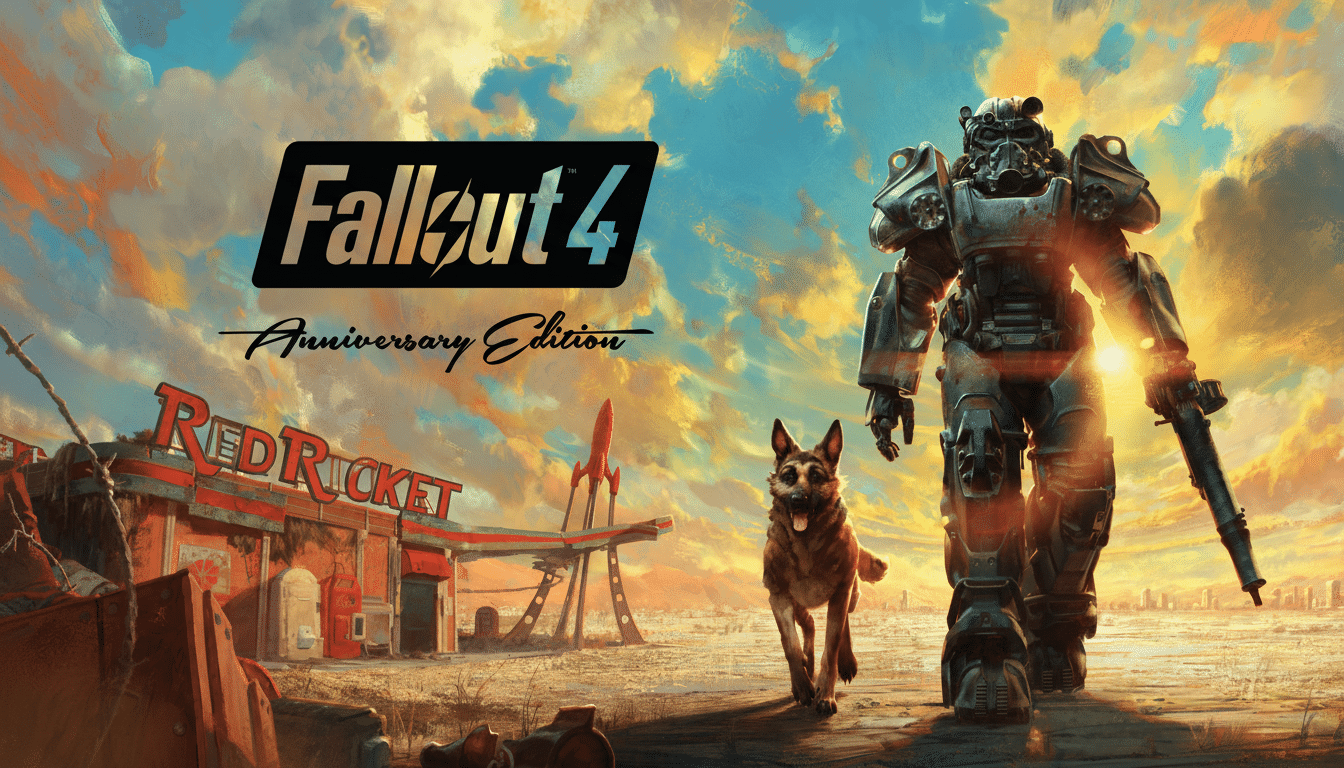
In Fallout 4, Starlight Drive-In is commonly players’ first settlement after leaving Sanctuary. It has a massive flat lot, position smack in the middle of the map, and is an easy hop to reach from most early game routes, resulting in it being one of your hub options for markets, artillery and crafting layouts. Settlement builders covet its unbroken sight lines and build volume, while survival runs are drawn to the efficient supply chain it establishes between Concord, Lexington and the broader Commonwealth.
It is memorable for what you must clear from it to make it habitable: burrowing mole rats, radroaches and the pool of irradiated water that teaches an early lesson in environmental hazards. To that gameplay loop — clean, claim, expand — Starlight turned the players of Fallout 4 outward and into one another’s community showcase, leading to any number of mega-builds across fan forums and creator channels.
Enemies reimagined for television atmosphere and pacing
While the game hurls waves of pests and an occasional feral ghoul at newcomers, the show prefers atmosphere to ambush. The premiere has taught us to keep the drive-in feeling ominous if relatively silent, giving character beats room to breathe, instead of staging a creature gauntlet. For instance, Super Mutants — the always-mutating Commonwealth threat — are still in shadows at the outset of this season to save them for a bigger storytelling revelation.
Cut Vault 24 lore canonized near the Starlight Drive-In
The series is set on a site somewhere close to Vault 24, a vault that’s held fan recognition as cut content from Fallout: New Vegas for years now. Placing the vault near Starlight provides the writers with a blank canvas: the existing lore acknowledges that concept without dictating its fate, allowing room for writers to write new history without losing authorial voice in Fallout’s oh-so-specific verbiage.
What the premiere signals for Fallout Season 2’s direction
It’s not purely fan service that Starlight has been selected as the premiere location of this season; it’s a thesis statement about mapping TV storytelling to game logic. Look for other locations that perform double duty, instantly legible to players and meaningful to viewers who’ve never touched a Pip-Boy.
The bet is smart. Analytics firms tracking PC play following Season 1 noted multi-year highs for Fallout titles on Steam, and Bethesda called out franchise engagement being reignited across console and PC. Fallout 4 is still one of the studio’s all-time hits, with total sales topping 30 million and a mod scene that continues to see daily downloads: proof positive that location fidelity isn’t just nostalgic, but a growth strategy.
If Episode 1 is any indication, Season 2 is narrowing the fabric between TV canon and game cartography. Starlight Drive-In is a template: an area dense with history, retrofitted for television to include just enough rust, radiation and romance to make it feel like the Wasteland has grown dangerous again — and alive.