


Meta is introducing an AI assistant to Facebook Dating, claiming that people will find compatible matches faster and create a more vivid profile. The company is positioning the tool as a solution to modern dating woes and describes it as less of a guessing game than today’s other matchmaking tools, while encouraging users to have quality conversations rather than senseless swiping.
In addition to its chatbot, Facebook’s dating service will also contain a new feature called Meet Cute, which chooses matches based on whether the two users in question have expressed interest in one another — while still appearing to leave open the possibility of giving fate a little push if they haven’t — with the goal of adding surprise back into an app experience that can often veer toward predictability.
- What the AI assistant is actually doing in Dating
- Meet Cute and the anti-swipe fatigue solution
- A crowded field in the race to automate chemistry
- Scale vs. depth: Facebook’s advantage and potential shortfall
- Privacy, security and bias questions for AI dating
- How to judge success for Facebook Dating’s AI tools
What the AI assistant is actually doing in Dating
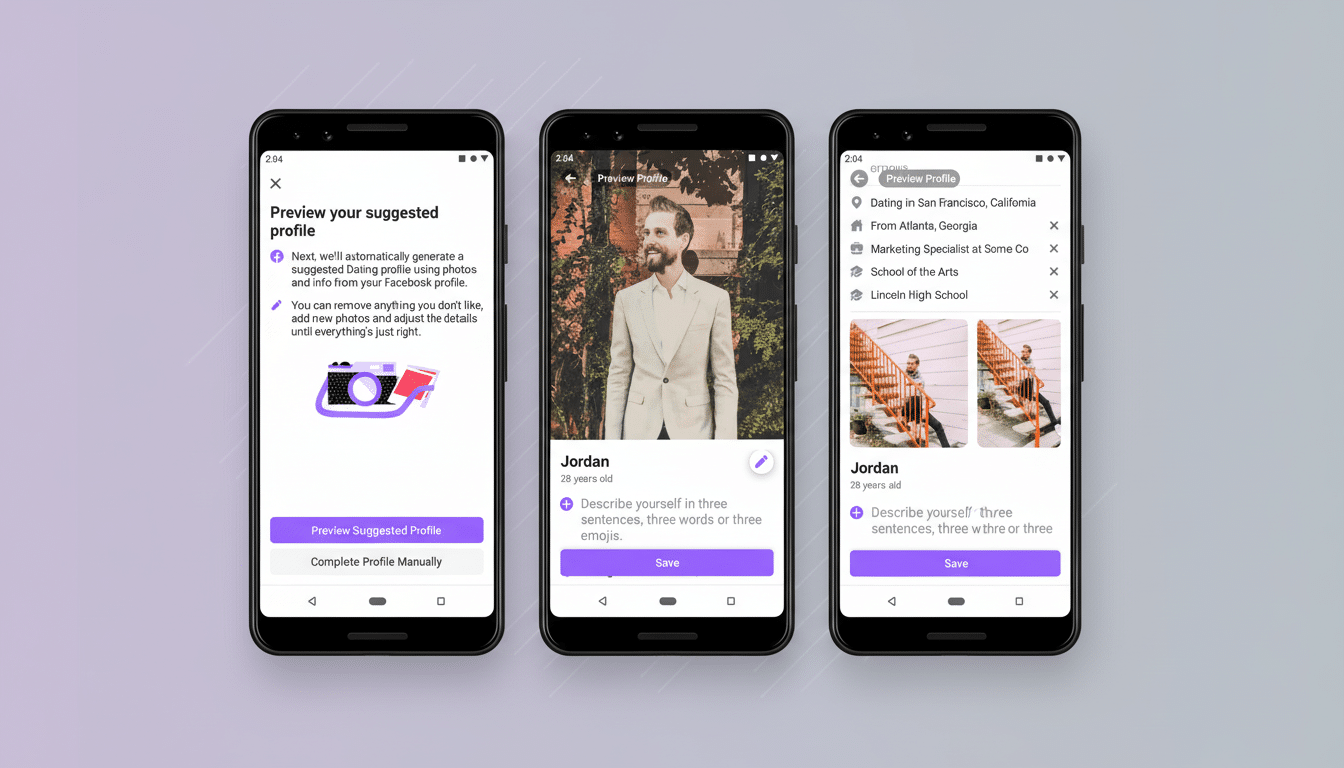
The assistant serves as a kind of in-house wingman. Users can write in natural language whom they’d like to meet — “a person in Brooklyn who works in tech and likes live music,” for example — and receive suggestions that match the criteria. It can also help punch up a profile, suggesting revisions to bios, prompts or photos that more accurately reflect personality and intent.
And expect some conversation starters thrown in there, too. Instead of spitting out generic openers, Meta says the tool will customize suggestions to shared interests, mutual prompts and location context. The swipe treadmill is “a lot of wasted time for people,” she added, and the aim is to transition singles into chats that lead somewhere.
Meet Cute and the anti-swipe fatigue solution
Choice overload is a well-documented annoyance on dating apps, and Meet Cute seeks to remedy the situation by offering one curated pick per week. By reducing the cognitive load and minimizing choices, Facebook is betting people will spend less time scrolling around and more time interacting.
Early indicators matter here. Meta says the number of Facebook Dating matches among people aged 18 to 29 is about 10% higher year over year, and hundreds of thousands of new profiles are created each month within that age group. Those are favorable trend lines in a demographic that tends to gravitate toward rivals early on.
A crowded field in the race to automate chemistry
AI has rapidly become table stakes in dating. Match Group, operator of Tinder, Hinge and OkCupid, announced that it is working with the company OpenAI in a deal estimated at well over $20 million to use AI for new product features. Results so far have included Tinder’s AI-powered photo-picking and AI-matching, while Hinge allows users to refine responses to prompts with machine assistance.
Bumble has introduced tools to enhance safety and prevent spam, and its founder has even contemplated the possibility of personal AI concierges that can pre-screen compatibility. Upstarts such as Sitch have relied on AI to distinguish themselves. In that light, Facebook’s shift is more necessity than novelty.
Scale vs. depth: Facebook’s advantage and potential shortfall
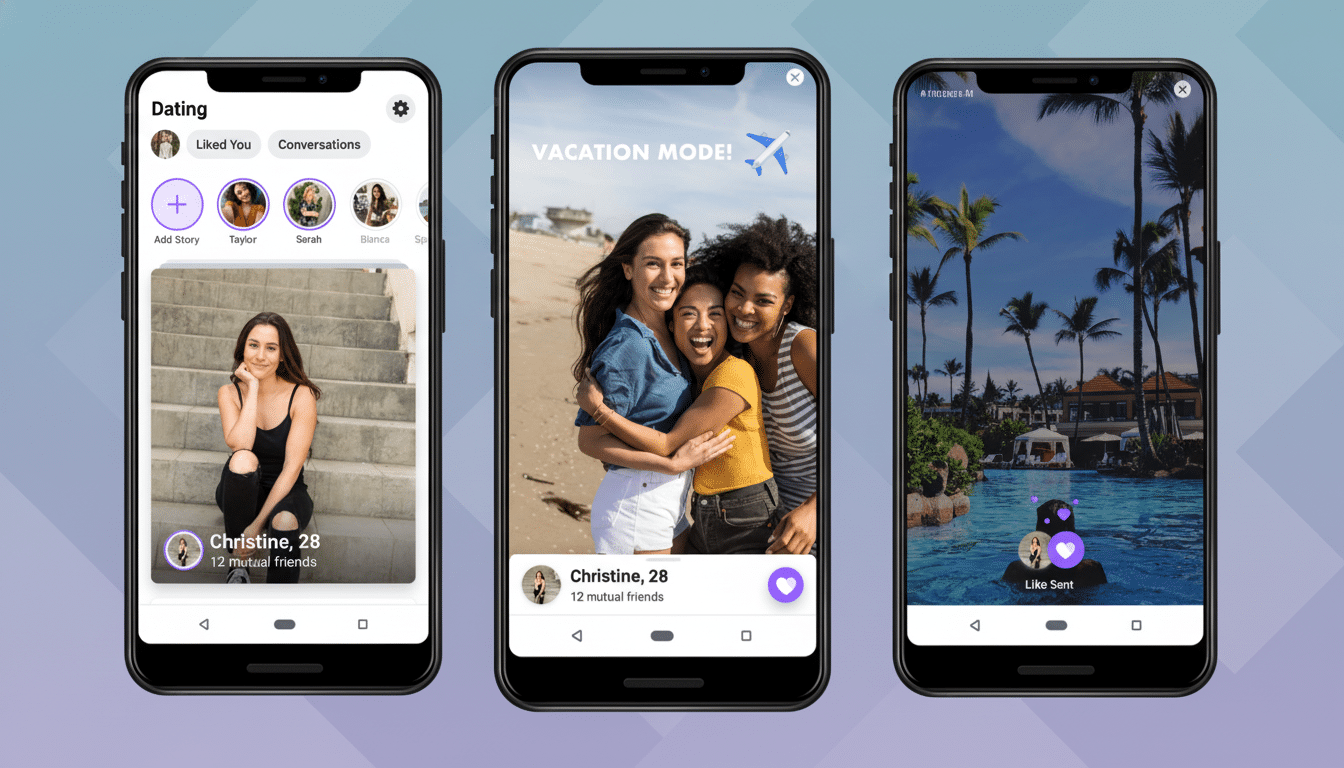
Facebook’s social graph is vast, but many people do not have as many friends on the internet as you’d think and there are still relatively few trustworthy signals for information about whether you can trust someone. Tinder is believed to bring in roughly 50 million daily active users, while Hinge is at around 10 million. That makes precision—and reducing churn—critical. And if AI even moderately increases match quality and conversation rates, network effects could exaggerate swiftly.
The assistant also plugs into Meta’s larger AI push in messaging and discovery. If Facebook is able to tap into signals like general friend group, events attended, and pages liked while still respecting privacy, it may be able to triangulate potential compatibility in ways single-purpose dating apps can’t.
Privacy, security and bias questions for AI dating
The critical question with any AI that comes into contact with intimate data is what does it use and how? Users will need clear explanations of whether chat content is used to train models, how image and location signals are considered, and what controls they have. And regulators and consumer advocates regularly call for opt-in transparency, as well as plain data minimization.
Bias is another risk. If the recommendations echo historical trends, the assistant might unwittingly perpetuate a narrow range of preferences or demographic imbalances. Civil society organizations and the FTC have called for impact testing to be applied to AI systems that “impact opportunities and relationships.” Independent audits and some user-level controls — for example, the ability to tune openness with respect to different identities — would be meaningful safeguards.
How to judge success for Facebook Dating’s AI tools
Superficial metrics — time spent in-app and messages sent — can be deceiving. The more telling metrics are match-to-chat conversion, reply quality, speed from match to first date and long-term retention. If Meet Cute and the assistant help move that needle, Facebook Dating gets stickier without using some of the engagement tactics users are growing to resent.
The ultimate promise of an AI wingman is straightforward: less friction, more resonance. If Meta complements that with strong privacy and bias checks, Facebook Dating could be less of a slot machine and more a service you can trust. If not, that assistant may be just another clever filter on top of the same old swipe fatigue.