


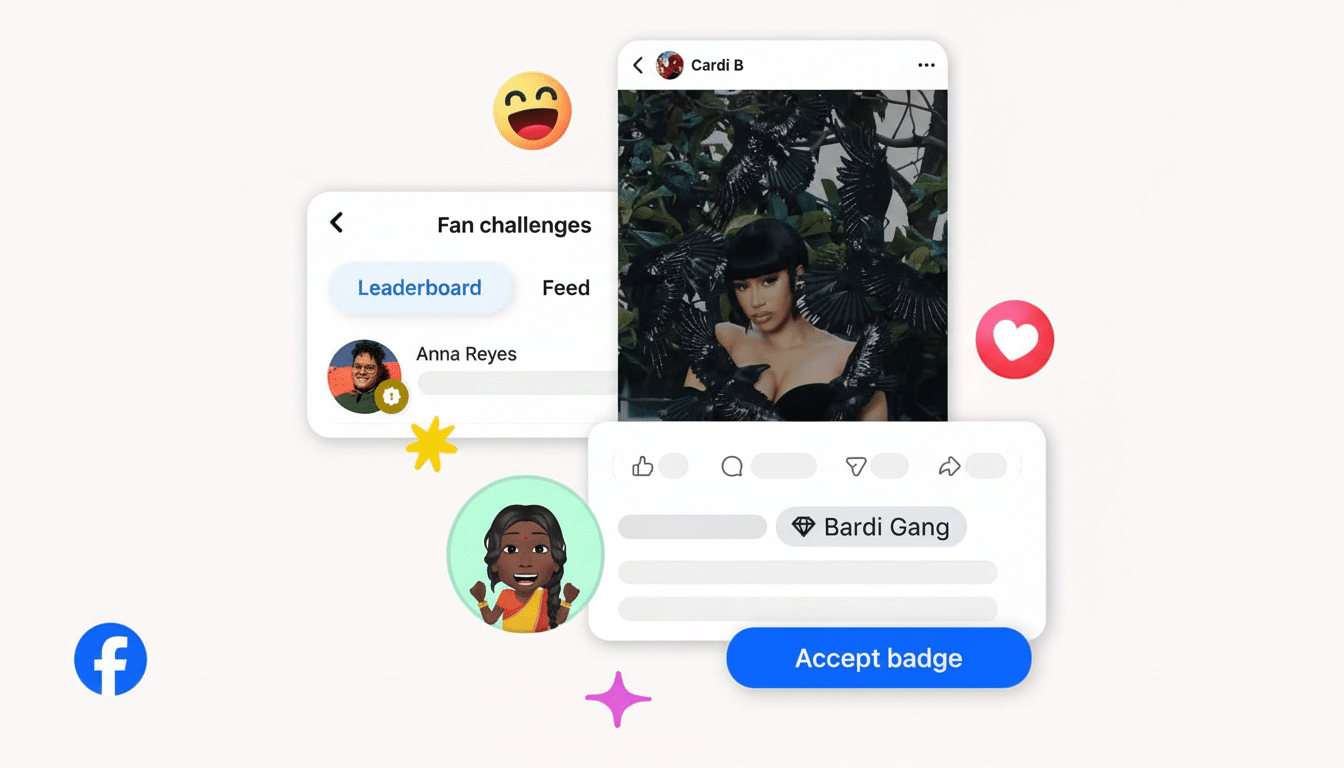
Facebook is adding two new creator tools to help facilitate more interaction and engagement between creators and their audiences. Fan Challenges let creators create prompts in which their followers can respond with either Reels or posts, while Custom Top Fan Badges will allow creators to rename the iconic “Top Fan” label to something that better suits their community.
Together, the changes push Facebook further into the creator economy’s playbook of keeping users engaged through gamification and status signaling along with lightweight creation tools to maintain a steady stream of returning audiences.
How Facebook Fan Challenges Work for Creators and Fans
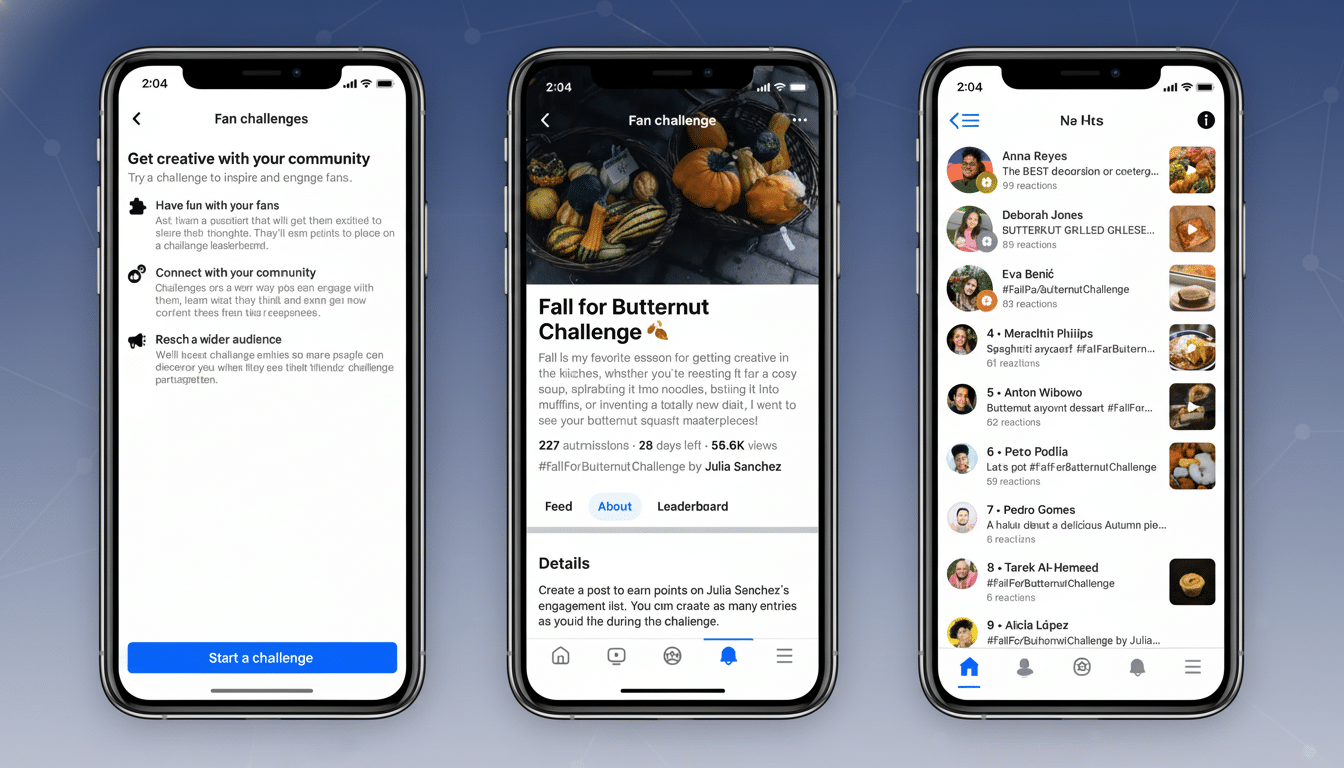
With Fan Challenges, creators have an easy way to toss out a prompt — think: “share your best one-pan fall recipe” — and invite followers’ responses. Users post a Reel with the challenge sticker or a feed post using the hashtag, and then participants’ entries are surfaced on a dedicated challenge page linked to the creator.
Submissions are listed on a leaderboard, sorted by the reactions they’ve received, adding a competitive element that rewards sharing and return visits. It’s a more structured, formalized take on the hashtag challenges that have powered trends for years on short-form video platforms, only with a home base (Facebook) and clearer mechanics.
Early tests point to traction. There have been about 1.5 million challenge entries during the trial period, according to Meta. The creator Kalen Allen, who has millions of followers on the platform, rolled out a prompt for videos about personal goals and dreams, and received approximately 520 entries — one illustration of how a focused theme can mobilize a community.
For creators, the appeal is two-pronged: Participation surges reach signals and leaderboards create a loop where fans come back to check standings, react to competitors and post new attempts. For fans, challenges reduce the barriers to posting while providing visibility beyond their friends list.
Custom Badges Turn Fandom Into Who You Are
The platform is also allowing creators to customize the Top Fan badge, a label that appears next to followers’ names who engage most with their content. Rather than a general-purpose name, the creator can select a community-specific moniker — picture fans of a music star who get lumped together as “Sheerios,” or an artist’s audience taking on an appellation invented on tour.
Many high-profile cast members have already adopted pimped-out badges — a testament to the importance of a name giving people ownership. It is reminiscent of status systems on services like Twitch and YouTube, where badges are awarded to show loyalty, but it has a unique twist in that it’s about the creator’s ‘brand’ language.
Beyond vanity, naming matters. Social identity theory and the many years of behaviors seen on platforms tell us that clear in-group signals can inch casual followers toward deeper participation, whether that’s to comment a little more, share content with friends, or show up for live streams.
Why This Is Important For Creators And Meta
Facebook has been honing its creator toolkit to attract the attention of people who otherwise work on TikTok and YouTube Shorts, in addition to complementing Instagram’s currently culturally dominant creator presence. With Challenges and customizable status markers, Facebook is vying for more of creators’ time and their communities’ attention.
There’s a business backdrop. The global creator economy may soon be on its way to the half-trillion-dollar threshold, according to estimates by Goldman Sachs, and platforms that can turn fandom into predictable cycles of engagement would be able to command advertising and direct audience support. Facebook’s current features — Stars, Subscriptions and Shops — work better when fans feel appreciated and incentivized.
The timing also arrives as the company is experimenting with artificial intelligence-powered content experiences throughout its products. Features that center around human-to-human interaction are a counterbalance: they’re signaling that building real community, not just generative content, is still going to be part of the strategy.
Opportunities and Risks of Leaderboards and Badges
Leaderboards and badges are known engagement drivers, but they come with their downsides too. Ordering by reactions could incentivize brigading or low-quality bait, so transparency into sorting signals and protections against spam will be important. Facebook’s integrity systems — already used to demote engagement bait and coordinated inauthentic behavior — will most likely be challenged by challenge dynamics.
Creators will also want clarity on moderation tools — how to set rules for submissions, filter off-topic entries, and adjudicate any harassment that can all too predictably arise as competition heats up. Robust community guidelines and the ability to highlight, remove or shrink entries are table stakes.
Practical Takeaways for Creators Using These Features
Begin narrow, with a theme that your audience can easily duplicate, and one linked to some regularly recurring concept you publish. Explicitly define what “good” is, feature your favorite entries early and employ light-touch rewards (on-page credit, duet reactions or special badge shout-outs) to keep the momentum going.
For badges, try test labels your fans already use naturally. Names that spring from inside jokes, lyrics or running bits tend to stick better than top-down branding. Monitor whether custom badges prompt comments and shares from your most active followers, and whether you drive their activity to new viewers through recommendations.
Were Meta to link Challenges or badges to monetization levers and then get additional engagement that drove revenue, it would shape up a new funnel: participate, gain recognition and unlock perks. The trick is keeping the loop fun and welcoming so that it draws in new players without teetering into paywalled territory.
Bottom line: By turning fandom into a game played by clearly defined rules and status that’s visible to everyone, Facebook is betting it can make creator communities on the platform livelier and stickier. For creators, the upside is more surface area for participation — and more opportunities to turn viewers into evangelists.