


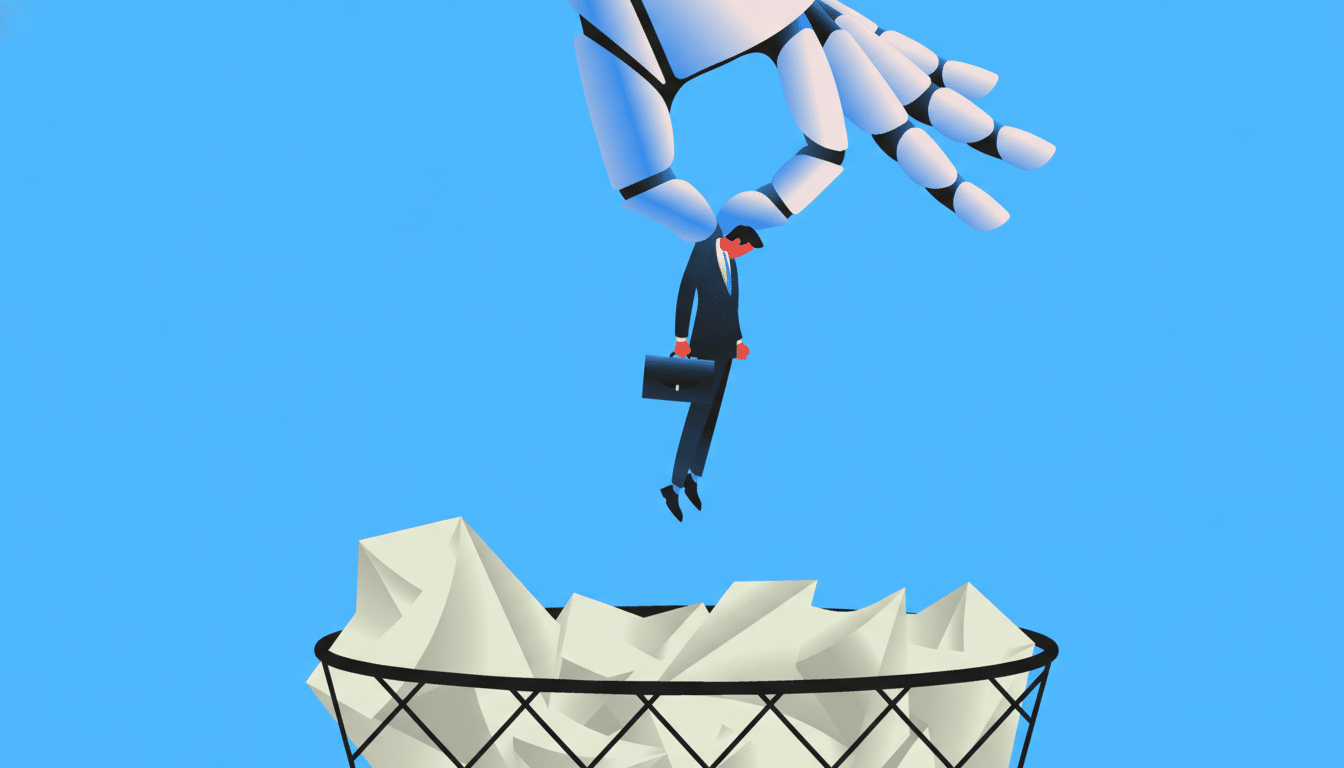
AI vendors are racing to purge inboxes, summarize meetings, and auto-generate reports. The pitch is simple: delete drudgery, unlock genius. But a growing chorus of researchers and industry leaders warn that erasing “busywork” wholesale may also erase the very boredom and rhythm that help ideas surface in the first place.
The emerging consensus is not anti-automation. It is anti-amnesia about how creativity actually happens. Moments of insight often arrive when the mind is unfocused, wandering during a repetitive task or a quiet walk—precisely the spaces automation threatens to compress.

The Promise Meets Cognitive Reality at Work
There’s no question AI can move the needle on output. A Stanford and MIT study of a Fortune 500 call center reported a 14% productivity lift when agents used generative AI assistance, with the largest gains among less experienced workers. Separate experiments by MIT researchers Shakked Noy and Whitney Zhang found that people completed writing tasks about 40% faster and produced drafts scored 18% higher when using AI support.
Yet experts caution that replacing every low-stakes task with high-cognition work misunderstands human limits. Advertising CTO Shawn Spooner has argued that teams perform best when deep-work blocks are “stitched together” with simple, routine tasks that provide a natural ebb and flow, rather than forcing nonstop intensity that risks diminishing returns.
What Boredom Does for the Brain and Creativity
In cognitive science, boredom is not dead time—it’s incubation time. A 2023 paper in Scientific Reports observed that brief, managed boredom can trigger reorganization in brain activity, priming people to re-engage with material more deeply afterward. The mechanism is familiar to anyone who’s had an idea “arrive” while washing dishes.
Classic work by psychologists Sandi Mann and Rebekah Cadman showed that participants assigned a tedious copying task later generated more creative uses for everyday objects than peers who jumped straight to the brainstorming. Research led by Jonathan Schooler has similarly linked mind-wandering during undemanding tasks to creative incubation. Even iconic practitioners—from Einstein’s daily walks to Bill Gates’s “think weeks”—have built deliberate boredom into their routines.
Productivity Gains Are Real But Not Cost Free
Field data suggests AI’s performance boost is uneven and can reshape motivation. The Stanford-MIT call center study noted the biggest gains among novices, hinting that AI can flatten learning curves but may also encourage overreliance. Organizational research has long shown that when tools strip away autonomy or craftsmanship, intrinsic motivation can dip—even if output rises.
Surveys are picking up cultural side effects, too. Upwork has reported that frequent AI users are more likely to feel disconnected from colleagues, a known precursor to burnout and attrition. Microsoft’s Work Trend Index found that a majority of employees would delegate as much as possible to AI, underscoring the temptation to automate beyond what’s healthy for team cohesion or long-term skill building.
Designing Workflows That Protect Flow and Serendipity
Leaders are reframing automation as a pacing tool, not a pedal-to-the-floor mandate. One approach is to carve out 2–3 hour deep-work blocks and deliberately bracket them with lower-cognitive tasks—administration, light data hygiene, or quick code reviews—that function as recovery laps for the brain. Another is to shift AI from “answer engine” to “scaffolding”: use it to assemble briefs, outlines, or rough datasets that humans interrogate, refine, and challenge.
Practitioners echo that restraint matters. Omnisend’s Bernard Meyer contends that AI should give people more control over where to spend mental energy, not remove that control entirely—a distinction that requires discipline in how freed time is used. Consultant Debra Andrews warns against filling every reclaimed minute with more high-intensity work; the better outcome is a steadier rhythm that preserves strategic clarity and prevents cognitive overdrive.
The Bottom Line on Automation, Flow, and Creativity
AI is not a creativity killer by design, but it can become one by default if it compresses the day into an uninterrupted series of demanding tasks and eliminates the mundane moments where insight germinates. The opportunity is to automate with intention: keep the gains, keep the guardrails, and keep just enough boredom in the system to let new ideas breathe.