


Former engineers from Google and LinkedIn are betting that artificial intelligence can tame the whiplash of U.S. trade policy under President Trump. Their startup, Amari AI, is pitching automated customs workflows and real-time regulatory tracking to brokers and importers scrambling to keep cargo moving as tariffs, classifications, and compliance rules change with little warning.
AI Agents for Customs Workflows and Compliance
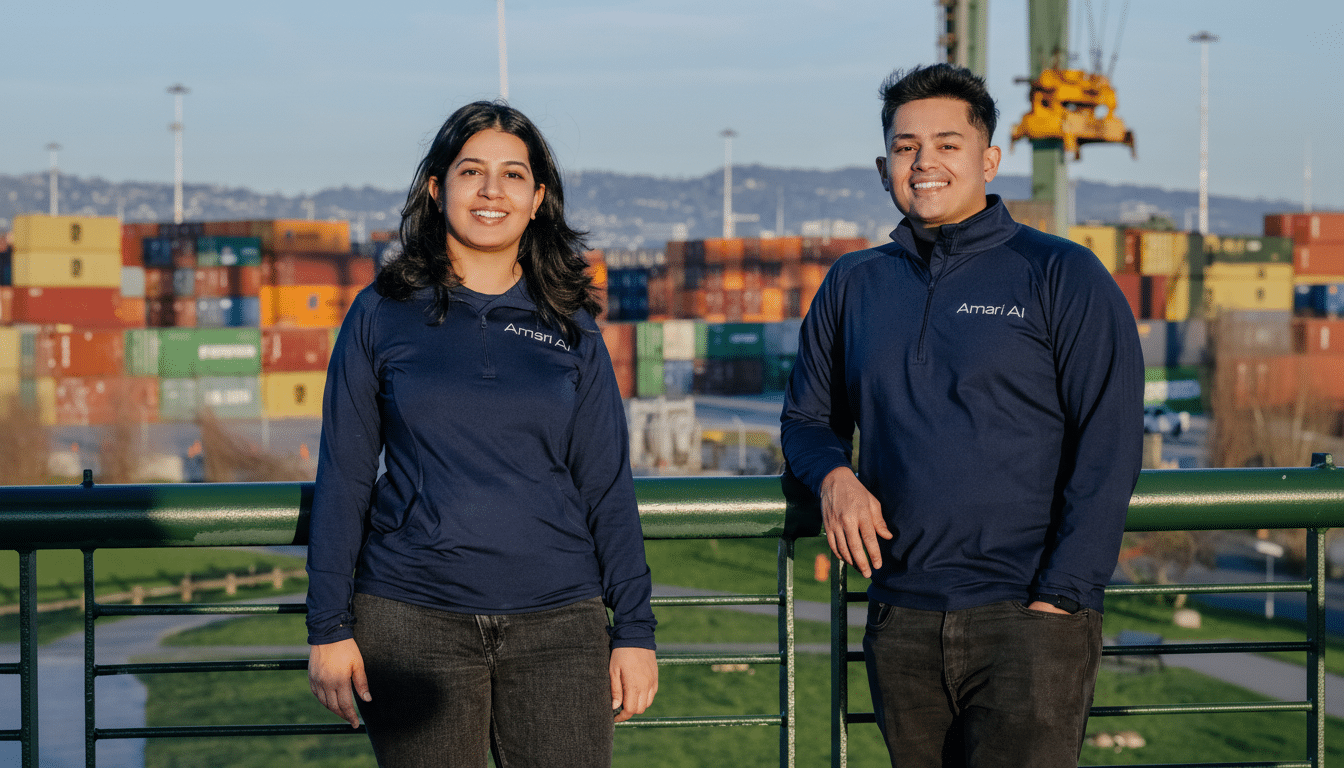
Amari’s co-founders, Sam Basu and Arushi Vashist, say their system ingests shipment data and drafts filings like CBP Forms 7501 and 3461, proposes Harmonized Tariff Schedule codes, and flags exposure to Section 301 and 232 measures. The platform continuously monitors rule changes, agency notices, and rulings so that brokers see the impact of a new tariff line or guidance in minutes rather than hours of manual research.

The pitch is simple: give licensed brokers superpowers while staying inside a tightly regulated workflow. U.S. law requires that filings be handled by credentialed personnel onshore, and the Licensed Customs Broker exam has a pass rate that typically sits near 10%–20%, making qualified headcount scarce. By handling repetitive data entry and document checks, Amari says its AI frees human experts for complex classification debates, client strategy, and audits.
Why Brokers Need Automation Now Amid Policy Volatility
Volatile trade policy creates operational strain across the border economy. A single misclassification can trigger delays, rework, and significant penalties under 19 U.S.C. § 1592, not to mention retroactive duty exposure when rates jump overnight. U.S. Customs and Border Protection has signaled rising enforcement activity, while the New York Fed’s Global Supply Chain Pressure Index shows that stress can resurface quickly with policy shocks.
Tariff resets and licensing twists ripple down to working capital. Importers planning inventory on thin margins suddenly face surcharges, exclusion expirations, or new country-of-origin tests. Brokers become the front line for translating Washington’s moves into landed-cost math and compliant paperwork at port. In that context, AI that can reconcile product specs with evolving rules and rulings is less a novelty than a survival tool.
From Big Tech to Trade Tech: Founders and Traction
Basu left Google to pursue applied AI and found the messiness of customs a perfect target after helping a friend slog through forms. Vashist, previously at LinkedIn, joined to build the data pipelines and guardrails enterprise clients demand. The team says Amari has signed more than 30 customers and assisted with over $15 billion in goods, from consumer electronics to industrial components.
Investors are taking notice. Amari closed a $4.5 million round co-led by First Round Capital and Pear VC, with backers pointing to an “old-school industry” that rewards founders willing to meet brokers on their turf. Early adopters include mid-market firms such as GHY International, which view automation as a way to win accounts without ballooning payrolls, even as employees worry about being replaced. The message to staff, executives say, is augmentation, not attrition.
Inside the Models and Guardrails Powering Amari AI
Under the hood, Amari blends off-the-shelf large language models with domain-specific training on more than a million historical shipment documents and public rulings. Retrieval systems pull in the Harmonized Tariff Schedule, CROSS rulings, Federal Register notices, and agency lists governing forced labor and sanctions to ground responses. Customers can opt out of contributing data; Amari says it anonymizes and isolates client information, and it does not sell data.
Because customs is a high-stakes environment, the system uses human-in-the-loop review and auditable reasoning steps. Recommendations come with citations to rulings and tariff notes, and confidence scores determine when a broker must approve or escalate. That approach mirrors best practices flagged by CBP and industry groups such as the National Customs Brokers and Forwarders Association of America, which emphasize traceability in automated workflows.
Measuring the Impact on Brokers and Importers
Clients report shaving hours off entry preparation and reducing post-summary corrections as the model learns product catalogs and supplier idiosyncrasies. While results vary, the direction aligns with outside research: McKinsey estimates that generative AI can deliver double-digit productivity gains in documentation-heavy back-office tasks, particularly where structured references and expert review are available.
Speed also matters for revenue. When a tariff hike lands, the faster a broker can reclassify, reprice, and communicate changes, the sooner importers can decide to reroute, accelerate, or hold shipments. AI that simulates duty outcomes across suppliers and origins gives CFOs and logistics managers options before containers hit the terminal.
The Stakes for Shippers Navigating Tariff Whiplash
Take a consumer electronics importer juggling assemblies sourced from multiple countries. A sudden change to Section 301 rates on a key component can upend landed costs. An AI assistant that ingests bills of materials, tests alternate HTS codes against rulings, and cross-checks supplier attestations for forced labor risk can mean the difference between a costly hold and a clean release.
That’s the bet these ex–Big Tech engineers are making: that the era of policy volatility rewards teams who can turn sprawling regulatory text into fast, defensible decisions. If they’re right, the winners in Trump’s trade turbulence won’t be those with the biggest legal budgets, but those with the best human-machine playbook at the border.