


Eufy’s new C28 enters the white-hot roller mop race with a price and footprint that finally make this tech feel attainable. I spent a week running it head to head with two category leaders — Dreame’s Aqua10 Ultra Roller and Roborock’s Qrevo Curv 2 Flow — to see where a budget-friendly roller mop can keep up and where it still lags.
Price and Design That Fit Well in Small Spaces
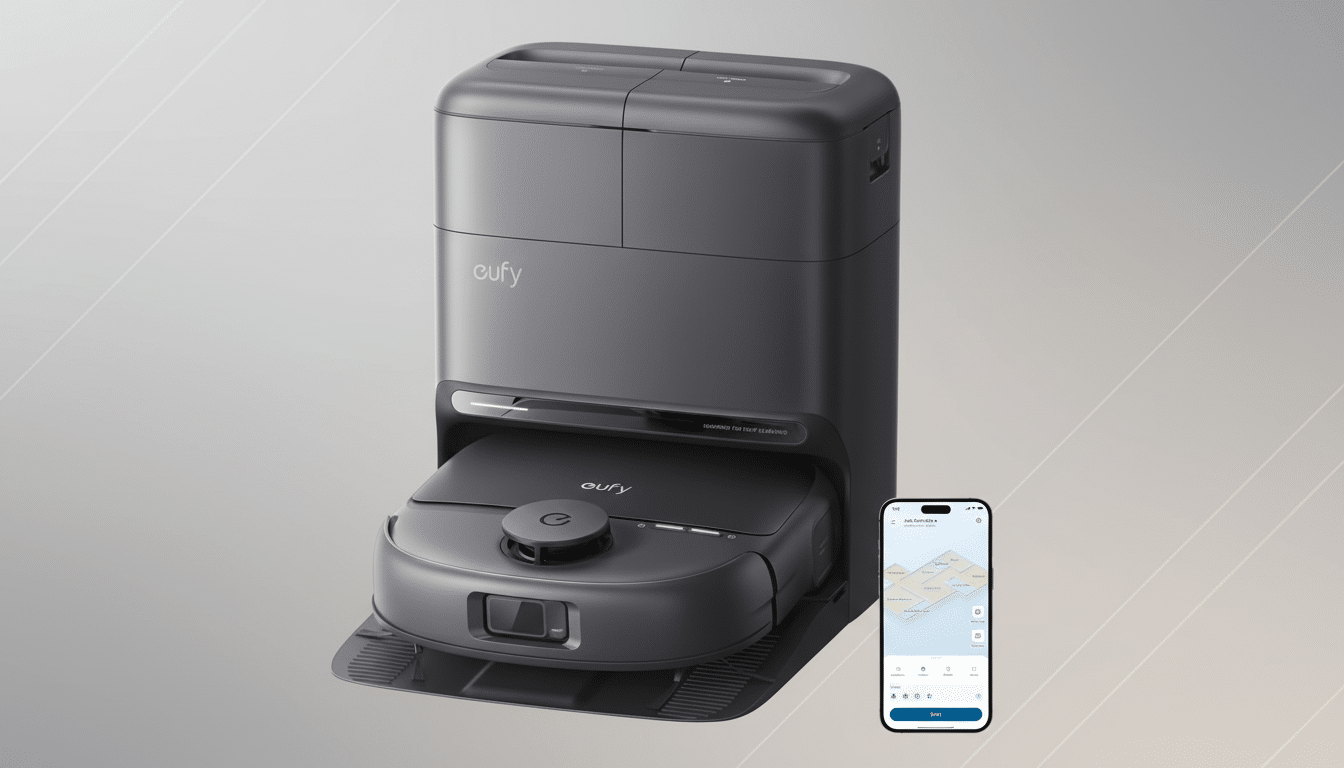
The C28’s sticker is $799.99, with a launch promo at $599.99 — a rare sub-$600 entry for a self-washing roller mop. Many rivals debut near or above $1,000 at major retailers, so this is a meaningful undercut. Eufy also shrinks the dock: it’s notably slimmer than most auto-wash and hot-air dry bases, closer in footprint to Roborock’s compact unit but without the higher cost. Apartment dwellers who have been playing dock Tetris will feel seen.
- Price and Design That Fit Well in Small Spaces
- Hard Floor Pickup and Overall Dust Control
- Spill Cleanup Performance and Roller System
- Edges, Corners, and Everyday Navigation Notes
- Carpet Performance and Handling of Pet Hair
- Noise, Maintenance, and Practical Trade-offs
- How It Compares to Dreame and Roborock Models
- Bottom Line: Is the Eufy C28 Worth It for Most Homes?
Hard Floor Pickup and Overall Dust Control
Roller mop systems have two big advantages: a pressurized wet contact patch and constant self-rinsing. The C28 leans into both. Its 15,000 Pa rating is modest next to the 30,000+ Pa numbers flashed at recent trade shows, but raw suction isn’t the whole story. The nearly 11-inch roller lays down even pressure, sweeping up fine debris that dry-only robots often skate past.
My toughest test zone — the halo around a self-cleaning litter box — is where dust is talcum-fine and hard to see on dark wood. After a two-pass run, the C28 left a visibly cleaner path and bare-ankle-proof floors. On tile, its roller squeegeed out crumbs clinging in grout lines better than dual-spin pad systems I’ve used over the past year.
Spill Cleanup Performance and Roller System
Saucy, sticky, and sugary messes separate roller mops from pad spinners. The C28 pulled up a red wine splash and a dropped spoonful of salsa in a single pass, then erased a faint streak on a second. That “go back and absorb” behavior is helped by Eufy’s HydroJet system, which recirculates clean water and scrubs the roller multiple times per second to avoid smearing gunk across the room. It’s not a substitute for a deliberate hand mop on caked-on grime, but for fresh spills it’s dramatically faster — and it avoids the pepper-fling chaos I’ve seen with spinning pads.
Edges, Corners, and Everyday Navigation Notes
Roborock’s extendable roller has set the class benchmark for wall and baseboard contact. Eufy doesn’t deploy a swing-out roller here, yet its square chassis still tracks closer to edges than many rounded bots. It occasionally misses the first inside corner as it maps, but settles in and reliably skims along walls, closed doors, and shoe racks by the entryway.
Mapping accuracy was solid, while driving behavior was a touch wobbly — think a new cyclist’s gentle weave. That sometimes left a breadcrumb or two along straightaways on the first pass. Height is another constraint: at roughly 4.5 inches tall, it won’t slip beneath many dishwashers or low credenzas where premium ultra-slim bots manage a clean.
Carpet Performance and Handling of Pet Hair
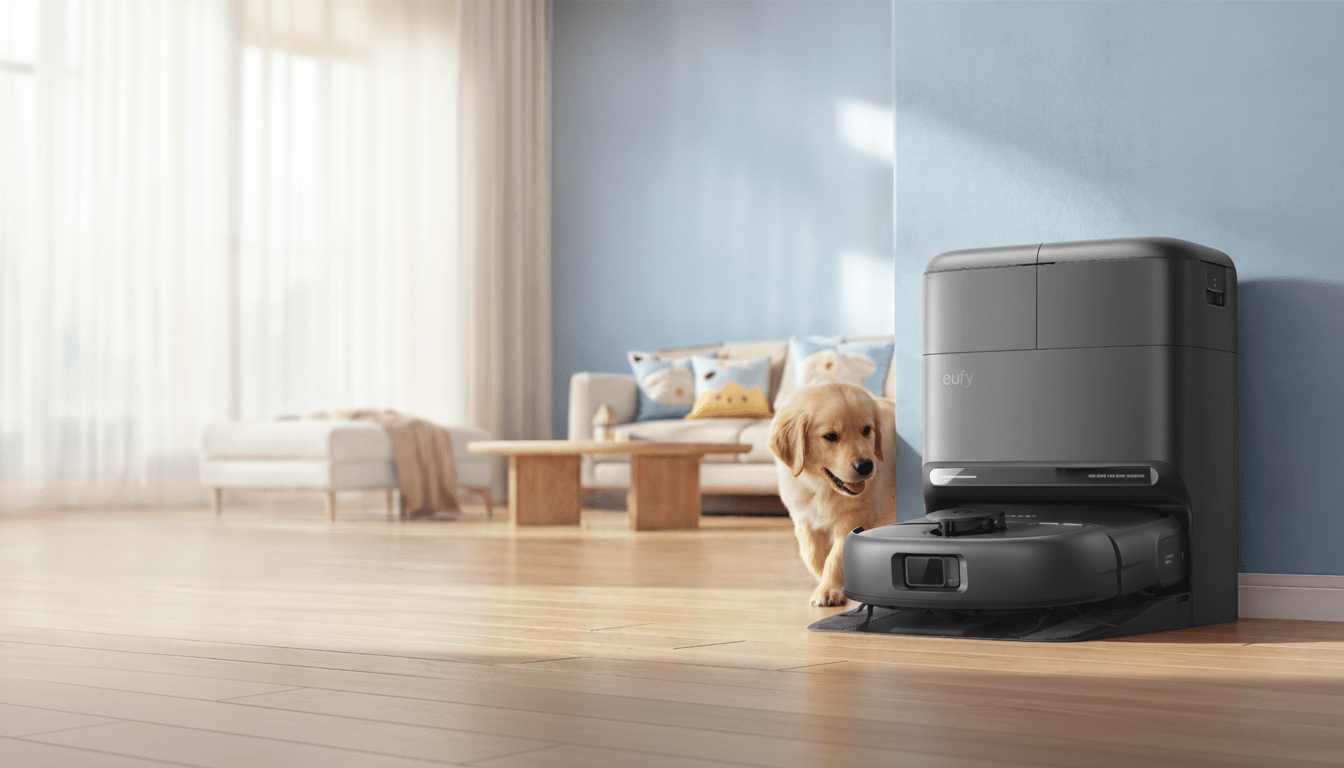
Given the conservative suction spec, I expected compromises on rugs. Instead, the C28 overdelivered on surface debris. It cleared a tufted living room rug of catnip flakes and crushed chips without visible leftovers, and a post-pass lint roller revealed only light fuzz. Around rug borders — where lighter robots tend to balk — the C28’s methodical second pass, often perpendicular to the first, plus periodic spot spins, dislodged the stragglers.
For homes blanketed in thick carpet or with multiple heavy shedders, Dreame and Roborock still have the horsepower advantage. But for mixed hard floors with area rugs, the C28 can maintain day-to-day cleanliness if you schedule daily or every-other-day runs.
Noise, Maintenance, and Practical Trade-offs
The C28 is not shy. Max suction brings a prominent roar, and the auto-empty cycle delivers a “jump-scare” whoosh. Independent labs such as Which? frequently measure 70+ dBA on maximum power for top-tier bots; subjectively, the C28 sounds in that ballpark. If you work from home, plan cleaning windows accordingly.
On the plus side, the wash-dry cycle kept the roller fresh between rooms, and dirty-water handling was cleanly contained. As with any roller system, frequent emptying of the dirty tank and periodic dock cleaning will protect performance and odor control. Consumables — detergent and filters — should be budgeted over time, though Eufy’s prices typically undercut premium brands.
How It Compares to Dreame and Roborock Models
Against Dreame and Roborock, the C28’s chief wins are cost, footprint, and spill control that’s surprisingly competitive. Where it trails: raw suction on dense carpets, edge reach without an extending roller, and polish in its driving dynamics. There’s also internal competition: Eufy’s E28, a sister model with 20,000 Pa and a dock that doubles as a portable spot cleaner, routinely sells near $699.99. Pet parents with wall-to-wall carpet may find that package a better fit if space allows.
Bottom Line: Is the Eufy C28 Worth It for Most Homes?
The Eufy C28 makes roller mop tech meaningfully more accessible without gutting the experience. It cleans hard floors exceptionally well, handles spills like a pro, and fits where jumbo docks won’t. If you need whisper-quiet operation, under-furniture reach, or the most aggressive carpet pull, Dreame and Roborock remain safer bets. For everyone else, the C28 is the rare budget model that punches far above its price — and finally brings the roller mop mainstream.