


A new crop of emoji candidates is quietly taking form, and two standouts have already generated chatter: a dill pickle and a shooting star. Preliminary entries in Unicode Consortium documents, discovered by Emojipedia, hint toward a tight group of nine themes being considered for Emoji 18.0—an annual update that determines what shows up on keyboards globally.
(Nothing is set in stone until the standard is approved and ships from big platforms, though the existence of these candidates provides an indication for how everyday messaging might evolve in coming years.) A metaphoric pickle factoring in a specific flavor of misunderstanding (no makeshift cucumbers need apply) and an actual meteor that’s not the existing comic-strip comet stand ready to fill conversational blind spots for users who have been workshopping with vague look-alikes and workarounds.
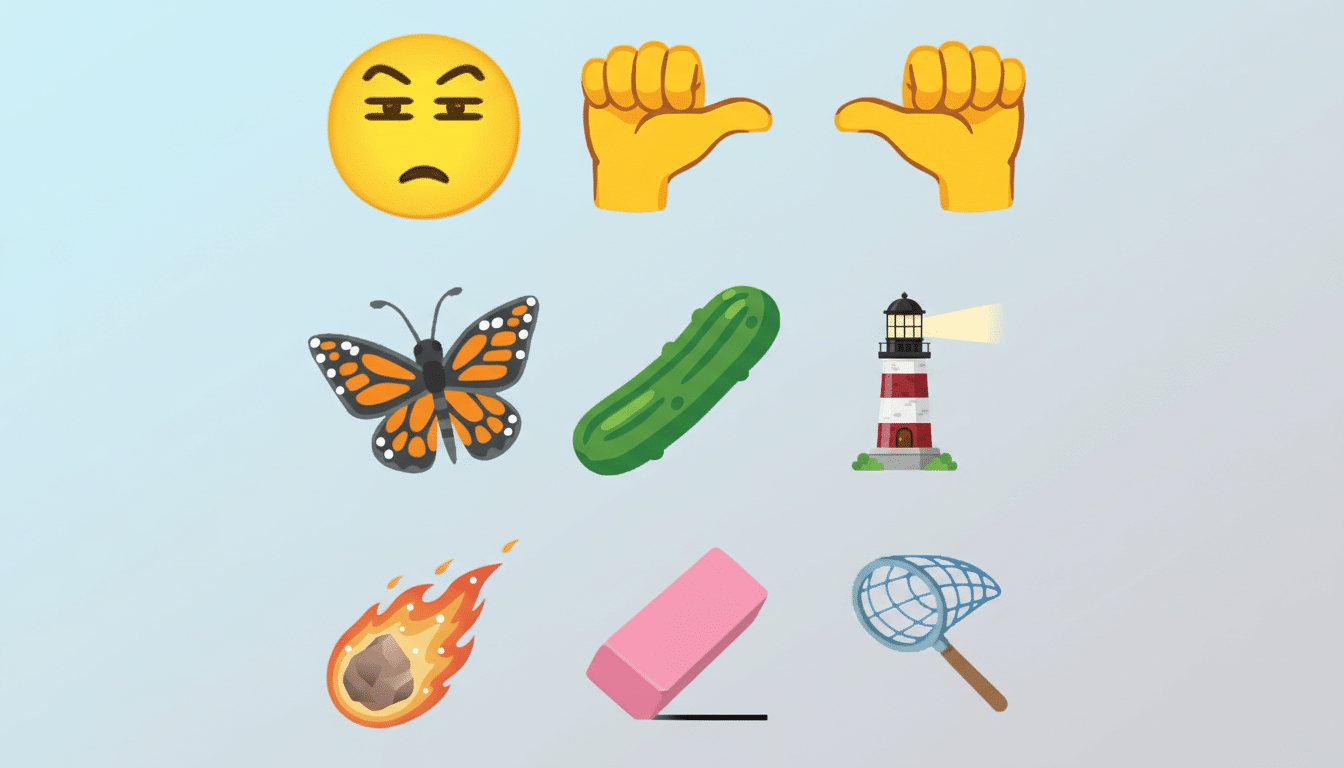
What’s in the Emoji 18.0 candidate list so far
Some of the new slate reportedly under consideration, as listed by Emojipedia, includes the following:
- A smiley face with squinting eyes
- A thumbs-up hand sign pointing to the left
- A thumbs-up hand sign pointing to the right
- A monarch butterfly (the species is not entirely clear)
- A pickle
- A lighthouse
- An asteroid or meteor flying through space
- An eraser
- A tool resembling a bug-catching handled net from Pokémon Go
The mix includes expressive faces, directional gestures, nature, objects—and one much-requested food item.
Two of these are particularly remarkable in relation to specificity. A meteor has a different implication than the venerable comet, which many platforms depict as a stylized space object with a tail—not what you get when you throw a rock through the atmosphere. Similarly, a pickle is not only culturally but culinarily separate from its mature cucumber self and so easier to reference when the subject turns to staples of the deli or briny sides or that old chestnut “in a pickle.”
Why a pickle and a meteor could matter to messaging
Emoji work by becoming short forms for ideas or emotions that people communicate often and, ideally, consistently across varying contexts. Unicode’s own frequency lists have for years proved that instantly recognizable images—such as the red heart or tears-of-joy—dominate usage. A meteor is a much more vivid, global image of sudden impact, urgency, or disaster than a comet’s sense of wonder or spectacle. It provides newsrooms, science communicators, and the public a sharper tool for indicating breaking events, or metaphorical “crash landings.”
Meanwhile, the pickle addresses an unexpectedly widespread demand. Food and beverages are among the most popular, with nuances that count. A genuine pickle can express desire, sandwich filling, a charcuterie board, pickling brine, or humor that owes itself largely to sourness. It also settles cross-cultural signals, too: cucumbers are everywhere, while the pickles on offer do vary and have a social totem all their own—often brined and served as a spear.
How new emoji get approved and reach your keyboard
Behind the scenes, proposals are checked over by the Unicode Emoji Subcommittee and the Unicode Technical Committee. Candidates are judged based on a variety of measures, including likely use cases, how distinct they are (or whether variants can be represented without ambiguity), how well they work with existing sets, and the likelihood of misinterpretation. The process consists of many rounds of reviews before a final release is sealed; then the big vendors—Apple, Google, Samsung, and others—build their own versions to ship as software updates.

There has historically been a lag of some months between standardization and when users see new icons on their keyboards. For instance, previous emoji rounds have arrived on iOS, Android, and other widely used social platforms at different times, and the designs have occasionally been adjusted on the way for clarity, cultural necessity, or legibility when scaled down to small sizes.
Gestural and design nuances in directional emoji
The tentative left- and right-pointing thumbs-up emphasize our increasing concern with directionality, as in forest-cover change. Mirrored gestures aid in visual alignment for right-to-left and left-to-right interfaces, and allow you to introduce conversational play, such as pointing “toward” the next message in a thread. The same goes for the handled net and eraser: they are both clearly workplace tools as well as parts of internet culture—catching “bugs,” erasing mistakes—where having the object itself matters more than a generic tool.
A monarch butterfly, if approved, would provide the level of species specificity that environmental communicators, educators, and hobbyists have asked for over many years.
A monarch is not just a “generic” (non-monarch) butterfly; it tells stories of conservation and includes an educational value. A lighthouse is a tidy metaphor for guidance, visibility, and warning—handy in everything from safety signage to poetic late-night texting.
What to expect next as the Emoji 18.0 process unfolds
These candidates are not guaranteed. Some may shift or be pushed back as feedback comes in. But a meteor and a pickle in the mix this time around speak to a bigger theme: users want emoji that better reflect how they communicate already, be it pumping out quick takes on fast-moving news or adding condiments to food chats.
If the set goes ahead, vendors deploy platform-specific art styles, and those designs are scrutinized to ensure cross-platform consistency. Emojipedia will document the breakdowns and monitor usage, while Unicode’s charts will eventually reveal how often each icon is wielded in the wild. For the moment, though, the message is clear: a more precise expressive keyboard is coming soon—and yes, soon it will likely include a dill-forward pickle or dramatic meteor.