


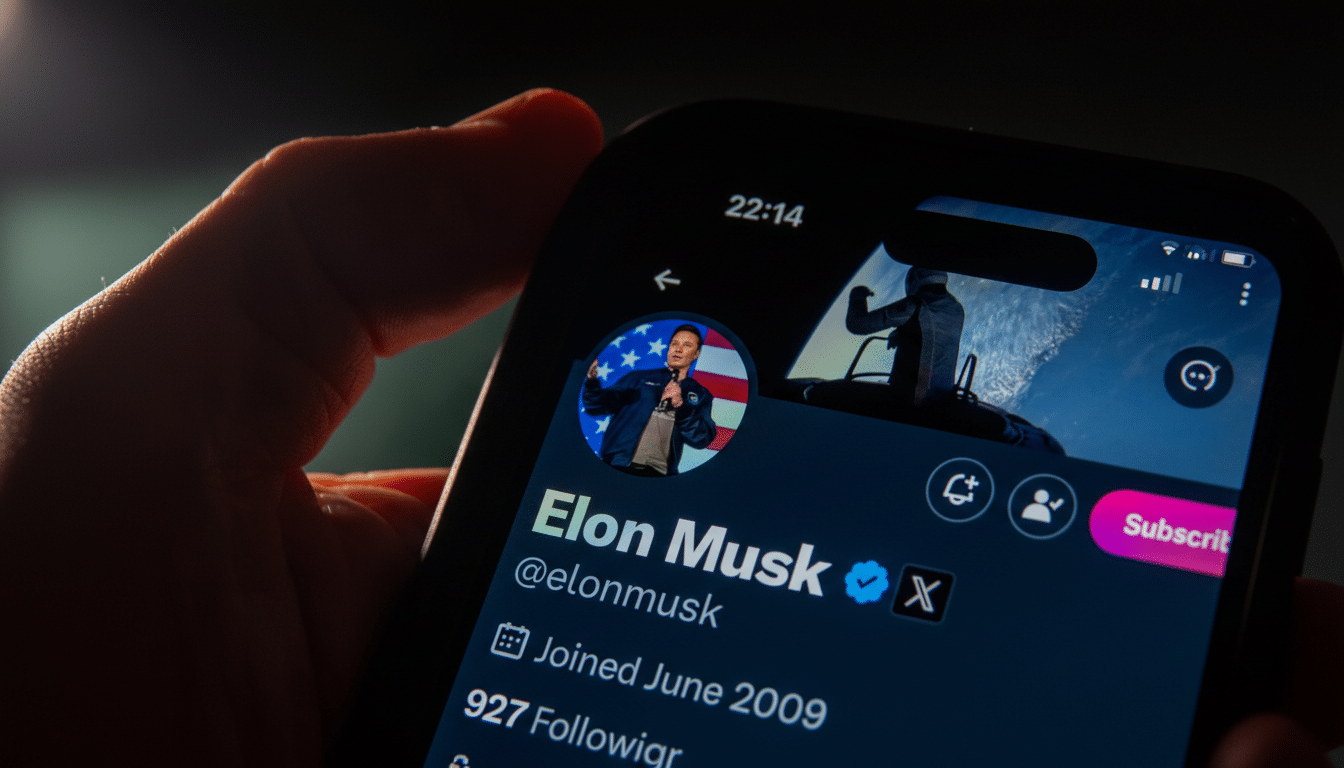
Elon Musk appears to be priming X for a new warning label on altered images, hinting at an incoming system with a short post that read “Edited visuals warning.” The tease, reshared from the anonymous account DogeDesigner, suggests X will flag manipulated or AI-touched media. What it doesn’t offer is the crucial detail: how the platform plans to decide what counts as “edited.”
What Musk Signaled About Upcoming Edited Visuals Labels
Musk’s message, brief by design, nods to a broader effort to mark content that isn’t an untouched original. DogeDesigner, a frequent conduit for early X feature reveals, framed the feature as a blow to misleading visuals, including those shared by established media outlets. The claim raised eyebrows because the specifics remain opaque: Is X targeting AI-generated imagery, cosmetic edits, deepfakes, or all of the above?
- What Musk Signaled About Upcoming Edited Visuals Labels
- What Might Be Labeled Under X’s Edited Visuals Policy
- Lessons From Other Platforms on AI and Editing Labels
- Standards and Provenance Efforts Shaping Media Labeling
- Detection Pitfalls and Due Process for Image Edit Labels
- Why an Edited Visuals Warning on X Matters Right Now
- What to Watch as X Defines and Enforces Edited Image Labels
That ambiguity matters. Labeling is only as credible as the definition behind it. Without clarity on scope, users won’t know whether the label means “synthetically created,” “significantly manipulated,” or simply “not straight-from-camera.”
What Might Be Labeled Under X’s Edited Visuals Policy
X inherits a lineage here. Before the rebrand, Twitter introduced a policy to flag deceptively altered or fabricated media rather than removing it outright. That framework encompassed more than AI, including selective edits, cropped clips, overdubs, and misleading subtitles—examples the company’s site integrity team emphasized at the time.
Whether X will revive that approach or prioritize AI-driven detection is unclear. The company’s help pages reference inauthentic media, but enforcement has been spotty, as seen when non-consensual deepfake images spread widely. If X combines automated systems with human review, it will need clear thresholds for intent, context, and potential harm.
Lessons From Other Platforms on AI and Editing Labels
Other platforms have learned the hard way that “AI” is not a tidy label. Meta’s early “Made with AI” tag misfired by branding genuine photos as synthetic. The culprit wasn’t deception so much as modern workflows: common tools like Adobe Photoshop can flatten or re-encode files, tripping detectors that look for telltale metadata. Even mundane edits—cropping, noise reduction, or using AI-assisted removal of small objects—were enough to draw a label.
Meta eventually softened its badge to “AI info,” acknowledging the spectrum between full generation and light-touch assistance. The episode is a warning for X: overbroad labels erode trust and punish creators for using standard industry tools.
Standards and Provenance Efforts Shaping Media Labeling
One path forward is provenance rather than pure detection. The Coalition for Content Provenance and Authenticity, alongside the Content Authenticity Initiative and Project Origin, promotes tamper-evident metadata that rides along with images and video. Heavyweights such as Microsoft, Adobe, the BBC, Intel, Sony, Arm, OpenAI, and others sit on the standards committees, and services like Google Photos already indicate how certain media was created using these signals.
If X embraces provenance, it could show users when an image was generated, edited, or exported across apps—without guessing from pixels alone. That won’t catch everything (bad actors strip metadata), but it creates a strong default and a clearer audit trail for reputable publishers and creators.
Detection Pitfalls and Due Process for Image Edit Labels
Automated classifiers inevitably face false positives and false negatives, especially with edge cases like upscaled images, lens corrections, and smartphone computational photography. A credible rollout would include a dispute channel, transparent criteria, and public examples showing where the line is drawn. Today, X leans on Community Notes for context, but labeling policy requires first-party accountability: who decides, on what basis, and how quickly can mistakes be fixed?
Expect questions around appeals, satire exemptions, and political speech—a frequent flashpoint. Researchers have long warned that manipulated visuals can travel faster and persuade more readily than text. Labels help, but only if they’re timely, accurate, and consistently applied.
Why an Edited Visuals Warning on X Matters Right Now
X remains a high-velocity arena for information warfare, commercial hoaxes, and creator content. A clear labeling system could discourage casual misinformation and steer audiences toward context. It could also backfire if it tags legitimate photography or misses high-impact deepfakes, inviting claims of bias from every side.
Music and video platforms offer a preview: Spotify and Deezer have begun flagging AI-generated tracks, while TikTok requires disclosure for synthetic media. The lesson is consistent—labels must be precise, comprehensible, and paired with enforcement that users can verify.
What to Watch as X Defines and Enforces Edited Image Labels
Look for X to clarify whether it will use provenance standards like C2PA, deploy its own classifiers, or blend both with human review. Watch for examples that distinguish AI-generated images from light edits. And pay attention to whether creators get an appeals process, whether publishers can attach signed provenance, and whether labels appear on reposts and screenshots where metadata is lost.
For now, Musk’s “Edited visuals warning” is a signal, not a spec sheet. If X delivers substance—clear definitions, transparent systems, and a fair path to challenge errors—it could meaningfully reduce visual misinformation. If not, a two-word warning may become yet another label users learn to ignore.