


Einride has landed an oversubscribed $113 million PIPE, bolstering its balance sheet just ahead of a planned public listing in the first half of the year. The Swedish autonomous and electric freight startup is merging with Legato Merger Corp., with the revised deal now valuing Einride at a $1.35 billion pre-money figure, down from the initial $1.8 billion attached to the SPAC announcement but backed by fresh institutional demand.
Between the PIPE and previously announced crossover financing, Einride has secured about $213 million tied to the transaction. Combined with roughly $220 million held in Legato’s trust account, the companies project total gross proceeds of about $333 million before redemptions and expenses, and they may seek additional capital prior to closing. Upon completion, Einride is expected to trade on the New York Stock Exchange.
Management says the proceeds will fund the technology roadmap, global expansion, and staged autonomous deployments across North America, Europe, and the Middle East. That mix reflects the capital intensity of commercial autonomy and the infrastructure needs of battery-electric trucking, from charging buildouts to remote operations centers and software development.
Why This PIPE Matters In A Choppy SPAC Market
SPAC-era logistics and autonomy deals have faced steep redemption rates and valuation resets, a reality underscored by sector data from SPAC Research showing prolonged periods when redemptions routinely topped 70%. In that context, an oversubscribed PIPE is noteworthy: it provides a counterweight to potential redemptions and signals conviction from new and existing backers, including Stockholm-based EQT Ventures and a large West Coast asset manager.
The step-down from the initial $1.8 billion valuation mirrors the broader repricing across autonomous vehicles, where investors are prioritizing revenue visibility, disciplined burn, and near-term commercialization. Aurora Innovation’s 2021 SPAC at a far larger headline valuation and Kodiak’s 2025 SPAC illustrate how public-market scrutiny has pushed the category toward tangible freight operations, safety milestones, and verifiable unit economics.
Einride’s Model Blends Electric Fleets And Driverless Pods
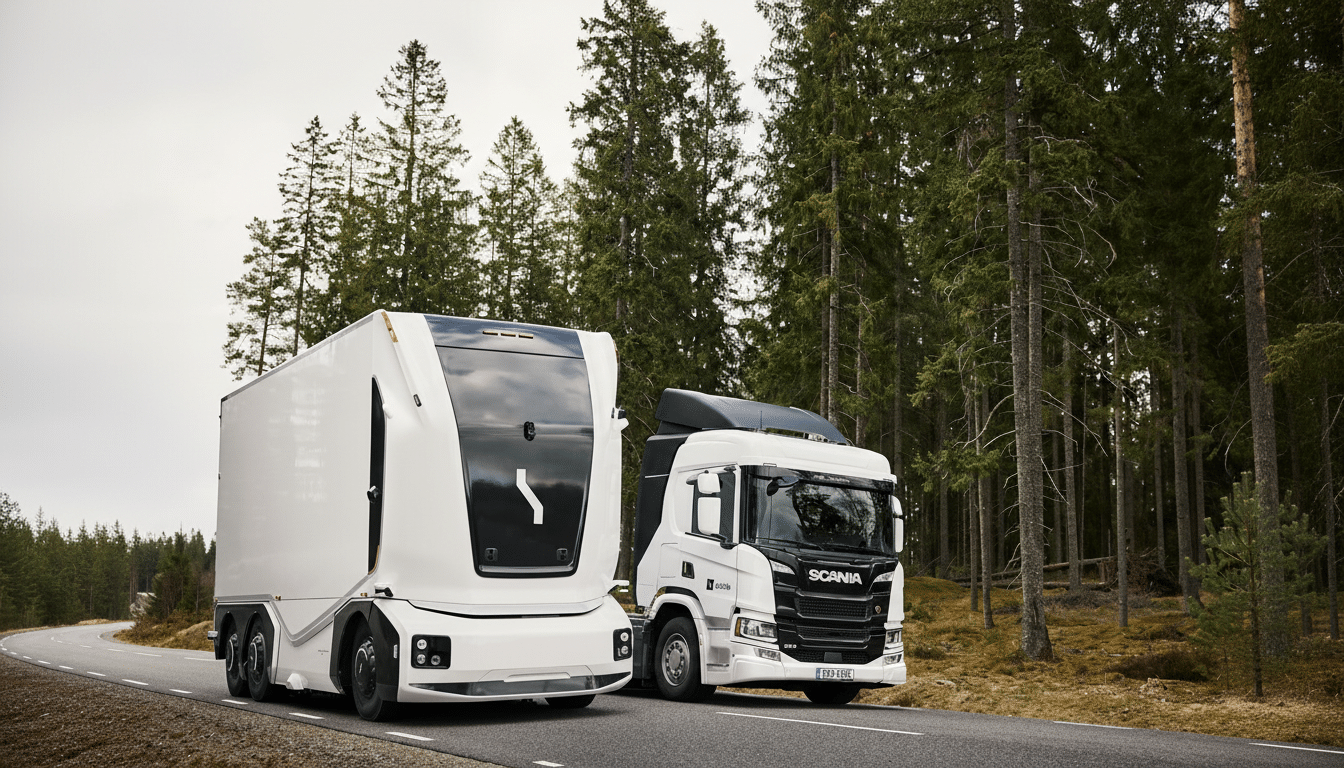
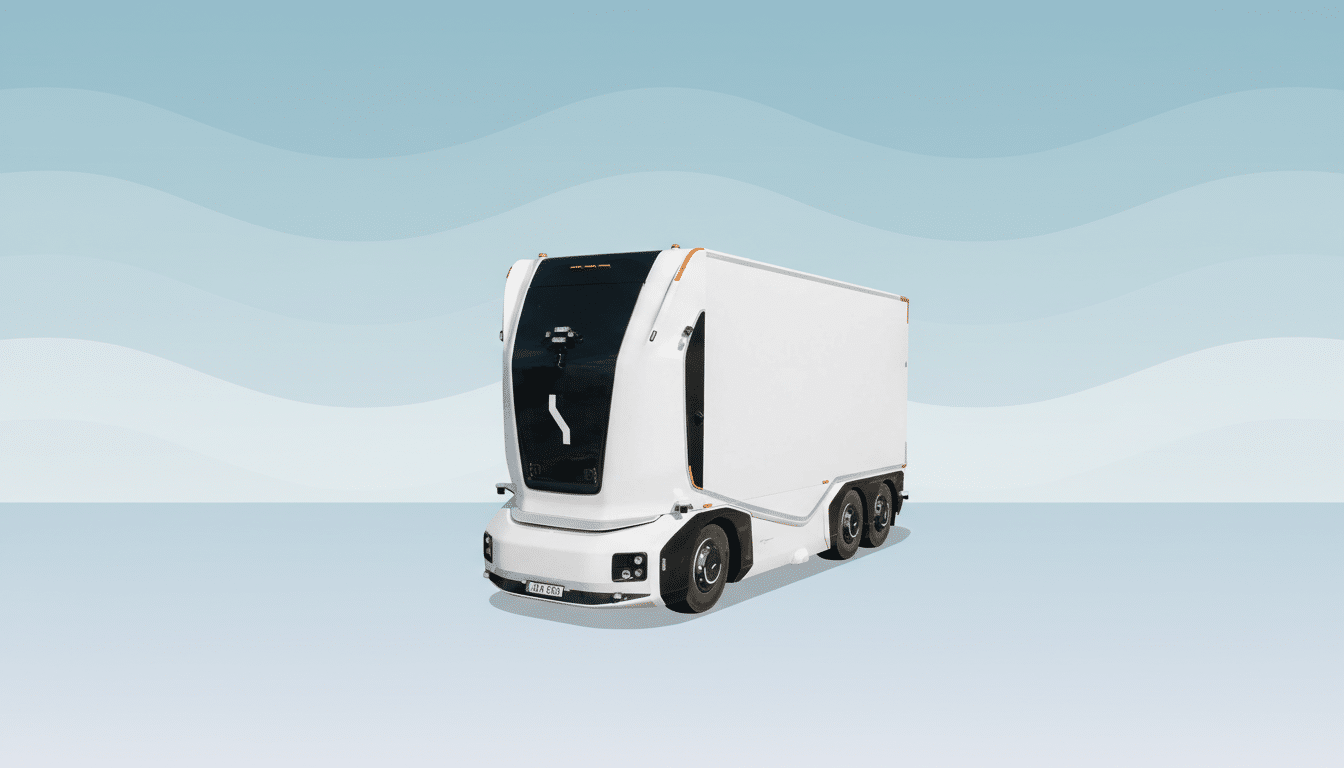
Einride’s strategy is two-pronged. First, it deploys and operates heavy-duty electric trucks for shippers today, generating freight revenue while lowering emissions. Second, it develops cabless autonomous “pods” designed for freight movement without a human onboard, paired with remote supervision and a tightly bounded operational design domain.
Beyond Sweden, Einride manages a fleet of roughly 200 heavy-duty electric trucks across Europe, North America, and the UAE, serving brands such as Heineken, PepsiCo, Carlsberg Sweden, and DP World. On the autonomy front, the company has executed limited, ODD-constrained deployments of its pod-like vehicles with customers including Apotea in Sweden and GE Appliances in the U.S., demonstrating controlled-route operations and a safety case that expands gradually.
Software underpins the stack. Einride’s platform orchestrates routing, charging, energy management, and load optimization—key to unlocking electric truck utilization and cost savings. This “freight-as-a-service” approach aims to shift margins upward over time, layering software and autonomy economics on top of contracted logistics work.
Global Expansion And The Regulatory Path Ahead
North American shippers are prioritizing depot-to-depot autonomy and electrified regional hauls where predictable routes, depot charging, and teleoperations can be stitched together. In Europe, supportive climate policy and dense logistics networks create favorable lanes for heavy-duty electrification, while the Middle East—exemplified by port and free-zone environments in the UAE—offers controlled logistics corridors suited to early autonomous rollouts.
Regulation remains pivotal. U.S. deployments interface with NHTSA oversight and state-level rules on driverless operations and remote assistance, while Europe is shaping type-approval frameworks for automated driving systems. Industry observers expect a phased path: expand pilots on private or geofenced routes, publish safety cases, then scale to higher-speed corridors as regulators codify performance-based standards.
What To Watch Ahead Of The Planned Public Listing
Investors will focus on the ultimate redemption rate from Legato’s trust, any upsizing of committed capital, and the cadence of new shipper contracts. Utilization and energy costs will be critical: analyses from NACFE’s Run on Less Electric have shown that well-chosen duty cycles can keep Class 8 e-trucks running 200–300 miles per day, improving total cost of ownership when electricity is priced favorably versus diesel. The International Energy Agency highlights freight as a fast-growing source of transport emissions, underscoring the policy and customer tailwinds behind electrified freight.
For autonomy, measurable milestones matter: driverless operating domains, cumulative autonomous miles with safety performance, and repeatable port or campus workflows that transition to public roads. If Einride can translate its electric fleet traction and early pod deployments into durable, margin-accretive contracts, this SPAC could serve as a bellwether for the next phase of autonomous trucking—less about prototypes, more about dependable freight service at scale.