


A rare, headline-grabbing education deal is putting a lifetime of upskilling within reach. EDU Unlimited by StackSkills is offering permanent access to a catalog of 1,000+ expert-led courses for a one-time $19.97. That’s roughly a 97% cut versus its $600 list price, with no subscriptions and no renewal surprises.
The pitch is simple: pay once, learn indefinitely. The library spans career essentials—Excel, coding, digital marketing, business strategy, and design—alongside personal-growth tracks like investing, productivity, and photography. Courses are self-paced, include progress tracking, and offer optional certificates.
- What This EDU Unlimited Lifetime Access Deal Actually Buys
- Why Lifetime Access to Skills Training Matters Now
- How the Value Compares with Other Learning Platforms
- Who Benefits Most from EDU Unlimited’s Lifetime Pass
- Caveats and Quality Signals to Evaluate Course Picks
- How to Maximize the Pass for Real-World Skill Gains
- Bottom Line on EDU Unlimited’s $19.97 Lifetime Access
For learners who bounce between interests and job needs, paying per platform or per class gets expensive fast. A single-seat workshop can cost more than this entire lifetime pass. This offer flips the calculus for generalists, career switchers, and side-hustlers who need breadth without ongoing fees.
What This EDU Unlimited Lifetime Access Deal Actually Buys
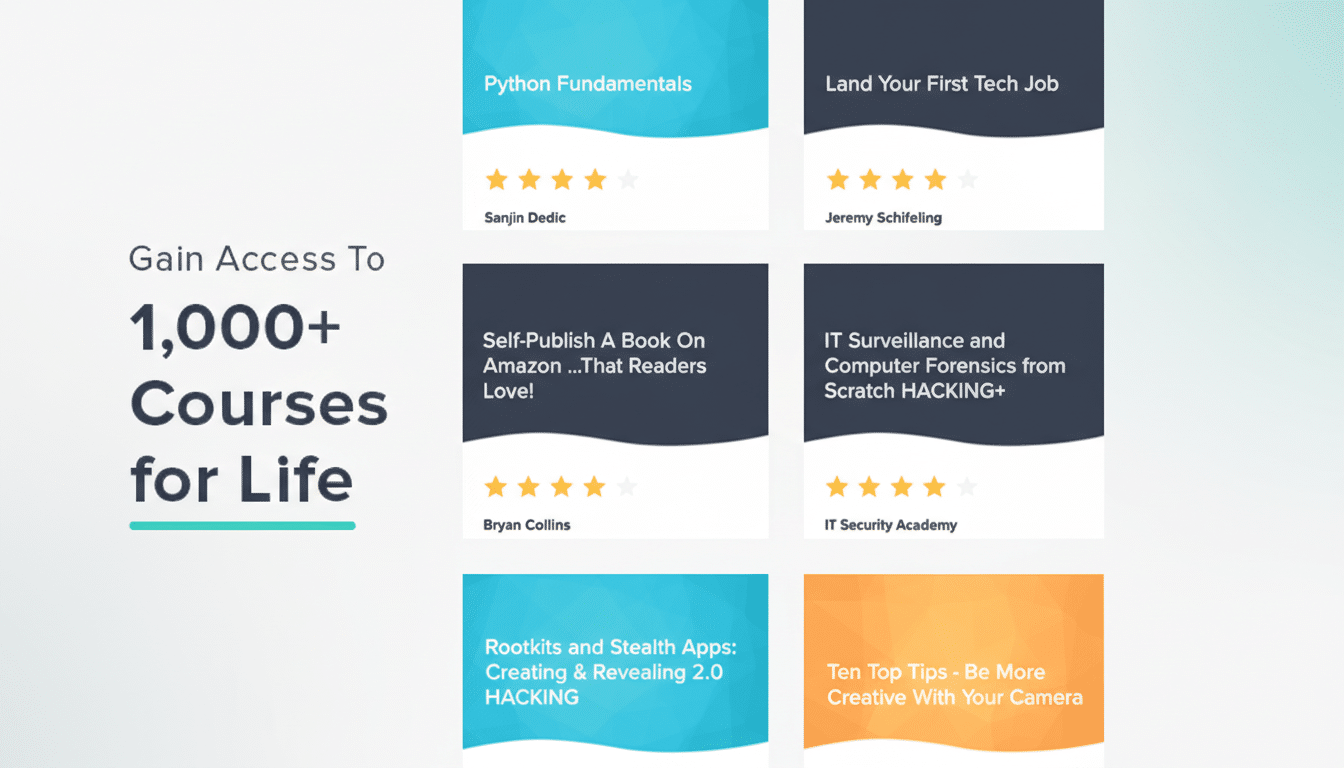
EDU Unlimited aggregates 1,000+ on-demand courses taught by subject-matter practitioners, with new titles added weekly. While the catalog evolves, the anchor categories align to high-demand skills: data analysis and Excel, Python and web development, SEO and performance marketing, branding and UI/UX, plus business operations, finance fundamentals, and soft skills such as communication and leadership.
It’s designed for flexible, incremental progress. Learners can stack shorter modules around busy schedules, track completion across multiple courses, and revisit content at any time—useful when tools update or you return to a topic months later.
Certificates of completion won’t replace accredited degrees, but they do help signal ability—especially when paired with portfolio artifacts like dashboards, code repos, ads managers, or case studies built during the course.
Why Lifetime Access to Skills Training Matters Now
Workplace skill half-lives are shrinking. The World Economic Forum’s most recent Future of Jobs analysis estimates that 44% of workers’ core skills will be disrupted, and about 60% of employees will need training within a few years. In parallel, HolonIQ forecasts the global edtech market to surpass $400B mid-decade, reflecting a structural shift toward continuous learning.
A lifetime model aligns with that reality. You don’t need to predict whether you’ll need Python for data cleaning next quarter or a crash course in GA4 attribution later this year. You simply dip back into the library when the job—or a new idea—demands it.
How the Value Compares with Other Learning Platforms
Many premium platforms bill monthly or yearly. LinkedIn Learning typically ranges from about $20–$40 a month. Coursera Plus and similar all-access passes often run hundreds per year. Even pay-per-course marketplaces can cost $10–$200 per class, which adds up if you sample widely.
Against that backdrop, $19.97 for permanent access is unusually aggressive pricing. It won’t replace accredited programs or instructor-led cohorts, but as a generalist library for self-starters, the cost-per-course is effectively negligible.
Who Benefits Most from EDU Unlimited’s Lifetime Pass
Career switchers who need to test multiple paths—say, moving from sales to analytics—can explore data fundamentals, SQL, and visualization without budget friction. Small business owners and freelancers can deepen marketing, finance, and branding skills as needs arise. Lifelong learners get a sandbox for hobbies that may later become side income.
Employers with lean training budgets may also see value in low-cost libraries employees can use to refresh basics between larger, strategic upskilling pushes.
Caveats and Quality Signals to Evaluate Course Picks
As with any broad catalog, instructor quality varies. Look for courses with practical projects, up-to-date tool coverage, and clearly defined learning outcomes. Check whether a course includes datasets, templates, or code examples—artifacts you can reuse at work.
“Lifetime” usually refers to the lifetime of the product or platform, not an individual’s lifespan. The provider has a track record in online education, but it’s smart to treat any lifetime claim as subject to the longevity of the service.
How to Maximize the Pass for Real-World Skill Gains
Set a specific, time-bound goal—such as building a dashboard or launching a landing page—and reverse-engineer your course sequence. Apply the 70-20-10 learning approach: 70% doing, 20% feedback, 10% coursework. That means shipping small real projects, seeking critique from a peer or mentor, and using lessons to close precise gaps.
Track outcomes, not just completions: Did your Excel model reduce a reporting cycle? Did your ad test lift CTR? Employers and clients value proof of impact over certificates alone.
Bottom Line on EDU Unlimited’s $19.97 Lifetime Access
At $19.97, EDU Unlimited’s lifetime pass is a low-risk, high-optionality buy for anyone who learns in bursts or juggles multiple skill tracks. It won’t replace accredited coursework, but it is a cost-effective foundation for continuous, practical upskilling—with the freedom to explore what’s curious today and commit deeper tomorrow.