


In a rare real-world referendum on AI in search, DuckDuckGo asked its users whether they wanted generative features in their results—and the verdict wasn’t close. Out of 175,354 votes cast, over 90% chose to keep search AI-free, a stark rebuke to the industry’s “AI-everywhere” push.
The privacy-focused engine ran the experiment by offering two live experiences: a traditional results page and an AI-enhanced version. Users could also fine-tune settings, toggling features such as AI summaries, image generation, and Duck.ai chat on or off. The clear outcome signals that at least one sizable community of searchers prefers transparency, speed, and links over synthesized answers.
How DuckDuckGo Ran Its Side-by-Side AI Search Test
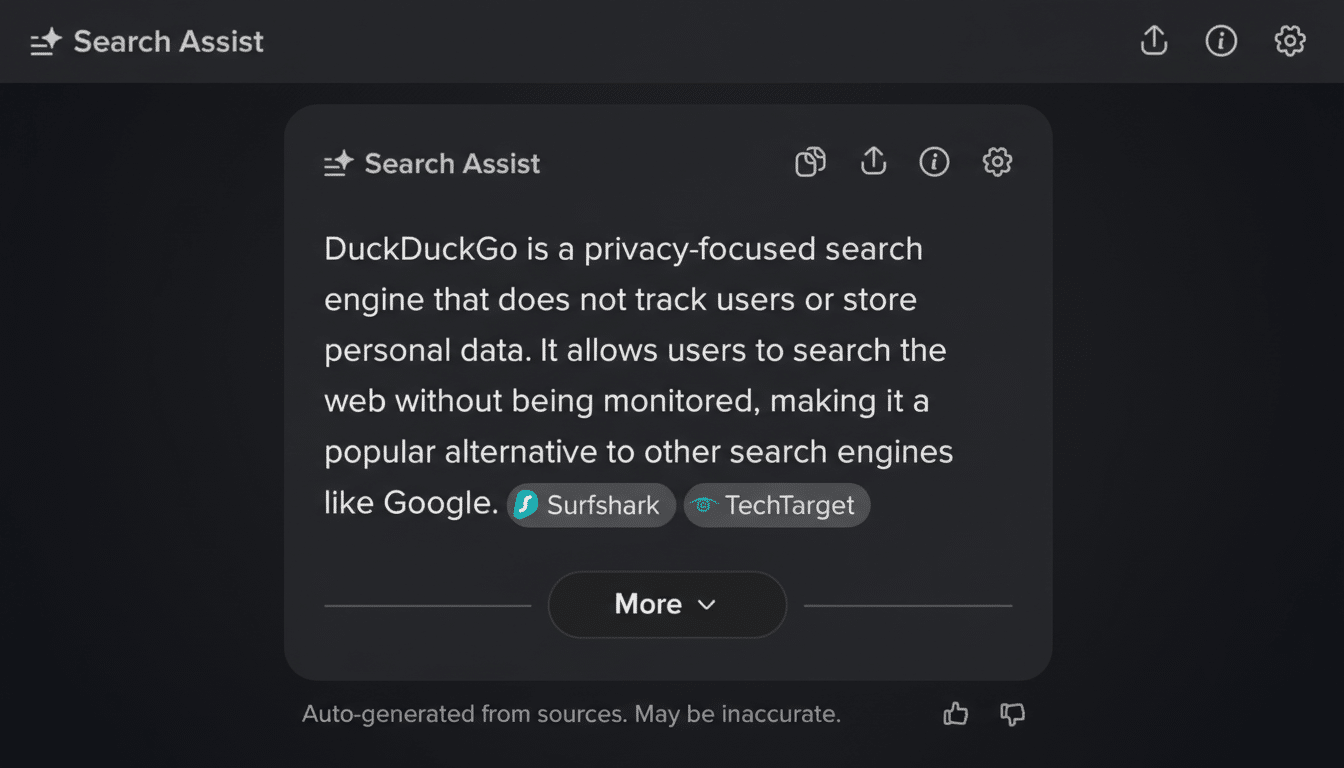
DuckDuckGo set up parallel paths—one “yes to AI” and one “no to AI”—and let people decide with their clicks. The AI track included Search Assist, which produces summaries at the top of results, optional AI-generated images, and access to Duck.ai, a chat interface that routes questions to large language models. The non-AI option preserved a classic list of links without generative overlays.
Importantly, users weren’t locked into a binary choice. They could mix and match controls in settings, dialing AI up for exploratory tasks and turning it off for everything else. Despite that flexibility, the overwhelming majority opted out entirely—suggesting dissatisfaction with AI in the core search workflow, not just with specific features.
Why Users Pushed Back Against AI in Search Results
Trust and control dominate the conversation. Generative systems can hallucinate facts, conflate sources, and obscure where answers come from. That’s a problem for search, which historically earned credibility by exposing sources and letting users judge them. When an AI overview becomes the first stop, the provenance of information can disappear behind a confident paragraph.
The broader market context hasn’t helped. Google’s AI Overviews have drawn scrutiny for occasional errors and for being difficult to fully disable, while Microsoft’s Bing has pushed Copilot chat into the main search experience. Research from the Reuters Institute has found many news consumers still prefer clear links and recognizable brands, and Pew Research Center has repeatedly reported that Americans are more concerned than excited about AI—particularly in information-centric tasks. DuckDuckGo’s results echo that sentiment with hard numbers.
The UX And Speed Problem With Generative Search Summaries
Even when generative answers are directionally right, they can slow people down. Summaries add latency and sometimes bury the link you actually need. Usability work from Nielsen Norman Group has documented that users value scannable results and transparent citations; if the system can’t show its work, confidence drops. Academic studies on large language models have also recorded nontrivial hallucination rates, underscoring why many searchers want sources first, synthesis second.
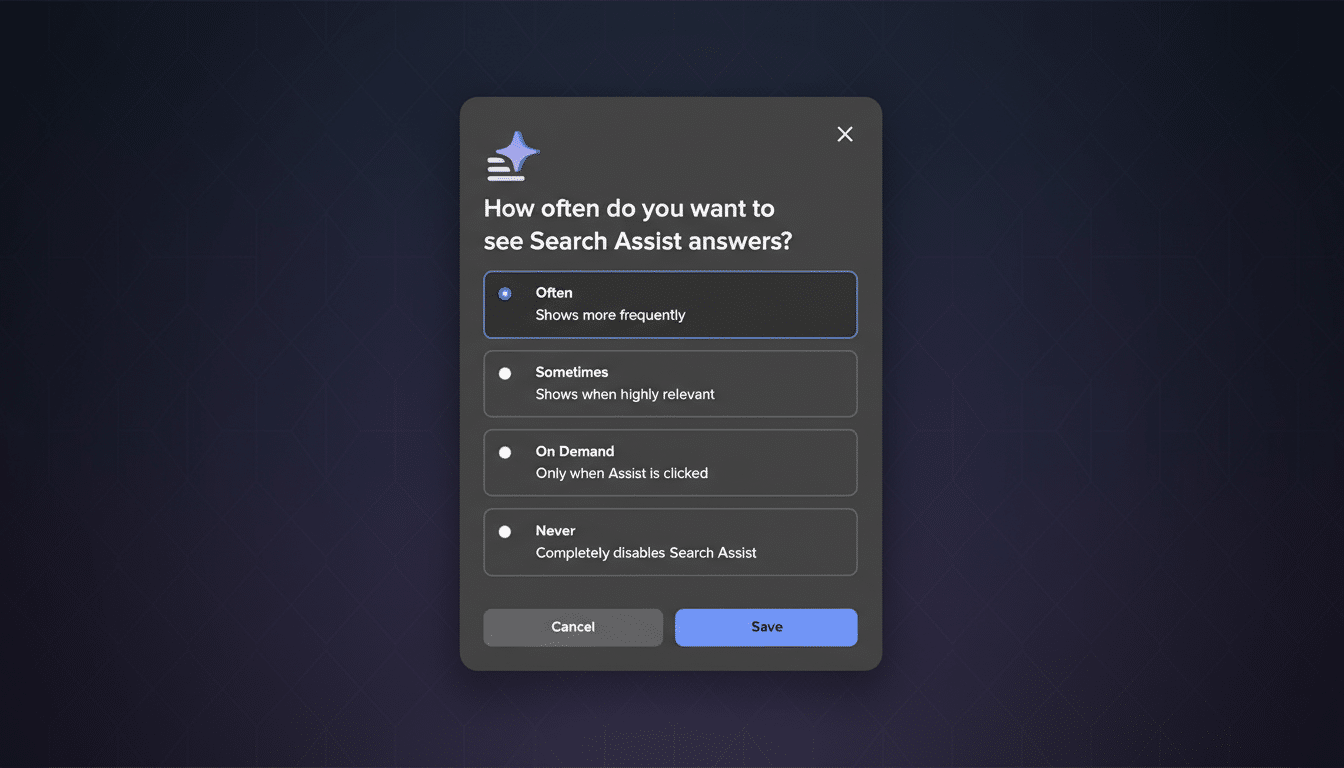
By making AI optional, DuckDuckGo aligns with how people naturally search: they skim, open multiple tabs, and triangulate. A summary can be useful for orientation, but only when it’s clearly labeled, fast, and easily dismissible—and when links remain the star of the page.
A Niche Audience Sends A Clear Signal On AI In Search
DuckDuckGo’s user base skews privacy-conscious and technically savvy, so it isn’t a perfect proxy for the entire web. Still, a 90% opt-out on a six-figure sample is hard to wave away. It suggests pent-up demand for choice at a time when many products make AI the default. On rival platforms, people resort to browser extensions to hide AI summaries; DuckDuckGo’s approach gives them an explicit switch.
That matters for publishers, too. If generative answers keep users on the results page, fewer clicks flow to original reporting and reference sites. A visible preference for link-first layouts could influence how search engines balance summaries with traffic to sources, especially as licensing and fair-use debates intensify.
What It Means For Search Strategy And User Trust
The takeaway isn’t that AI has no place in search—it’s that it needs to be accountable to users. Clear on/off controls, prominent citations, and conservative defaults for sensitive queries would go a long way. Faster rendering and concise, opt-in summaries could help, as would model guardrails tuned for accuracy over creativity in search contexts.
DuckDuckGo’s vote is a reminder that the simplest feature can be the most powerful: a button that lets people say “not now.” As the biggest players race ahead with AI, a meaningful slice of searchers is asking for something older—and, to them, better: direct answers from the open web, one link at a time.