


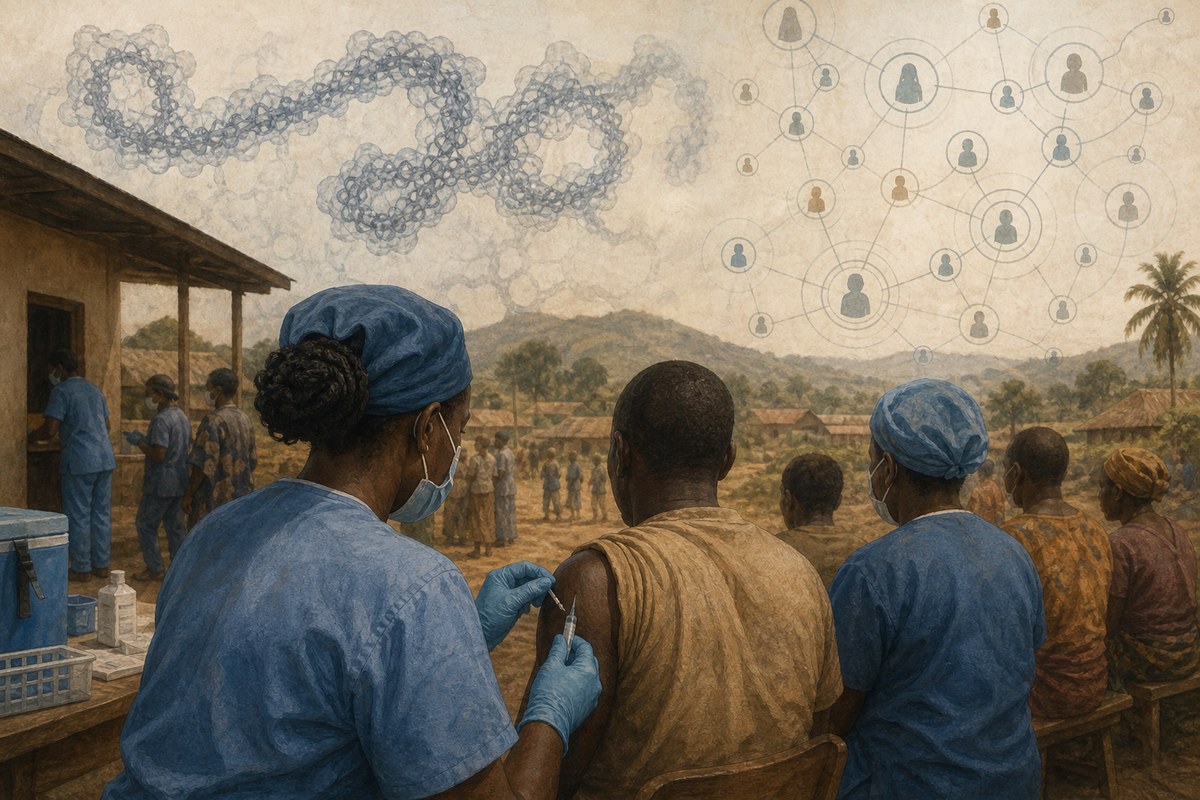
Health authorities in the Democratic Republic of the Congo have begun administering the Ebola vaccine Ervebo to health workers in Bunia and Mongbwalu, two health zones in Ituri province affected by an expanding outbreak of Bundibugyo virus disease. The rollout, reported Sept. 19 by the Associated Press, extends an earlier vaccination effort in Tshopo province and is intended to reach people whose work may bring them into contact with patients or infectious materials.
The campaign is taking place with an important scientific limitation: Ervebo is licensed for Ebola disease caused by Zaire ebolavirus, not the Bundibugyo virus causing this outbreak. Laboratory, animal and observational findings raise the possibility of some cross-protection, but the World Health Organization says they do not establish clinically meaningful protection against Bundibugyo virus in people. AP reported that health authorities are using Ervebo through compassionate use while its potential cross-protection is studied.
A rollout alongside a planned efficacy study
The vaccine supply is substantial, but the announced figures describe different parts of the response. In August, the WHO and Africa Centres for Disease Control and Prevention said the International Coordinating Group on Vaccine Provision had allocated 70,000 Ervebo doses to the DRC. Of those, 20,000 doses were designated for a Phase 3 clinical trial and 50,000 for frontline and health workers.
Those dose totals should not be read as enrollment totals or as a count of workers vaccinated. A dose allocation is an inventory decision; a trial requires its own rules on who can participate, how outcomes will be measured and how groups will be compared. AP reported that authorities expect the campaign in Ituri and North Kivu to cover 20,000 frontline workers over six to nine months. That is a target for people across a defined operational campaign, not the same measure as the 50,000 doses allocated nationally for frontline and health workers.
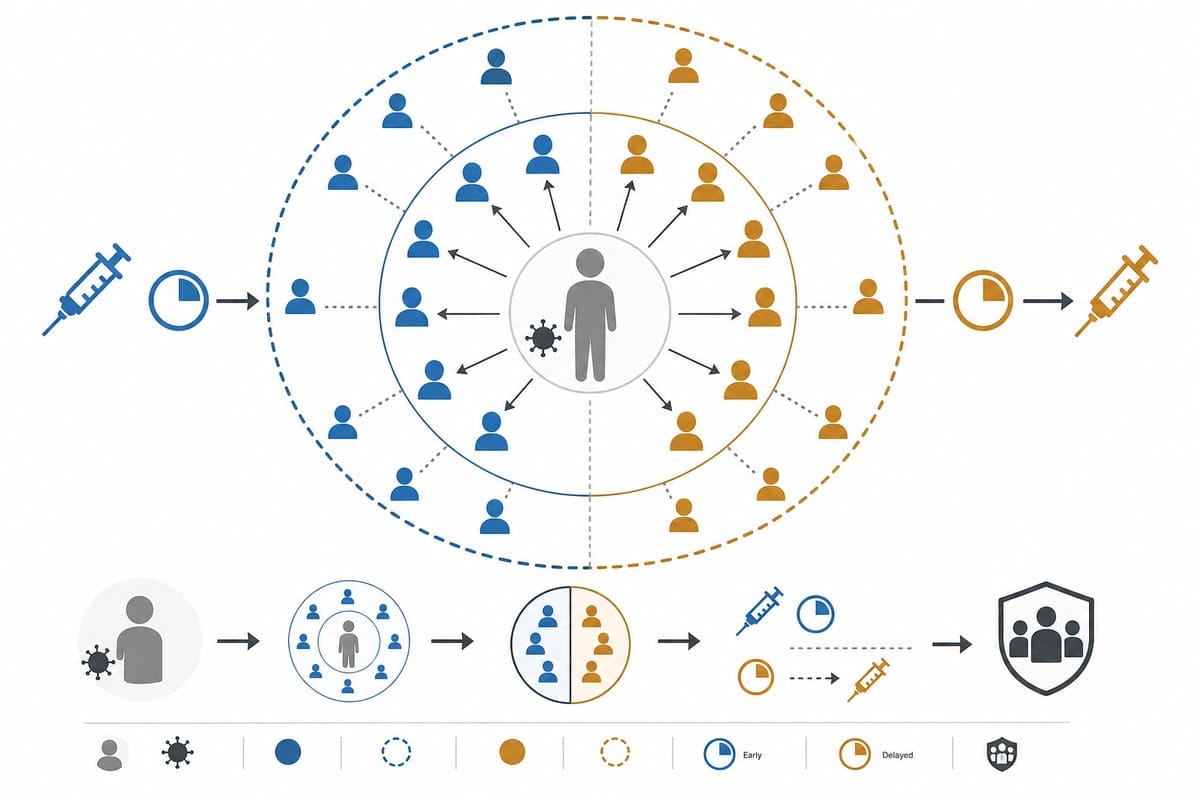
WHO’s emergency guidance, published Sept. 1, recommends that Ervebo be used in this outbreak only within research protocols and calls for a ring randomized controlled trial. In that approach, investigators identify contacts of a confirmed case and contacts of those contacts, forming a “ring” around a possible chain of transmission. Eligible rings can then be assigned different vaccination timing or strategies, allowing researchers to estimate whether vaccination changes the risk of disease while vaccination is offered amid an emergency response.
The available reports do not specify the trial’s enrollment target, endpoints, eligibility criteria, randomization procedures or results. They also do not explain how the reported compassionate-use vaccination operation is being governed under WHO’s updated recommendation for research-protocol use. That unresolved operational detail does not establish that the vaccination is outside a protocol; it means the public accounts do not describe the connection.
Why the strain matters
Bundibugyo virus is one of several viruses that can cause Ebola disease. It is biologically distinct from Zaire ebolavirus, the virus against which Ervebo was developed and licensed. The vaccine cannot therefore be described as a proven Bundibugyo vaccine.
According to WHO’s emergency guidance, the evidence supporting possible cross-protection includes animal studies, immune-response findings and observational information. Each can be useful in deciding whether a vaccine merits study in an outbreak, particularly when there is no strain-specific licensed option. None can substitute for evidence that vaccinated people have a lower risk of Bundibugyo virus disease than comparable unvaccinated people.
Reports of less severe illness in some previously vaccinated health workers are also not enough to show that the vaccine reduced severity. Such observations can be influenced by differences in exposure, access to care, timing of diagnosis and other factors. A properly designed trial is intended to separate those influences from a vaccine effect.
There is no licensed vaccine or specific treatment for Bundibugyo virus disease. The U.S. Centers for Disease Control and Prevention has said no FDA-licensed or authorized vaccine protects against Bundibugyo virus infection, while the European Centre for Disease Prevention and Control likewise notes the absence of a licensed vaccine or specific treatment for this disease.
Vaccination is only one part of outbreak control
Bundibugyo virus disease spreads through direct contact with the blood or other bodily fluids of an infected person or animal, including contact with contaminated materials. It is not airborne. That means rapid identification and isolation of patients, protection for clinical staff, tracing and monitoring contacts, safe burials and community engagement remain core measures regardless of whether Ervebo ultimately demonstrates cross-protection.
DRC government figures cited by AP listed 7,541 confirmed cases, 3,639 deaths and 1,823 recoveries as of Sept. 19. Such counts can change as surveillance expands and cases are investigated, but they illustrate the scale of the emergency in which health officials are weighing a vaccine with suggestive, rather than definitive, evidence for the circulating virus.
The decision to vaccinate workers reflects their heightened potential exposure and the lack of a Bundibugyo-specific licensed alternative. It is not a finding that Ervebo works against the outbreak strain. No licensed vaccine is available for Bundibugyo virus disease, and whether Ervebo protects against it remains unproven.