


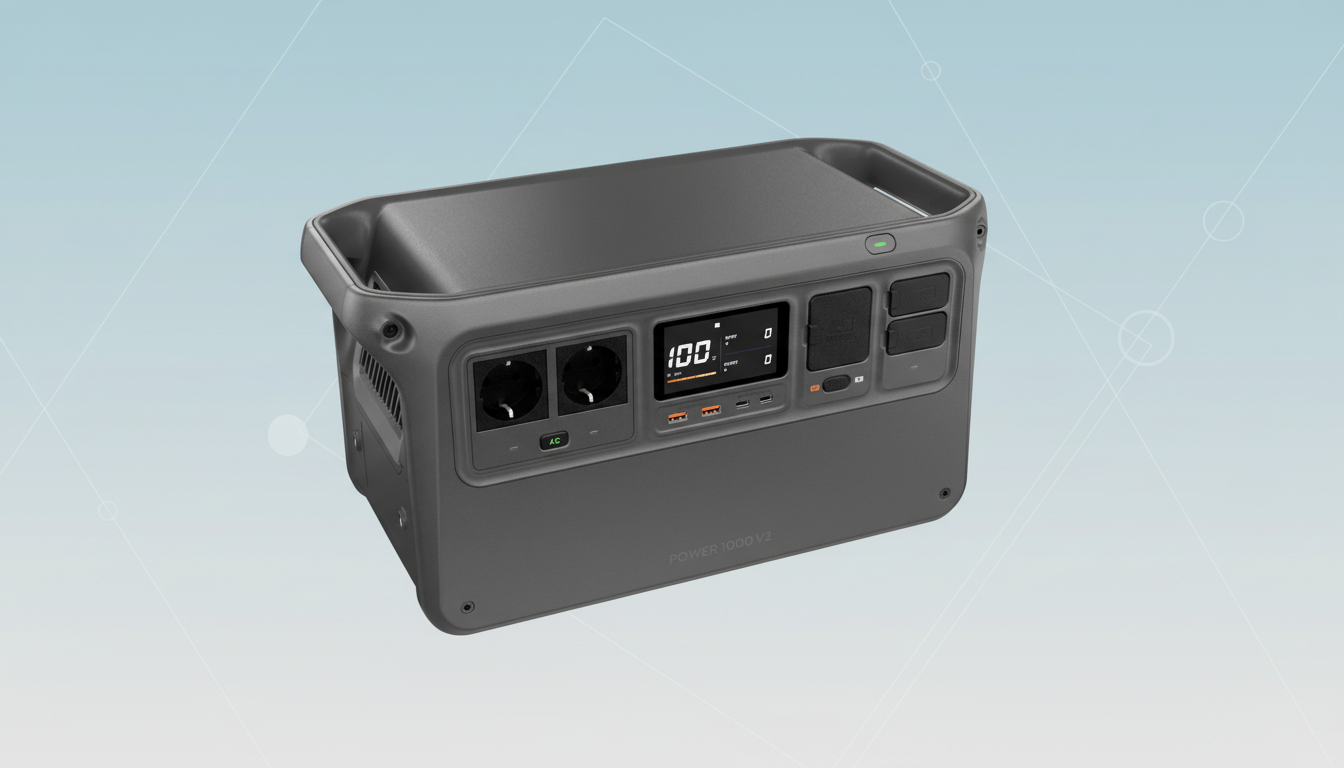
A standout portable power deal just dropped: the DJI Power 1000 V2 is now $429, down from $699, a 39% discount that pushes a premium 1,024Wh station into budget territory. For creators, campers, and home backup planners, this is one of the best price-to-capacity values currently available from a major brand.
Why This 39% Discount Stands Out From Rivals
Price-per-Wh is the clearest way to judge value in this category. At $429 for 1,024Wh, the Power 1000 V2 lands around $0.42 per Wh. Comparable 1kWh-class models from rivals typically hover between $0.60 and $1.00 per Wh at standard pricing, meaning this deal undercuts mainstream averages by a wide margin while keeping the build quality and support you expect from a top-tier manufacturer.
It’s also a compelling hedge against outages. The U.S. Energy Information Administration reports the average American experienced about 5.5 hours of power interruptions in 2022, underscoring why compact, fast-recharging stations have become essential kit for households and freelancers alike.
Fast Recharge And Quiet Operation For Daily Use
Speed is the V2’s calling card. Plugged into a wall outlet, it jumps to 80% in about 37 minutes and reaches a full charge in roughly 56 minutes. That quick turnaround is a difference-maker on production days when you have a narrow window to top up before the next shoot or when you need a rapid reset during a storm-related outage.
Noise, or the lack of it, is just as important. Operating as low as 26 decibels, the Power 1000 V2 is quiet enough to sit near a set, desk, or bedside without spoiling audio or sleep. If you’ve ever tried to record voiceover next to a drone charger or run a CPAP from a loud inverter, you’ll appreciate the near-whisper cooling profile here.
Ports And Creator-Friendly Perks For DJI Users
DJI built the V2 with creators in mind. Dual SDC ports can fast charge compatible DJI drone batteries directly, eliminating a tangle of power bricks and cutting downtime between flights. You’ll also find multiple AC outlets for lights and monitors plus USB ports ready for laptops, cameras, and storage hubs—enough flexibility to anchor a mobile editing bay or on-location charging station.
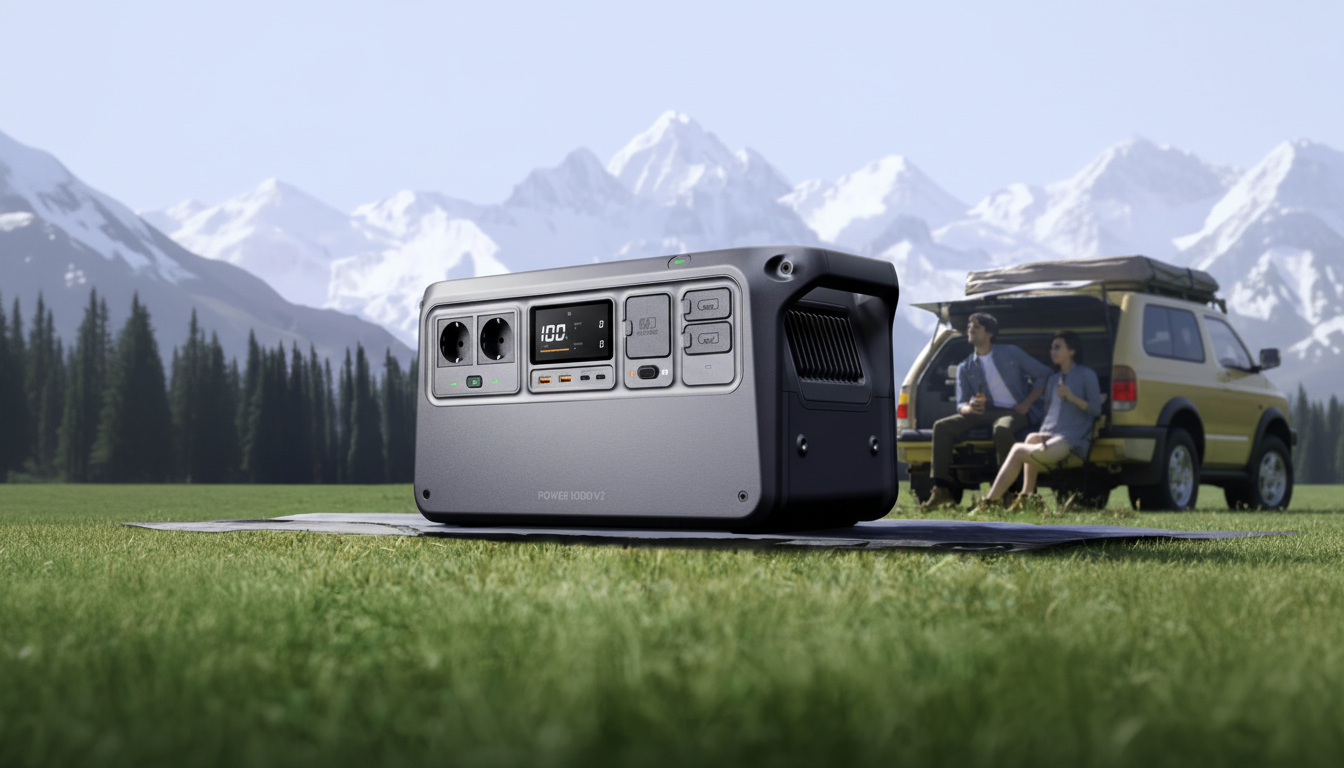
Despite its 1kWh class, the unit remains reasonably portable at about 31 pounds, with a sturdy frame and handle that make it feasible to shuttle between the car, studio, and campsite without feeling like you’re moving a lead-acid relic.
How Much 1,024Wh Really Powers In Real Life
Accounting for typical inverter and conversion losses, you can expect roughly 900Wh of usable energy in real-world scenarios. That translates to around 15 hours for a 60W laptop, 20 hours for a 40W CPAP, or a full workday running a small set of LED panels and a camera charger. For phones, figure roughly 30 to 45 full charges depending on battery size and charging speed. Drone pilots can expect several battery cycles per flying kit, aided by the SDC ports’ faster turnaround.
In home-backup mode, a compact fridge or router-plus-modem load can ride out an evening outage, and essential work-from-home gear can stay online through peak disruption windows.
Expandable For Multi-Day Power With Add-On Batteries
If your needs grow, the Power 1000 V2 supports up to five DJI Expansion Battery 2000 units. Each adds 2,048Wh, allowing you to scale far beyond the base capacity for road trips, off-grid shoots, or extended blackouts. At maximum expansion, you’re looking at a system capable of multi-day runtime for light to moderate loads—without moving to a gas generator.
Who Should Buy It Now And Who Should Wait
Content creators who fly DJI drones will get the most immediate benefit from the SDC ecosystem and fast top-ups, but the deal is just as compelling for homeowners seeking compact backup, van-lifers balancing weight and capacity, and contractors who want silent, emission-free power on-site.
Compared with similarly sized models from established brands that often list between $599 and $1,099 depending on features and bundles, this 39% drop turns the Power 1000 V2 into a category value pick without obvious compromises. The only caveat is portability expectations: at around 31 pounds, it’s grab-and-go, not hike-and-haul—and like any 1kWh station, it’s best suited to electronics, tools, and appliances under sustained moderate loads rather than energy-hungry heaters.
Bottom line: If you’ve been waiting for a high-capacity, creator-ready power station to fall below the $0.50-per-Wh threshold, this is the moment. The DJI Power 1000 V2 at $429 is an easy recommendation while the promotion lasts.