


In a world saturated with content, capturing audience attention at live events has become one of the greatest challenges facing marketers and event planners. Traditional banners, static posters, and heavy signage structures no longer cut through the noise — they blend into the background. The industry has responded with a decisive shift toward dynamic digital billboards that deliver vibrant, moving visuals capable of stopping people in their tracks. What makes today’s options particularly exciting is a new generation of lightweight, portable digital billboards now available for purchase that are fundamentally changing how events communicate with attendees. These displays offer event planners the dual advantage of high audience engagement and remarkable ease of use, eliminating the logistical headaches that once accompanied large-format digital signage. Whether you’re managing trade shows, outdoor festivals, or corporate gatherings, the combination of portability and visual impact creates opportunities that static signage simply cannot match. In the sections ahead, we’ll explore the technology driving these displays, walk through practical installation guidance, and examine cost-effective paths to making digital billboards a permanent part of your event toolkit.
Why Lightweight Design is a Game-Changer for Event Planners
Event planners operate under relentless time pressure. Venues often grant limited load-in windows, sometimes just a few hours to transform an empty space into a fully branded environment. Traditional LED displays, often weighing hundreds of pounds per panel and requiring structural reinforcement, created bottlenecks that consumed budgets and manpower. The shift toward lightweight digital billboards has fundamentally altered this equation. Modern portable displays leverage aerospace-grade aluminum alloys and, in premium models, carbon fiber composite frames that slash weight by 40 to 60 percent compared to conventional steel-housed panels. This reduction isn’t merely a convenience — it’s a strategic advantage. Fewer crew members are needed on-site, which directly lowers labor costs per event. Setup and teardown times shrink from hours to minutes, freeing teams to focus on content calibration and audience experience rather than wrestling with hardware. Lighter units also expand venue possibilities dramatically; planners can deploy displays in upper-floor ballrooms, rooftop terraces, or temporary structures that couldn’t support heavier equipment without costly engineering assessments. When evaluating digital billboards for sale, “lightweight install” should rank among your top purchasing criteria, right alongside resolution and brightness. A display that delivers stunning visuals but demands a crane and a five-person crew ultimately undermines the agility that modern event marketing requires.
Key Features of Portable Digital Billboards
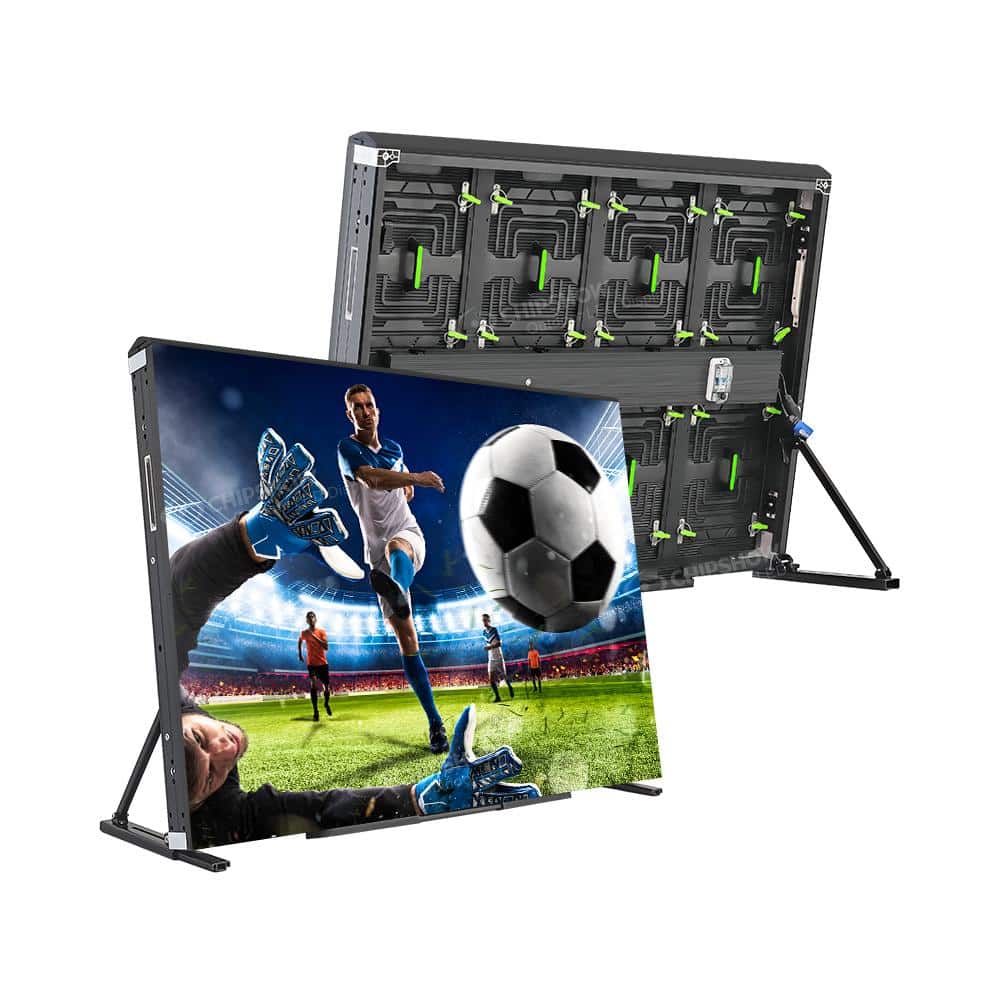
The most practical portable digital billboards share a set of features designed specifically for mobile deployment. Modular panel architecture allows you to scale your display size by connecting additional tiles, adapting to different stage dimensions or booth configurations without purchasing entirely new hardware. Integrated carrying cases with wheeled flight-case designs protect panels during transport while eliminating the need for custom crating. Quick-connect mechanisms — magnetic locks or tool-free latching systems — let individual panels snap together seamlessly, reducing assembly to an intuitive process that doesn’t require specialized technicians. Built-in redundant power supplies ensure that a single cable failure won’t black out your entire display mid-presentation. Many units now include onboard media players, removing the need for external laptops or content servers. Together, these features address the event planner’s core demand: get the display operational quickly, keep it running reliably, and pack it up without drama when the event ends.
Step-by-Step: Planning Your Display Installation
A smooth installation starts well before you arrive on-site. Begin with a thorough site assessment: measure available floor or wall space, confirm power outlet locations and amperage capacity, identify ambient light sources that could affect visibility, and verify load-bearing limits if mounting overhead. Map out your cable routing to avoid trip hazards in high-traffic zones. On event day, unpack panels systematically, inspecting each tile for transit damage before assembly. Connect panels according to the manufacturer’s numbered sequence, ensuring magnetic or mechanical locks engage fully at every joint. Once the display wall is physically assembled, run power cables to a dedicated circuit — avoid sharing lines with audio equipment to prevent electrical interference. Connect your signal source, whether HDMI, fiber, or wireless transmitter, and power on the system. Upload your content playlist through the onboard media player or CMS software, then run a full test cycle checking for dead pixels, color uniformity, and audio sync if applicable. Finally, complete safety and weatherproofing checks: secure all ballast weights on freestanding units, confirm IP-rated gaskets are sealed if outdoors, and verify emergency shutdown procedures with your on-site team.
Understanding LED Display Technology for Outdoor Events
Modern LED display technology has evolved specifically to meet the demands of outdoor environments where sunlight, weather, and viewing distance present unique challenges. At its core, an LED billboard consists of thousands of individual light-emitting diodes grouped into pixels, and the distance between the center of each pixel — known as pixel pitch — determines both image clarity and optimal viewing distance. A smaller pixel pitch (such as P2.5 or P3.9) delivers sharper images for close-up viewing at trade show booths, while larger pitches (P6 to P10) work better for outdoor festivals where audiences stand twenty meters or more from the screen. Brightness, measured in nits, is perhaps the most critical specification for outdoor deployment. Indoor displays typically operate between 800 and 1,500 nits, but outdoor events demand 5,000 to 8,000 nits or higher to remain legible under direct sunlight — this is what separates a display that commands attention from one that washes out by midday. Weather resistance is quantified through IP ratings; an IP65-rated panel offers complete dust protection and can withstand water jets from any direction, making it suitable for open-air concerts and sporting events where sudden rain is a realistic scenario. Beyond these metrics, the panel construction type matters significantly for portable applications. Surface-mounted diode (SMD) technology remains the industry standard for rental and touring displays, offering excellent color reproduction and wide viewing angles in a relatively thin package. Chip-on-board (COB) technology represents the next frontier, encapsulating LEDs directly onto the circuit board under a protective resin layer, which dramatically improves impact resistance — a meaningful advantage when panels are repeatedly loaded into trucks and assembled on-site. Manufacturers like Chipshow have been advancing both SMD and COB panel designs specifically for the rental and touring market, emphasizing durability alongside lightweight construction. For event planners seeking high visibility options for outdoor events, the intersection of sufficient brightness, appropriate pixel pitch for your typical audience distance, and robust weatherproofing defines the ideal purchase. Choosing a panel type designed for frequent transport ensures your investment survives the rigors of a busy event calendar rather than degrading after a handful of deployments.
Ensuring High Visibility in Any Setting
Achieving consistent visibility across varying conditions requires more than raw brightness. Anti-glare surface treatments applied to LED modules reduce specular reflection, preventing the washed-out appearance that plagues glossy screens under stage lighting or afternoon sun. Wide viewing angles — ideally 160 degrees horizontal and 140 degrees vertical — ensure that attendees approaching from the sides or viewing from elevated positions still see accurate colors and readable text rather than a dimmed, color-shifted image. Adaptive brightness controls, often driven by ambient light sensors mounted on the display frame, automatically adjust output throughout the day: ramping up to full power during peak sunlight hours and dimming during evening sessions to avoid blinding nearby audiences while conserving energy. When selecting your display, match brightness to your most challenging scenario. If your events are predominantly daytime outdoor festivals, prioritize panels rated above 6,000 nits. For covered exhibition halls with controlled lighting, 3,000 to 4,000 nits provides ample punch without excessive power draw. This targeted approach prevents overspending on brightness capacity you’ll rarely use while guaranteeing your content remains the focal point regardless of setting.
Making a Cost-Effective Upgrade to Digital Signage
Transitioning from static signage to digital billboards represents a significant capital decision, but the financial case becomes compelling when you examine total cost of ownership rather than sticker price alone. Event businesses that rely on printed banners and vinyl graphics face recurring production costs — every new client, theme change, or branding update requires fresh materials, design fees, and disposal of outdated inventory. A digital billboard eliminates this cycle entirely. Once purchased, content updates cost nothing beyond the creative time invested, and a single display can serve dozens of different clients and events throughout its lifespan. When comparing outright purchase against long-term rental, the breakeven point typically arrives faster than most planners expect. If your business runs more than eight to ten events annually that would benefit from large-format digital displays, ownership almost always delivers better value within eighteen to twenty-four months compared to repeated rental fees that include delivery, setup surcharges, and damage deposits. The ROI extends beyond simple cost avoidance. Digital billboards generate direct revenue opportunities that static signage cannot. You can sell rotating advertising slots to event sponsors, displaying multiple brands on a single screen throughout the day rather than dedicating physical space to each sponsor’s banner. Dynamic content also commands higher sponsorship premiums — brands willingly pay more for animated, attention-grabbing placements than for a logo on a static backdrop. Versatility compounds this return; the same display that serves as a stage backdrop at a music festival becomes a wayfinding tool at a conference and a product showcase at a trade exhibition. For businesses entering this space, scalable modular systems offer the smartest entry point. Start with a configuration that covers your most common event size, then add panels as revenue grows. This approach spreads capital expenditure across budget cycles while delivering immediate operational benefits from day one.
Budgeting and Financing Solutions for Event Businesses
Three primary acquisition paths exist for event businesses evaluating digital billboard purchases. Outright purchase delivers the lowest long-term cost and full asset ownership, making it ideal for established companies with strong cash reserves and predictable event calendars. Leasing arrangements spread payments across two to five years while often including maintenance coverage and technology refresh options at lease end — a practical choice for growing businesses that want to preserve working capital. Equipment financing through specialized AV lenders offers a middle ground, providing ownership at term completion with monthly payments structured around your revenue cycle. When evaluating which path fits, calculate your projected utilization rate honestly. Divide the annual payment by the number of events where the display will generate revenue or save rental costs; if the per-event cost falls below what you’d pay a rental house, the investment justifies itself. Factor in client billing potential as well — many event companies add digital signage as a line item, recovering a portion of their investment on every project. Whichever financing route you choose, negotiate warranty terms that cover at least three years of panel replacement and include loaner units during repairs to protect your event commitments.
Integrating Your Billboard into a Broader Digital Signage Strategy
A portable digital billboard delivers its greatest value not as an isolated piece of hardware but as a node within a comprehensive digital signage ecosystem. When connected to a cloud-based content management system, your billboard transforms from a standalone screen into a remotely controllable communication channel. Modern CMS platforms allow you to schedule content days or weeks in advance, push real-time updates from any device, and manage multiple displays across different venues simultaneously — all without touching the physical hardware. This capability proves invaluable for event companies managing concurrent activations in different cities, where sending a technician to each location for every content change would be impractical and expensive.
The strategic depth increases when you integrate dynamic content sources directly into your display workflow. Live social media feeds pull attendee posts onto the screen in real time, creating a participatory loop that encourages more audience interaction. Live video streams from keynote stages or performance areas can be routed to billboards positioned in overflow zones, extending the event experience beyond the main venue footprint. Interactive elements — QR codes triggering polls, countdown timers synced to session schedules, or gamified leaderboards — transform passive viewers into active participants. For event planners, this integration creates immersive attendee experiences that justify premium ticket pricing and attract higher-caliber sponsors. The billboard becomes less of a sign and more of an engagement platform, one that adapts fluidly to each event’s unique narrative arc from opening registration through closing remarks.
Content Best Practices for Maximum Engagement
Effective billboard content respects the viewing context. Keep video loops between fifteen and thirty seconds for high-traffic areas where dwell time is short, extending to sixty seconds only in seated environments like conference halls. Use sans-serif fonts at a minimum height of one-tenth the screen’s total height to ensure readability from your expected viewing distance. Bold, high-contrast visuals outperform subtle gradients on LED panels — saturated colors and clean motion graphics hold attention far more effectively than dense text blocks. Tailor messaging to event phases: during arrival, prioritize wayfinding and schedule highlights; mid-event, shift to sponsor rotations and social media walls; during closing, feature calls to action and post-event engagement prompts. This context-aware approach ensures your content feels relevant rather than repetitive, maintaining audience interest throughout the entire event duration.
Investing in Portable Digital Billboards for Event Success
Lightweight, portable digital billboards represent a fundamental shift in how event professionals communicate with audiences. The combination of aerospace-grade materials, modular construction, and high-brightness LED technology solves the longstanding tension between visual impact and logistical practicality. Event planners no longer face the choice between a compelling display and a manageable setup process — today’s portable billboards deliver both simultaneously. The easy installation workflows enabled by quick-connect panels and integrated media players mean smaller crews, shorter load-in windows, and more time devoted to crafting memorable attendee experiences. For outdoor deployments, advances in brightness, weatherproofing, and adaptive display controls ensure your content remains visible and vibrant regardless of environmental conditions. Financially, ownership of a scalable modular system eliminates recurring rental costs while opening revenue streams through sponsor rotations and premium advertising placements. As audiences continue to expect richer, more interactive visual experiences at every gathering, dynamic digital displays are transitioning from competitive advantage to baseline expectation. The event businesses that invest now position themselves ahead of this curve. Assess your typical event scale, venue requirements, and content ambitions, then explore the digital billboards for sale from established LED manufacturers like Chipshow that match your operational reality — the right system will pay for itself faster than you anticipate.