


Digg, once the web’s original link-voting juggernaut, is back in public beta under its founding architect Kevin Rose—with Reddit co-founder Alexis Ohanian in the mix—and it’s aiming squarely at the community-driven arena that Reddit dominates.
The relaunch opens a fresh chapter for a brand that helped popularize the upvote long before Reddit took the mantle of the internet’s “front page.” This time, the pitch is familiar yet timely: user-led communities, transparent governance, and guardrails to keep spam and AI manipulation out.
- A Founder Duo With Platform DNA Leads Digg’s Comeback
- Trust and Anti-Bot Design From Day One Guides Digg Beta
- Features Launch Lean With Weekly Iteration
- The Reddit-Sized Mountain Facing Any New Community Platform
- Learning From the 2010 Fallout to Avoid Repeating Past Mistakes
- How to Try the New Digg Public Beta and Shape Its Direction
A Founder Duo With Platform DNA Leads Digg’s Comeback
Rose is returning to the product that defined an era of social news, joined by Ohanian, who left Reddit in 2020. The pairing blends early social aggregation instincts with lessons from the last decade of community platforms—a sign the new Digg wants to move fast without repeating old mistakes.
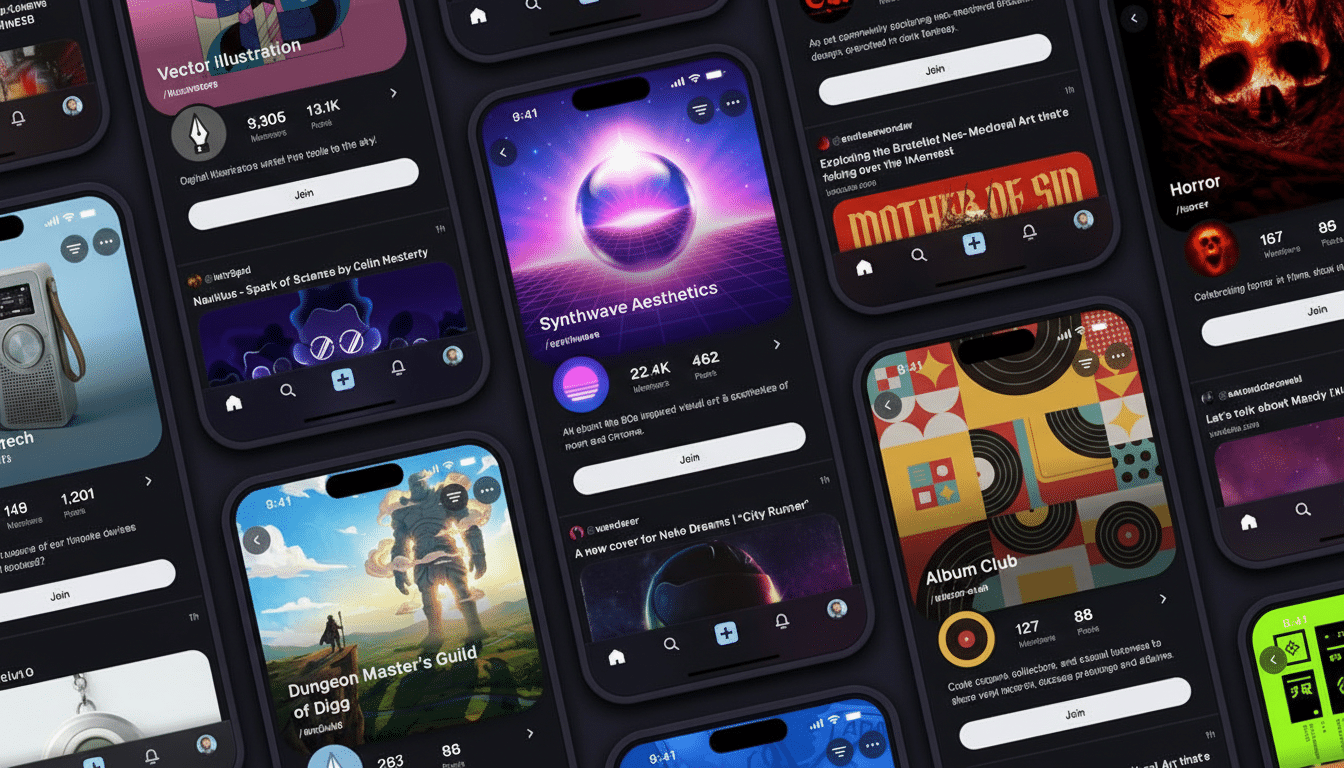
Before the doors opened to everyone, Digg invited roughly 67,000 early users to help shake out the product. At launch, there are 21 general communities, spanning science, tech, gaming, entertainment, and more, with the platform encouraging users to spin up niche communities as it scales.
Trust and Anti-Bot Design From Day One Guides Digg Beta
In interviews, Rose has emphasized a “trust-first” approach. One example: communities tied to specific devices or clubs could require proof of ownership or membership to participate. It’s a verification-lite philosophy meant to preserve openness while deterring brigading, sockpuppets, and spammy AI farms.
This is not a theoretical problem. Researchers and platform operators alike have warned that generative AI tools can churn out armies of plausible comments and posts at scale. Building authentication and reputation systems into the architecture early could prove decisive for community quality.
Features Launch Lean With Weekly Iteration
Digg’s structure is intentionally simple at first. Each community currently has a single manager—an approach that favors accountability over bureaucracy in the early days. CEO Justin Mezzell has said the plan is to ship features weekly, expanding moderation controls, discovery tools, and collaboration as signals emerge from real use.
The company is also experimenting with an AI-generated show, Digg Daily, to recap top stories on the platform. The team has indicated it may bring in human hosts based on user feedback—an iterative posture that mirrors the broader product strategy.
The Reddit-Sized Mountain Facing Any New Community Platform
Any challenger to Reddit faces formidable network effects. Company filings from Reddit’s public listing detailed tens of millions of daily active users and hundreds of millions on a weekly basis, underscoring the scale and inertia Digg must overcome. The opportunity, however, is not imaginary.
Reddit’s 2023 API pricing changes triggered widespread subreddit blackouts and pushed many power users to reassess their loyalties. Alternative platforms like Lemmy saw bursts of sign-ups during that period. If Digg can cultivate trustworthy communities, reliable moderation, and predictable governance, it could attract users who want a familiar format without the frictions they’ve felt elsewhere.
Learning From the 2010 Fallout to Avoid Repeating Past Mistakes
Digg’s earlier collapse followed a controversial 2010 redesign that alienated core contributors and opened the door for Reddit’s rise. That history looms large—and might be an advantage. The new team appears focused on incremental changes, community consent, and transparency to avoid jolting users with sudden shifts.
In practical terms, that means small-batch features, clear lines of authority in each community, and experimentation that can be rolled back quickly if it harms user trust. Community-led platforms rarely fail from too little innovation; they fail when they break the social contract with their most invested members.
How to Try the New Digg Public Beta and Shape Its Direction
The public beta is now live. Anyone can create an account, join one of the existing communities, or propose their own niche. Early adopters will influence the product directly as the company ships weekly updates and scales moderation tools.
Whether Digg can convert nostalgia and early momentum into durable growth will hinge on execution: keeping AI-driven noise out, rewarding authentic contributions, and giving communities a dependable home. For the first time in years, the social news space has a credible new entrant—with the founders who helped invent the format back at the controls.