


Wallets get lost in taxicabs, slide into channels between couch cushions, or are left on checkout counters. The only thing that’s different now is that you don’t have to engage in a mad panic of retracing your steps. Now, a new type of ultra-slim Bluetooth tracker the size of a credit card, designed for wallets, passports and badge holders, is turning this perennial headache into an easily solvable problem — often in minutes.
Why Wallet Trackers Are Booming for Everyday Use
Two things changed. The first change is that the crowdsourced networks (with attendant rewards for item tracking) got gargantuan. Apple says its Find My network relies on hundreds of millions of nearby Apple devices to help track lost items, even when they’re out of Bluetooth range. Google activated its expanded Find My Device network for Android in 2024 after implementing anti-stalking protections, and suddenly billions of phones can be put to work finding things, passively.
- Why Wallet Trackers Are Booming for Everyday Use
- How Card-Style Bluetooth Trackers Work to Find Wallets
- Wallet-Friendly Tracker Options Every Buyer Should Know
- Real-World Results When You Lose a Wallet or Luggage
- Set Up Your Card-Style Tracker for the Best Results
- Privacy and Safety Protections Built Into Tracker Networks
- What to Look for Before You Buy a Card-Style Tracker
- Beyond Wallets: Other Smart Uses for Card-Style Trackers
- Bottom Line: Why Card-Style Trackers Are Worth Considering
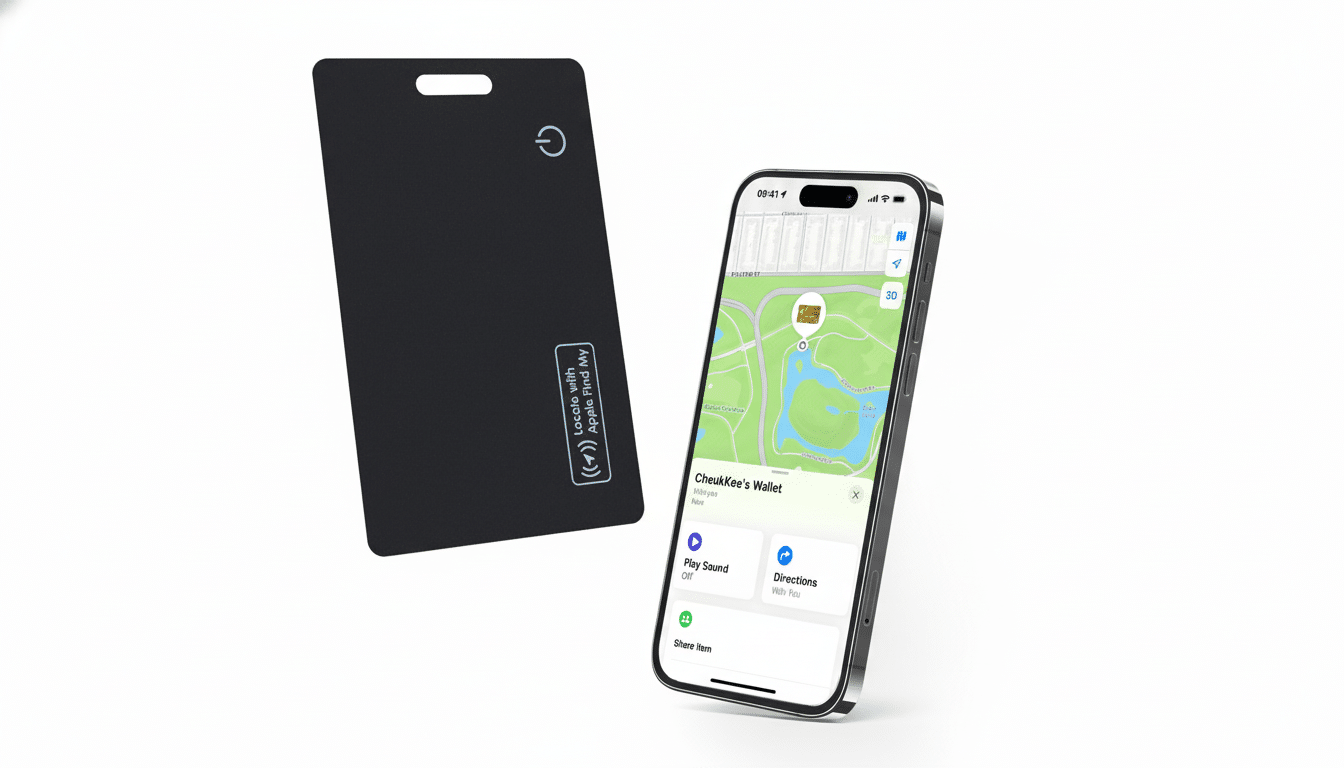
Second, the hardware fits in your wallet at last. Card-style trackers are about 2mm thick — not much thicker than two stacked credit cards — so they will fit inside a billfold or passport sleeve or an ID holder (places where you can’t stash puck-style trackers). It’s that form factor that is the unlock.
How Card-Style Bluetooth Trackers Work to Find Wallets
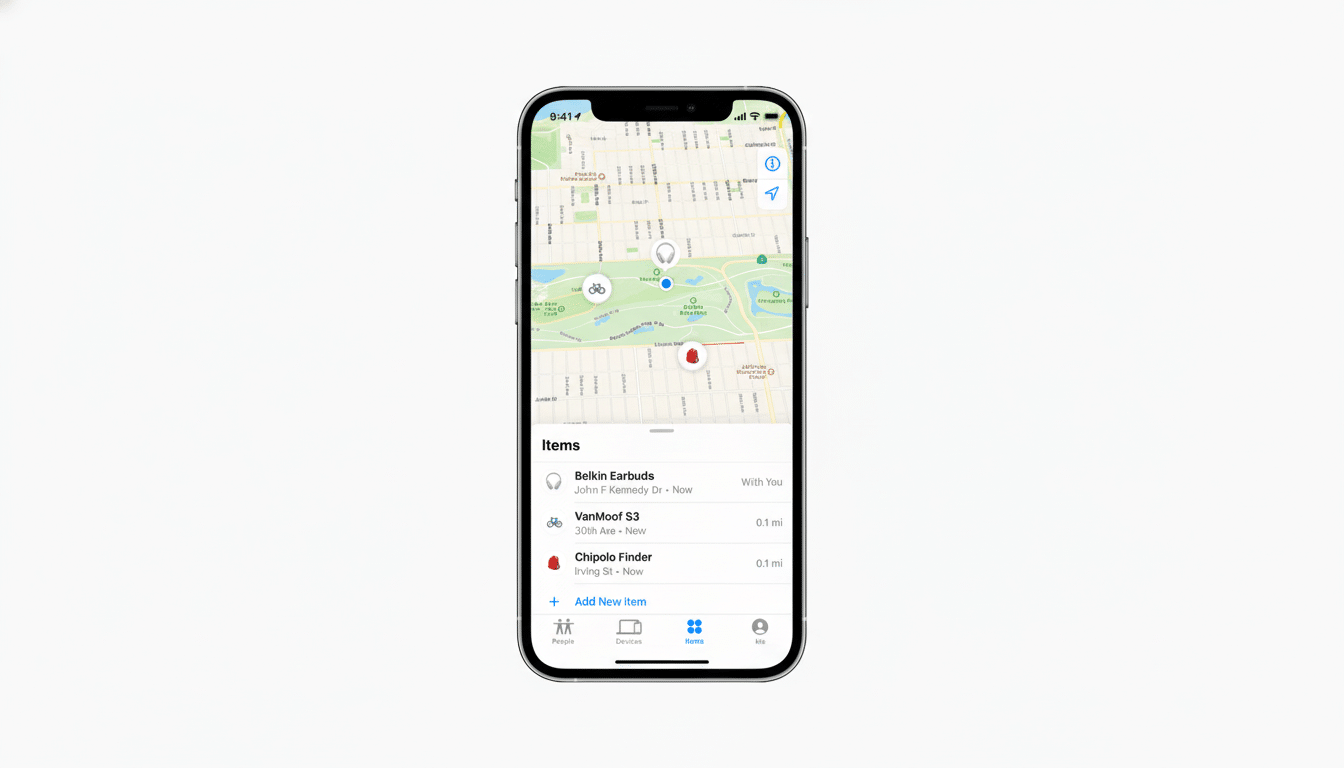
These gadgets connect to your phone via Bluetooth Low Energy and appear in an app like Apple’s Find My, Google’s Find My Device or Samsung’s SmartThings Find. At short range, you can get the card to chime so that it is easier to locate under a car seat. If you left your wallet on the bus, for example, other anonymous devices nearby relay that wallet’s location to the cloud — and suddenly you get a map update, without the Good Samaritan needing to lift a finger.
Top-end models include extras such as Precision Finding using ultra-wideband on recent iPhones for arrow-guided directions, and rechargeable batteries with Qi or magnetic charging. Many are IP-rated, so some rain or a coffee spill won’t render them useless.
Wallet-Friendly Tracker Options Every Buyer Should Know
Find My–capable cards (from companies like Chipolo, Pebblebee, Eufy and KeySmart) pair directly with the iPhone’s native app and connect to the larger Apple network. Typical thickness is 2–2.5mm. Battery life varies from a few months on rechargeable models to as long as two years on some sealed-battery versions; some can be recharged wirelessly, while others need a magnetic puck or cable.
The new Find My Device network is rolling out for Android, with support for trackers from early partners like Chipolo and Pebblebee. If you’re living behind that particular castle’s walls, then Samsung’s SmartTag2 system is still a strong option for you. The trick is finding the card that fits the phone ecosystem you really use day to day.
Real-World Results When You Lose a Wallet or Luggage
Lost at the café? Your wallet — assuming it’s on the premises of the party where you lost it — can get “pinged” by a nearby iPhone or Android phone as soon as the shop opens, not when you finally remember to call. Left in a rideshare? The card’s chime might be useful to a driver who wants to track one down under a seat. Airlines will even permit Bluetooth trackers in checked luggage, under the guidance of aviation regulators in the United States and Europe, which is why travelers now trace baggage through connections and delays.
Set Up Your Card-Style Tracker for the Best Results
Pair with the card and enable features such as Notify When Left Behind for home, office, or campus geofences. Include your contact information in Lost Mode so that someone who finds it can reach you without knowing where you are. Try out the ringer volume in a busy room and label the tracker clearly — Wallet, Passport or Badge, for example — so when an alert comes you can triage things faster. Families can share locations of items in the Find My app to increase recovery chances.
Privacy and Safety Protections Built Into Tracker Networks
Today’s networks rely on rotating, encrypted identifiers so that neither platform owners nor any random passing stranger can see your item’s identity or route.
In 2024, Apple and Google released the two companies’ joint standard for unwanted tracker alerts, meaning that both iOS and Android warn users if there’s an unknown tracker seemingly accompanying them during travel. That’s a sign of actual restore-and-don’t-backslide responsibility.
What to Look for Before You Buy a Card-Style Tracker
- Ecosystem fit: If you’re an iPhone user, Find My; for Android, Fitbit itself is promoting its own option called Find My Device (other companies have similar offerings); for Samsung devices, SmartThings.
- Power: Rechargeable convenience versus multi-year sealed batteries; verify real-world life claims and charging method.
- Durability: A minimum of IPX7 splashing water protection, and a shell that is not going to flex when you stuff it into a tight wallet.
- Sound and range: Louder speakers, and UWB support (on compatible phones) for improved close-range tracking.
- Size: Approximately 2mm thick, it fits most wallets; thicker cards will place strain on a card slot over time.
Beyond Wallets: Other Smart Uses for Card-Style Trackers
These cards also slip into a passport sleeve, camera bag, work badge holder, or even a travel pharmacy kit. Some travelers have gone so far as to stuff one in a luggage tag and another in a carry-on pouch, for redundancy if they silence the first by stuffing it too deep into a bin.
Bottom Line: Why Card-Style Trackers Are Worth Considering
A mix of billion-scale networks and sleek, card-size hardware has changed the calculus on losing wallets. If you can fit a credit card in it, you can find it — and be that much less likely to spend hours canceling cards or an eternity in line at the DMV. For many, that peace of mind is priceless and far exceeds the value of the tracker itself.