


When people start feeling the pressure of rising balances and minimum payments that barely move the needle, they often assume their options are limited. In reality, solutions for unsecured debt exist on a wide spectrum, each designed for a different level of financial stress and personal preference. Whether you want to handle things on your own or need structured support, exploring Credit Card Debt Relief early can help you navigate the many choices available before the situation becomes overwhelming.
It May Not be As Bad as You Think
One of the biggest misconceptions is that relief always requires drastic measures. Many borrowers have more control than they realize. Small, consistent changes can make a meaningful difference when debt is still manageable. Once payments fall behind, however, strategies shift. Your credit score, income, and total debt start playing a bigger role in determining which pathways are realistic. Seeing the full range of options in one place allows you to compare them thoughtfully instead of reacting out of panic.
- It May Not be As Bad as You Think
- Debt Elimination Isn’t Always the Right Goal
- Do It Yourself Methods for Early-Stage Debt
- Debt Management Plans Through Nonprofit Credit Counseling
- Debt Settlement for Significant Hardship
- Bankruptcy as a Last Resort for Severe Debt
- Choosing the Right Path Based on Your Situation
Debt Elimination Isn’t Always the Right Goal
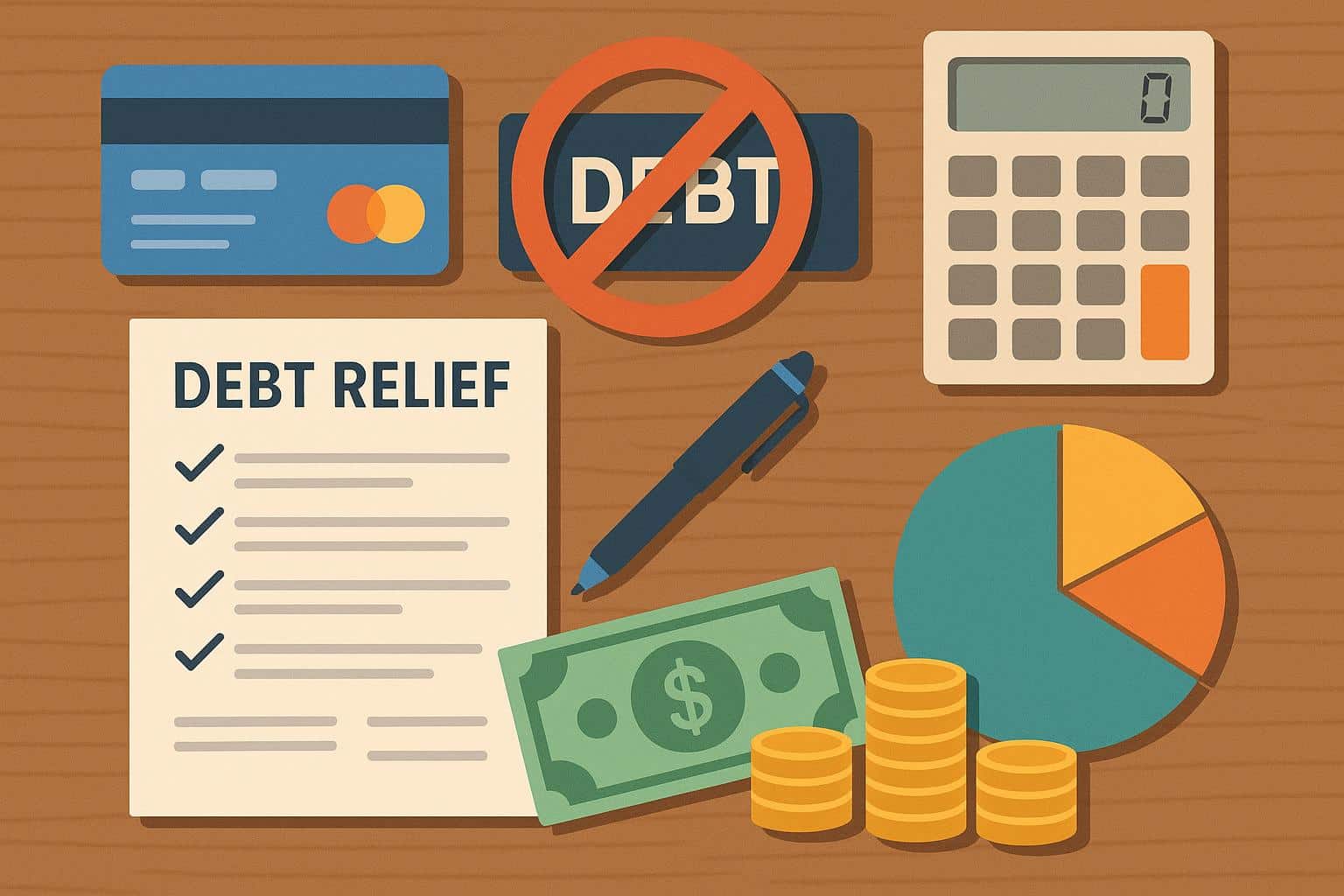
Another lesser discussed insight is that not all debt relief programs aim to eliminate debt. Some focus on restructuring or reducing interest while others target repayment efficiency. The key is matching the program to your goals. If your priority is lowering monthly payments, your solution will look different than someone whose main objective is eliminating balances as quickly as possible.
Do It Yourself Methods for Early-Stage Debt
Borrowers who are not yet behind on payments often have the most flexibility. Creating a realistic budget is a foundational step, but it becomes especially powerful when paired with targeted debt strategies. The avalanche method focuses on paying off the highest interest balances first, which reduces the long-term cost of debt. The snowball method emphasizes paying smaller balances first to build motivation. Either approach can improve morale and financial momentum when used consistently.
Interest rate negotiation is another underutilized strategy. Credit card companies sometimes reduce rates for customers with strong payment histories who express genuine concern about repayment. Even a slight reduction can result in meaningful savings over time. For people who rely on multiple cards, consolidating balances through a low interest personal loan or a promotional balance transfer card can also provide temporary relief. These methods work best for borrowers who still have solid credit scores and predictable income.
For those wanting additional guidance, the United States Federal Trade Commission offers practical insights on budgeting techniques and your rights when dealing with creditors. These resources can help you evaluate DIY strategies with more confidence.
Debt Management Plans Through Nonprofit Credit Counseling
When interest becomes unmanageable or payments feel too scattered, many borrowers turn to nonprofit credit counseling agencies. Debt management plans do not reduce your principal, but they can significantly lower your interest rates and late fees. You make one monthly payment to the agency, and they distribute it to your creditors according to negotiated terms.
The advantage here is structure. Many people find that the relief from high interest rates creates enough breathing room to stay on track. These programs typically last three to five years and require steady participation, but they offer a path forward without damaging your credit as severely as other options.
It is important to work with accredited counseling agencies. Reputable organizations provide education, transparency, and customized plans rather than one size fits all solutions.
Debt Settlement for Significant Hardship
Debt settlement becomes a practical option when borrowers have fallen behind, cannot keep up with payments, or face long-term financial hardship. Settlement aims to reduce the principal by negotiating with creditors. This option is best suited for people who cannot realistically repay the full amount they owe within a reasonable timeframe.
While settlement can reduce debt substantially, it does come with consequences. Your credit score may drop during the process because creditors may not be paid until negotiations are completed. Forgiven amounts may also be considered taxable income. Still, many borrowers see settlement as a realistic path back to financial stability when compared to indefinite collections or escalating interest.
The Internal Revenue Service provides detailed information about how canceled debt is taxed, which can help borrowers prepare for any tax related considerations that arise from settlement.
Bankruptcy as a Last Resort for Severe Debt
Bankruptcy is the most extreme solution on the spectrum, but it can also be the most transformative when used appropriately. Chapter 7 bankruptcy can eliminate unsecured debts entirely for qualifying borrowers. Chapter 13 reorganizes debts into a structured repayment plan. Bankruptcy carries long-term credit consequences, yet it also offers a clean slate for individuals facing overwhelming financial hardship.
Many people consider bankruptcy only when every other option has failed. Consulting with a qualified attorney is essential, because the right chapter and process depend on your income, assets, and the types of debt you carry. Bankruptcy is not a moral failure. It is a legal tool designed to help borrowers rebuild their financial lives under structured protection.
Choosing the Right Path Based on Your Situation
Finding the best debt relief option means evaluating where you stand today. How far behind are you on payments? How much do you owe? Is your income steady or unpredictable? Are you trying to protect your credit or is it already damaged? Answering these questions helps narrow your choices and prevent you from committing to a program that does not match your reality.
For borrowers with manageable balances, DIY strategies and consolidation can be effective. For those dealing with high interest burdens, a debt management plan may provide necessary structure. Settlement helps people in deeper hardship, while bankruptcy becomes a powerful last resort for those facing insurmountable debt.
Credit card debt relief is not a single destination. It is a spectrum of tools, each serving a different purpose along the journey. When you understand the strengths and tradeoffs of each option, you can choose the one that aligns best with your goals and circumstances. With clarity and the right support, even overwhelming unsecured debt can become manageable.