


A bakery order is more than a transaction. From the moment customers see the packaging to the moment they open the box and share the products with others, every detail shapes how they perceive the business.
The quality of the cakes, pastries, cookies, or bread will always remain central to customer satisfaction. However, flavor is only one part of the experience. Packaging, presentation, messaging, convenience, and small personal touches can make an ordinary purchase feel thoughtful and memorable.
- Start With a Clear Brand Identity
- Treat Packaging as Part of the Product
- Use Printed Packaging to Build Recognition
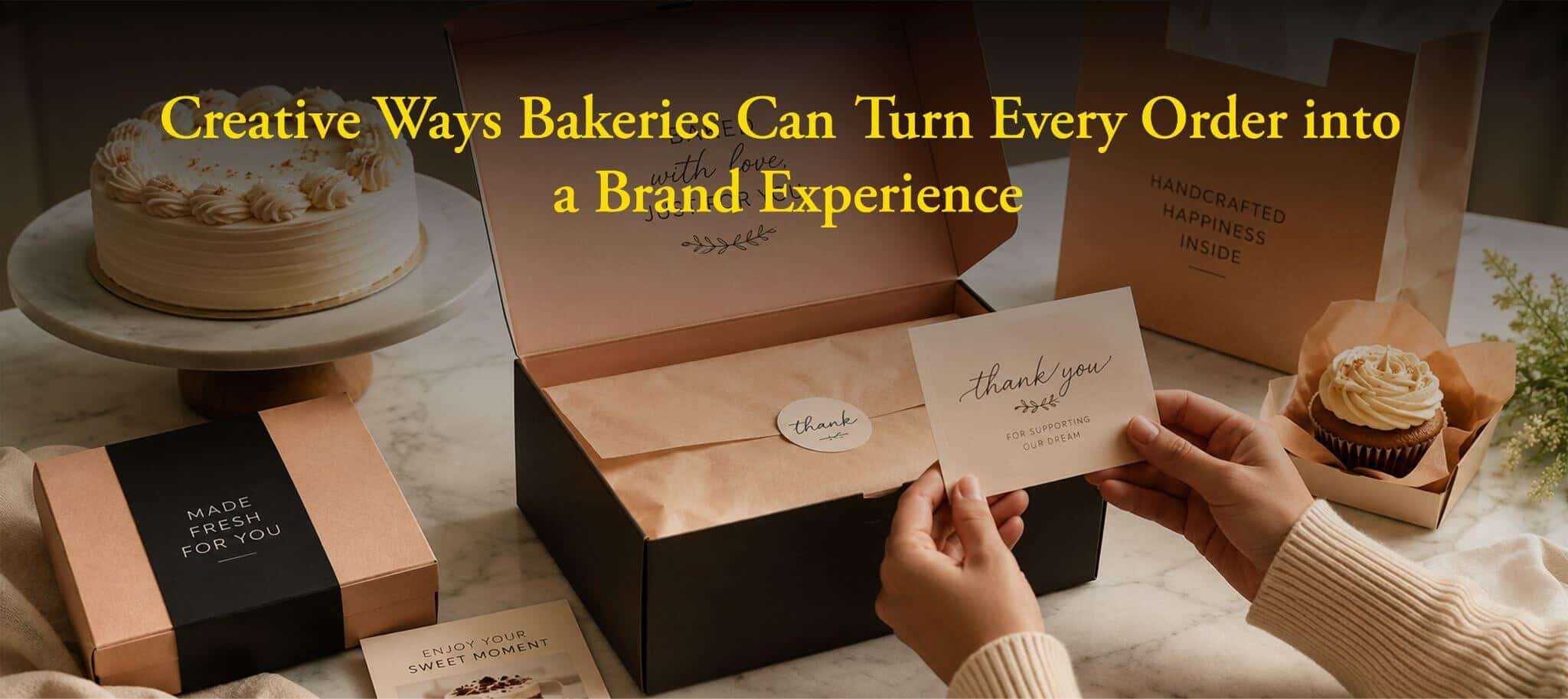
- Create an Enjoyable Unboxing Moment
- Add Personalized Thank-You Messages
- Tell the Story Behind the Bakery
- Make Product Presentation Consistent
- Use Packaging to Guide the Customer
- Create Signature Packaging Details
- Turn Seasonal Packaging Into an Event
- Offer Gift-Ready Presentation
- Use QR Codes With a Clear Purpose
- Encourage Social Media Sharing Naturally
- Introduce Loyalty Through the Packaging
- Make Corporate Orders Feel Purpose-Built
- Design for Different Occasions
- Use Windows to Showcase Attractive Products
- Surprise Customers Without Creating Waste
- Make Sustainability Part of the Experience
- Train Staff to Deliver the Brand Experience
- Test Ideas Before Using Them at Scale
- Measure What Customers Respond To
- Conclusion
This is especially important in a competitive market where customers may have several bakeries offering similar products at comparable prices. A strong brand experience gives people a reason to remember one business, recommend it to others, and return for future occasions.
Bakeries do not need extravagant packaging or expensive gifts with every order. The most effective experiences often come from consistent, practical, and emotionally relevant details that reflect the personality of the brand.
Start With a Clear Brand Identity
Before adding creative touches to bakery orders, the business needs a clear identity.
Customers should be able to understand what the bakery represents through its colors, tone, packaging, product style, and communication. A luxury dessert studio may focus on elegance and exclusivity, while a neighborhood bakery may emphasize warmth, tradition, and familiarity.
A brand identity can be shaped through:
- A consistent color palette
- Recognizable typography
- A memorable logo
- A clear tone of voice
- Distinctive product photography
- Repeated packaging elements
- A strong brand story
- Consistent customer service
Every detail does not need to look identical, but it should feel connected. When packaging, social media, labels, and in-store presentation follow the same visual direction, customers are more likely to recognize and remember the business.
Treat Packaging as Part of the Product
Packaging should not be viewed only as a container that protects baked goods. It is one of the most visible parts of the customer journey.
A customer may carry a bakery box through an office, place it on a celebration table, give it as a gift, or photograph it for social media.
Strong bakery packaging should:
- Protect delicate products
- Fit the order correctly
- Look clean and professional
- Be easy to carry
- Open smoothly
- Display branding clearly
- Support the value of the product
When the packaging feels carefully considered, customers often assume that the same level of care has been applied to the food inside.
Use Printed Packaging to Build Recognition
Generic packaging may perform its basic protective function, but it misses an opportunity to reinforce the business name.
Bakeries can use Custom Printed Bakery Boxes to place their logo, colors, contact details, social media handles, slogans, or signature patterns directly on the package. Repeated exposure to these visual elements helps customers connect the product with the business.
Printed packaging may be particularly useful for:
- Celebration cakes
- Corporate orders
- Gift assortments
- Subscription boxes
- Wedding favors
- Retail bakery products
- Catering orders
- Seasonal promotions
The design should remain clear and readable. Covering every surface with patterns, text, and promotional messages can make the packaging feel crowded.
A restrained design with one or two memorable elements is often more effective than excessive decoration.
Create an Enjoyable Unboxing Moment
Opening a bakery order can be part of the experience.
Customers often feel anticipation before seeing a cake, dessert assortment, or box of pastries. A thoughtful presentation can increase this sense of excitement.
An effective unboxing experience may include:
- Products arranged neatly
- A clean interior
- A printed message under the lid
- A branded sticker or seal
- Coordinated tissue or food-safe liners
- A thank-you card
- Simple serving instructions
- A small story about the product
The process should still be convenient. Customers should not need to remove multiple unnecessary layers before reaching the food.
The best unboxing design balances visual impact with ease of use.
Add Personalized Thank-You Messages
A short message can make a customer feel recognized.
Bakeries can include handwritten notes, printed thank-you cards, or short messages inside the packaging. These details are especially effective for custom cakes, wedding orders, corporate gifts, and repeat customers.
Possible messages could thank customers for supporting a local business, celebrate the occasion, or invite them to share feedback.
Personalization does not always require writing a unique note for every buyer. A well-written printed message can still feel warm when it matches the bakery’s tone.
For high-value or milestone orders, adding the customer’s name or event can make the interaction more personal.
Tell the Story Behind the Bakery
Customers often remember stories more easily than product descriptions.
A bakery can use packaging inserts, labels, or QR codes to explain how the business began, why certain recipes matter, or what makes its ingredients and process distinctive.
A brand story might focus on:
- A family recipe
- Traditional baking methods
- Local sourcing
- Small-batch production
- Cultural inspiration
- Community involvement
- A founder’s passion
- A commitment to reducing waste
The story should be genuine and concise. Customers may not read a long company history while opening a pastry box, but they may remember one meaningful sentence.
Make Product Presentation Consistent
Every order should feel recognizably connected to the bakery, regardless of who prepared or packed it.
Consistency can be improved by creating simple standards for:
- Product placement
- Label positioning
- Ribbon or sticker use
- Box selection
- Cake-board sizing
- Portion arrangement
- Printed message placement
- Final quality checks
Standardization does not eliminate creativity. Instead, it protects the essential parts of the brand experience while allowing special designs for particular occasions.
A customer ordering twice should receive the same overall level of care both times.
Use Packaging to Guide the Customer
Packaging can improve the experience by answering common questions.
A bakery can print or include information such as:
- Storage instructions
- Serving suggestions
- Reheating guidance
- Best-consumed dates
- Allergen reminders
- Cake-handling instructions
- Portion recommendations
- Disposal guidance
These details reduce uncertainty and help customers enjoy the products as intended.
For example, a card explaining how long a cake should sit at room temperature before serving may prevent a customer from eating it while the frosting is still too firm.
Useful information demonstrates expertise and strengthens trust.
Create Signature Packaging Details
A recognizable detail can help customers identify the bakery even before they see the logo.
This could be:
- A distinctive box color
- A signature sticker shape
- A patterned interior
- A ribbon style
- A specific thank-you phrase
- A branded illustration
- A recognizable window shape
- A repeated interior message
The detail should be simple enough to use consistently. Complicated design elements may become expensive or difficult to maintain during busy periods.
A small signature feature can have more branding value than a constantly changing collection of unrelated decorations.
Turn Seasonal Packaging Into an Event
Seasonal orders provide an excellent opportunity to create excitement.
Customers often purchase baked goods for holidays, office gatherings, gifts, and family celebrations. Special packaging can make these orders feel more timely and gift-ready.
Bakeries can use Custom Christmas Bakery Boxes for festive cookies, cakes, mince pies, cupcakes, dessert assortments, and corporate gifts. Seasonal colors, illustrations, messages, and window designs can help products feel prepared for the occasion.
Christmas packaging may include:
- Festive patterns
- Gift tags
- Holiday messages
- Coordinated ribbons
- Product windows
- Serving suggestions
- Limited-edition branding
- Space for the recipient’s name
The packaging should still remain consistent with the bakery’s main visual identity. A seasonal design works best when customers can immediately recognize which bakery produced it.
Offer Gift-Ready Presentation
Customers value convenience, particularly when purchasing bakery products as presents.
A gift-ready order saves the buyer from finding additional wrapping or repackaging delicate food. The bakery can offer optional upgrades such as ribbons, message cards, sleeves, or premium boxes.
This approach can increase average order value while improving the customer experience.
Gift packaging should be available in clearly defined tiers so customers understand what they are paying for. For example, a bakery may offer standard packaging, a celebration upgrade, and a premium gift presentation.
Transparent pricing prevents confusion and allows customers to choose according to the occasion.
Use QR Codes With a Clear Purpose
QR codes can connect physical packaging with digital content, but they should provide something genuinely useful.
A bakery could link a QR code to:
- Product information
- A loyalty program
- Reordering pages
- Serving instructions
- Behind-the-scenes videos
- Customer reviews
- Seasonal menus
- Social media profiles
- A feedback form
- A discount for the next purchase
The code should be placed where it is easy to scan and accompanied by a short explanation.
A QR code without a clear benefit may be ignored. Customers need to know what they will receive before scanning it.
Encourage Social Media Sharing Naturally
Customers often share attractive bakery products online, especially when they are purchased for birthdays, weddings, holidays, or other celebrations.
Packaging can encourage this behavior by making the brand name visible and including a simple social handle or branded hashtag.
The business might also print a friendly message inviting customers to share their celebration. However, the request should feel optional rather than demanding.
Photo-friendly packaging may feature:
- A clean lid
- A well-framed viewing window
- Minimal branding
- A message inside the box
- Coordinated product arrangement
- A recognizable background pattern
The food should remain the main focus. Packaging should support the image rather than overwhelm it.
Introduce Loyalty Through the Packaging
Every order creates an opportunity to encourage the next purchase.
Bakeries can place loyalty information inside the box instead of relying only on digital advertising. This might include a stamp card, reward code, referral offer, or invitation to join a customer list.
The offer should be easy to understand. Complicated reward structures may discourage participation.
Examples include:
- A reward after a set number of purchases
- A birthday discount
- Early access to seasonal products
- A referral benefit
- A discount on the next order
- Exclusive products for members
Loyalty incentives work best when they support genuine satisfaction. Customers are unlikely to return for a reward if the original product or service disappointed them.
Make Corporate Orders Feel Purpose-Built
Corporate bakery orders often reach many potential customers at once.
A box delivered to a meeting, event, or client office may be seen by dozens of people. This makes presentation especially important.
Bakeries can improve corporate orders through:
- Branded sleeves
- Client message cards
- Organized product assortments
- Clearly labeled flavors
- Easy-to-share formats
- Individual portions
- Professional invoices
- Reliable delivery presentation
Some businesses may also request co-branded packaging. The bakery should ensure that its own identity remains visible while accommodating the client’s branding requirements.
Design for Different Occasions
The same packaging style may not suit every event.
A casual cookie order, wedding dessert, children’s birthday cake, and corporate gift all create different expectations.
Bakeries can develop a flexible packaging system with a consistent base design and occasion-specific additions. A standard box could be adapted using sleeves, labels, ribbons, cards, or inserts.
This approach provides variety without requiring completely different packaging inventory for every celebration.
It can also make personalization more affordable.
Use Windows to Showcase Attractive Products
A transparent window allows the baked goods to contribute to the design.
Customers can see decoration, color, quantity, and arrangement before opening the box. This may increase excitement and help the product feel more gift-ready.
Windows work particularly well for:
- Cupcakes
- Doughnuts
- Cookies
- Macarons
- Brownies
- Pastries
- Small cakes
- Assorted desserts
The visible section should frame the products neatly. Smudged frosting, loose crumbs, condensation, or uneven placement may become more noticeable through transparent packaging.
Staff should handle window boxes carefully and complete a presentation check before handing them to customers.
Surprise Customers Without Creating Waste
Small surprises can strengthen emotional connections, but they should be planned carefully.
A bakery might occasionally include:
- A sample of a new product
- A small birthday message
- A discount card
- A recipe suggestion
- A seasonal sticker
- A thank-you note
- A loyalty bonus
The surprise should fit within the box safely and should not create unnecessary packaging waste.
Restaurants and bakeries should also avoid including food samples without considering allergens, dietary preferences, and labeling requirements.
A thoughtful surprise is most effective when it feels relevant rather than random.
Make Sustainability Part of the Experience
Customers may judge a bakery’s values through its packaging choices.
A business can improve the experience by reducing unnecessary layers, right-sizing boxes, selecting suitable paper-based materials, and providing accurate disposal guidance.
Sustainability messaging should remain specific. Rather than using broad terms such as “completely green,” the bakery can explain the verified recycled content, responsible fibre sourcing, or local recycling instructions.
Customers are more likely to trust practical guidance than exaggerated environmental claims.
Train Staff to Deliver the Brand Experience
Packaging cannot create a strong experience without consistent staff execution.
Employees need to understand how products should be arranged, which box should be used, where labels belong, and what final checks are required.
Training may cover:
- Box assembly
- Product placement
- Handling decorated items
- Applying seals
- Checking order accuracy
- Keeping windows clean
- Adding cards or inserts
- Presenting the package to customers
The final handover also matters. A friendly greeting, clear handling advice, and genuine thanks can make the packaging feel like part of a thoughtful service rather than a decorative object.
Test Ideas Before Using Them at Scale
Creative packaging ideas should be tested before the bakery commits to a large order.
A physical trial can help determine whether the design is practical, durable, easy to assemble, and appreciated by customers.
The bakery should test:
- Product fit
- Assembly time
- Lid strength
- Window clarity
- Label placement
- Carrying comfort
- Delivery performance
- Storage requirements
- Customer response
- Cost per complete order
Staff feedback is especially valuable because a design that looks excellent in a mockup may slow down packing during peak hours.
Measure What Customers Respond To
Brand experience should be evaluated through customer behavior as well as appearance.
A bakery can monitor:
- Repeat orders
- Social media mentions
- Packaging-related feedback
- Referral rates
- Loyalty participation
- Seasonal sales
- Gift upgrade purchases
- QR-code scans
- Customer complaints
Not every creative element will produce the same value. Measuring response helps the business invest in details customers actually appreciate.
Conclusion
Bakeries can turn every order into a brand experience by treating packaging, presentation, communication, and service as connected parts of the purchase.
Printed boxes, thoughtful messages, product visibility, seasonal designs, loyalty offers, useful instructions, and consistent presentation can make customers feel that the bakery has considered every stage of the experience.
When creative packaging is supported by excellent baked goods and reliable service, every box becomes more than a container. It becomes a reminder of the bakery’s identity, values, and attention to detail giving customers a reason to remember the business long after the final bite.