


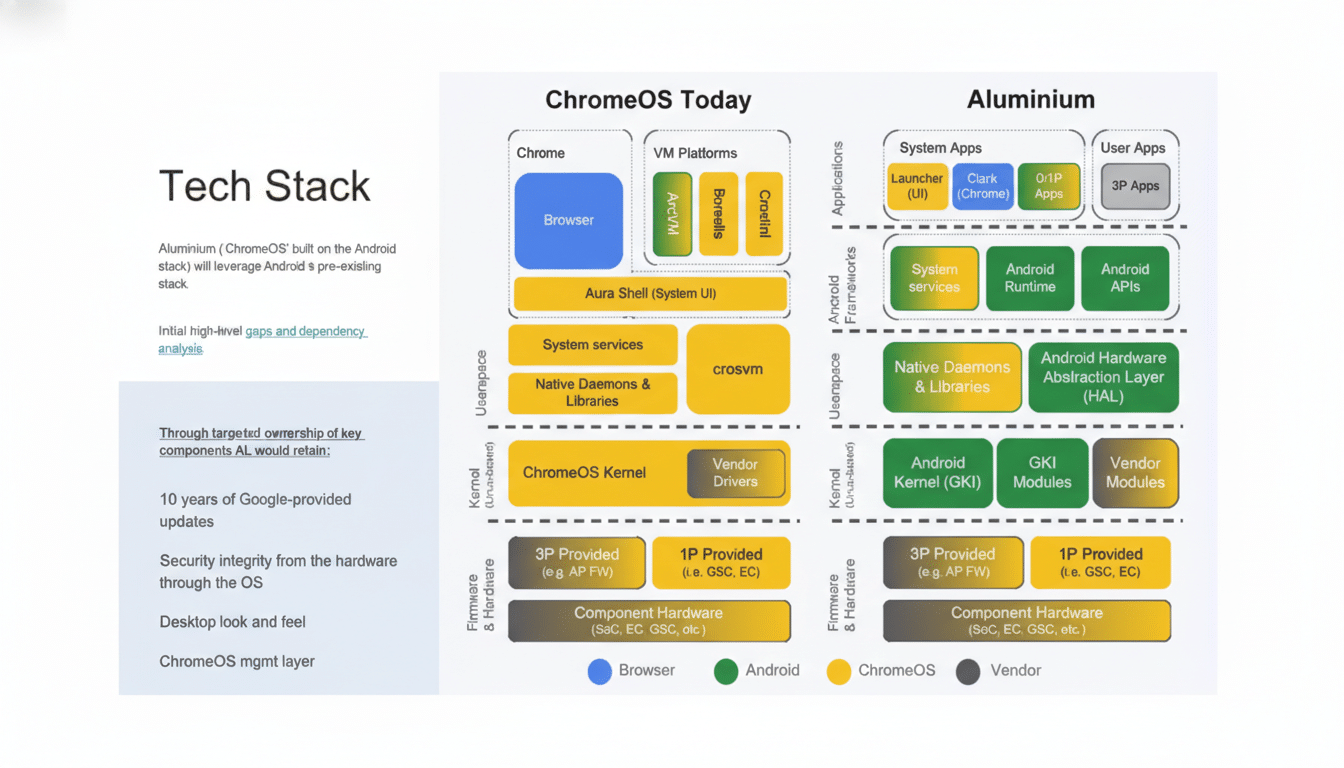
Reports from Google’s ongoing antitrust proceedings indicate ChromeOS is not riding into the sunset anytime soon. Testimony cited by The Verge points to a long runway for the platform, with Google expected to maintain ChromeOS until at least 2034 even as it develops a unified Android–ChromeOS successor code-named Aluminum.
The key reason is straightforward: Google’s 10-year update promise for Chromebooks. That pledge, combined with hardware compatibility constraints for Aluminum, means the existing OS must keep receiving fixes and features for years after a new platform arrives.
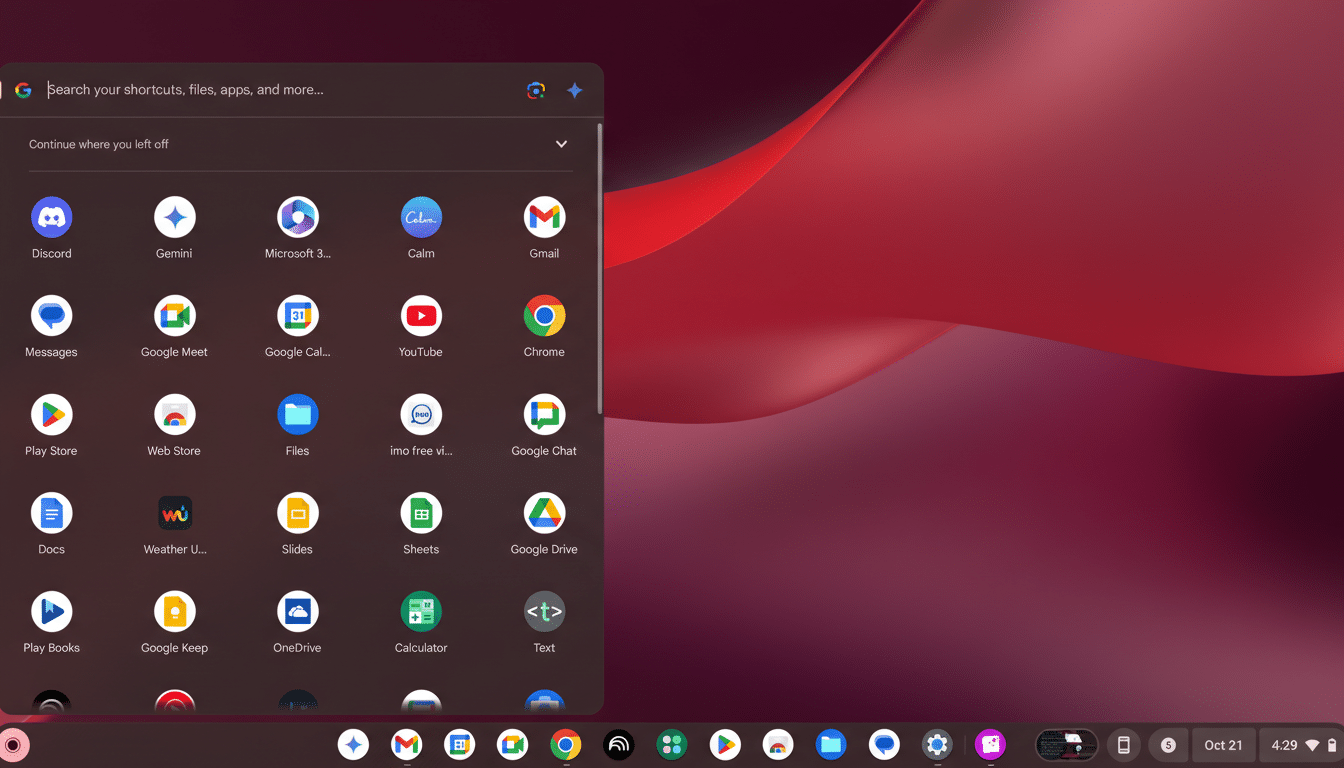
Aluminum OS Timeline And What It Means For Users
According to statements referenced in court, Aluminum is tracking toward testing in the near term with a broad release later in the decade. Critically, Aluminum won’t support every Chromebook currently in use. That puts Google on a dual-OS path: ship the new system while sustaining ChromeOS so older devices stay secure and usable through their promised lifecycle.
This is not unprecedented for Google. The company has long pursued parallel development across platforms, and ChromeOS itself evolved from a browser-first idea into a full desktop-class environment. The Aluminum plan reads as another iteration, not a cold reboot, with years of overlap baked in.
Ten Years of Updates Keep Chromebooks Alive
Google extended Chromebook automatic updates to a 10-year window for eligible models, a policy the company has framed as essential for trust and total cost of ownership. John Maletis, who leads ChromeOS, underscored that commitment in an interview with Chrome Unboxed, positioning long-term support as a core pillar rather than a marketing line.
Practically, this means devices well into their service lives—especially those purchased during remote learning surges—will continue to receive security patches and key updates even as Aluminum rolls out on newer hardware. For administrators, the Auto Update Expiration (AUE) date remains the single most important line on a Chromebook spec sheet.
Education and Enterprise Impact of Long-Term Support
Few ecosystems are as sensitive to OS uncertainty as K–12. At its peak, Futuresource Consulting reported Chromebooks captured roughly 70% of mobile device shipments into US schools, reflecting a blend of price, manageability, and web-first workflows. Those fleets cannot flip overnight to a new operating system without budget shocks and retraining.
The 2034 window calms those fears. Long support horizons align with multi-year procurement cycles and grant funding timelines, giving districts and IT teams room to plan refreshes that match AUE dates. The same applies to enterprises that standardized on Chrome Enterprise for secure, low-maintenance endpoints.
Market Context And Security Stakes For ChromeOS
Globally, ChromeOS remains a niche desktop OS by market share, typically hovering around the low single digits according to StatCounter. Yet its concentration in education and certain frontline workforces magnifies the impact of any support changes. A sudden end-of-life would leave millions of learners and workers exposed to unpatched vulnerabilities.
The industry has seen what happens when a widely deployed platform ceases updates. As Windows 10 reaches the end of its mainstream support, organizations face tough decisions about extended security programs or accelerated hardware refreshes. Google’s decade-long Chromebook policy is designed to avoid that cliff, keeping devices safe without forcing immediate upgrades.
How To Plan The Transition To Aluminum OS
IT leaders should build roadmaps around two anchors: AUE dates for current fleets and the hardware requirements that Aluminum will eventually set. Prioritize devices nearing AUE for replacement and test pilots of newer models expected to support Aluminum to validate app compatibility, identity, and management workflows.
For buyers today, ChromeOS remains a safe bet. Look for models with the longest published AUE dates, confirm support for modern security features like Verified Boot and TPM-backed credentials, and budget for staggered refreshes rather than a single large cutover when Aluminum arrives.
The Bottom Line On ChromeOS Support Through 2034
Court documents and executive commentary make the near-term picture clear: ChromeOS is not being axed. Google is plotting an eventual evolution to Aluminum, but the company’s 10-year support promise all but guarantees ChromeOS will keep receiving updates into 2034.
That long tail matters more than any code name. It signals continuity for schools and businesses, protects users with ongoing security fixes, and gives Google space to deliver a next-gen platform without stranding the ecosystem that made Chromebooks a success.