


Jackknife accidents happen when a large truck’s trailer swings out and folds toward the cab at a sharp angle. The most common causes are hard braking, high speed, slippery roads, and brake or equipment malfunctions.
These crashes are especially dangerous because the trailer can sweep across several lanes. A loaded semi weighs far more than a car, so the impact is often severe. Understanding the causes helps drivers and carriers prevent them.
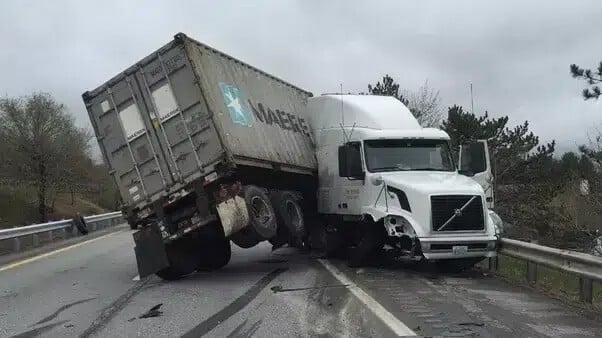
Many factors can combine to trigger a jackknife truck accident in a single moment. This guide explains the most common causes behind these crashes. It also points to the safety rules meant to reduce the risk.
What a Jackknife Accident Is
A jackknife happens when the trailer skids and swings toward the tractor. The rig bends like a folding pocketknife, which gives the crash its name. This usually begins when the trailer or drive wheels lose traction. Once the trailer starts to slide, the driver has little control over where it ends up.
Hard or Sudden Braking
Slamming the brakes is the leading trigger of a jackknife. When the wheels lock, the trailer can slide out of line with the cab and swing wide. Smooth, gradual braking gives the tires a better chance to keep their grip.
Driving Too Fast for Conditions
Speed cuts the time a driver has to react and stop safely. On curves, downhill grades, or wet roads, too much speed can break the tires’ grip and start a skid.
Trucks need far more stopping distance than cars. Slowing down early is one of the simplest ways to avoid a jackknife.
Slippery or Wet Road Surfaces
Rain, ice, and snow reduce the traction between the tires and the road. With less grip, even normal braking can lock the wheels:
- Wet leaves or an oily film after light rain.
- Black ice on bridges and shaded curves.
- Packed snow on poorly cleared highways.
Drivers are expected to slow down and add following distance in these conditions.
Faulty or Imbalanced Brakes
Brake problems are a frequent mechanical cause of jackknifing. If the trailer and tractor brakes are out of balance, one set can lock first and swing the trailer. Federal standards in 49 CFR Part 393 require working, properly adjusted brakes, including antilock systems on many trucks. Worn or poorly matched brakes make a skid far more likely.
Poor Truck Maintenance
Neglected maintenance lets small problems grow into real hazards. Under 49 CFR Part 396, carriers must inspect, repair, and maintain their trucks. Skipping that duty shows up as a common thread in many crashes.
Improper or Uneven Loading
How a trailer is loaded affects how it handles under braking. A poorly balanced or unsecured load can shift and push the trailer sideways. An empty or lightly loaded trailer is also more prone to jackknifing, because less weight means less traction on its tires.
Driver Fatigue
Tired drivers often experience fatigue, which can slow reaction times and impair their ability to judge speed, distance, and braking. The hours-of-service limits in 49 CFR Part 395 cap how long a driver may stay behind the wheel. Ignoring these limits increases fatigue and raises the risk of a dangerous mistake.
Driver Error and Inexperience
Some jackknifes come down to simple driver mistakes. Overcorrecting a slide, downshifting poorly, or following too closely can all upset a heavy rig. Newer drivers may not yet have a feel for how a loaded trailer behaves. Training and experience help them respond calmly when traction slips.
Key Takeaways
- A jackknife happens when the trailer skids and folds toward the cab.
- Hard braking and high speed are the most common triggers.
- Slippery roads sharply raise the risk of a skid.
- Faulty brakes can violate 49 CFR Part 393 and cause jackknifing.
- Poor maintenance and driver fatigue are frequent contributing factors.