


Manufacturers producing electrical panels, switchgear, transformers, power distribution equipment, and more will need to make a crucial choice when deciding which CNC busbar processing machine to use. The proper type of machine can increase cutting accuracy, decrease material waste and help to maintain consistent production quality. But, buying equipment without taking a look at its technical specs can result in unnecessary production delays and expenses.
The cutting, punching, bending and automation capabilities vary among different machines. Manufacturers intending to invest should take into account the materials they will need, the quantity they will be producing, accuracy requirements, and the operating costs over the long-term. This is a guide of the major considerations to take into account when choosing a CNC busbar machine for industrial applications.
- 1. Match the Machine to Your Busbar Production Requirements
- 2. Check Cutting, Punching, and Bending Capabilities
- Cutting Capacity and Edge Quality
- Punching Force, Hole Sizes, and Tooling
- Bending Angles, Radius, and Repeatability
- 3. Compare CNC Automation with Hydraulic Machine Configurations
- CNC Controls, Programmable Settings, and Automatic Positioning
- When a Hydraulic Busbar Processing Machine Makes Sense
- 4. Verify Processing Accuracy and Consistent Output
- 5. Evaluate Production Speed, Tool Changes, and Workflow Efficiency
- Calculate Real Output Beyond Advertised Cycle Times
- Consider Multi-Function and 3-in-1 Machine Designs
- 6. Assess Machine Durability, Maintenance, and Operator Safety
- Frame Strength, Tooling Wear, and Maintenance Access
- Safety Guards, Emergency Stops, and Operator Training
- 7. Calculate Total Ownership Costs, Not Just Purchase Price
- 8. Review Manufacturer Reliability and After-Sales Support
- 9. CNC Busbar Processing Machine Buying Checklist
- FAQs
- What is a CNC busbar processing machine used for?
- Can one CNC busbar machine cut, punch, and bend copper busbars?
- What is the difference between CNC and hydraulic busbar processing machines?
- How do I choose the right processing capacity for my busbars?
- What affects the cost of a CNC busbar processing machine?
- Final Thoughts:
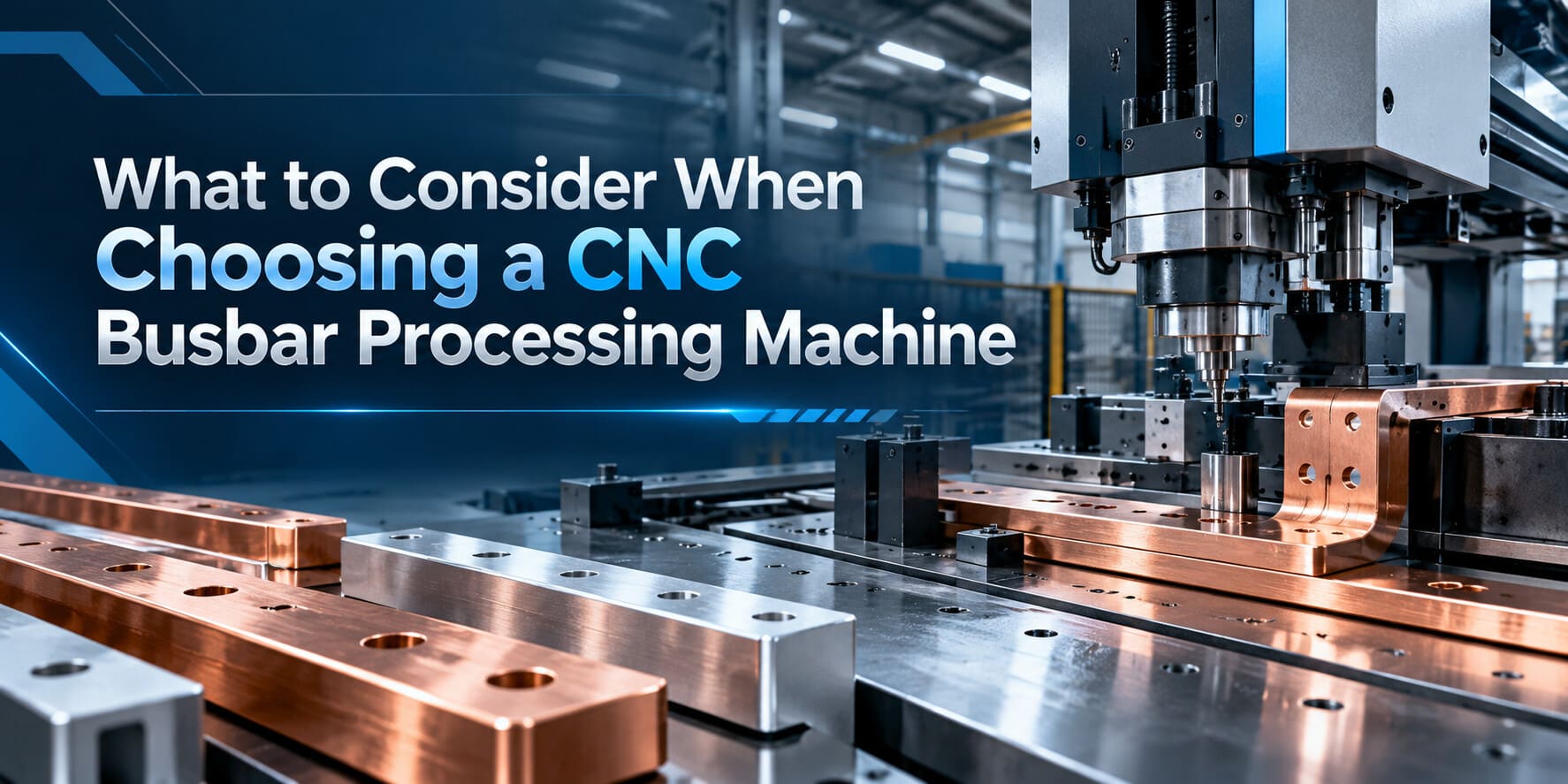
1. Match the Machine to Your Busbar Production Requirements
You must first determine what equipment is required in your production line, before you compare equipment. The equipment used in a small electrical shop might not be sufficient for continuous industrial production.
Identify Busbar Materials, Width, and Thickness
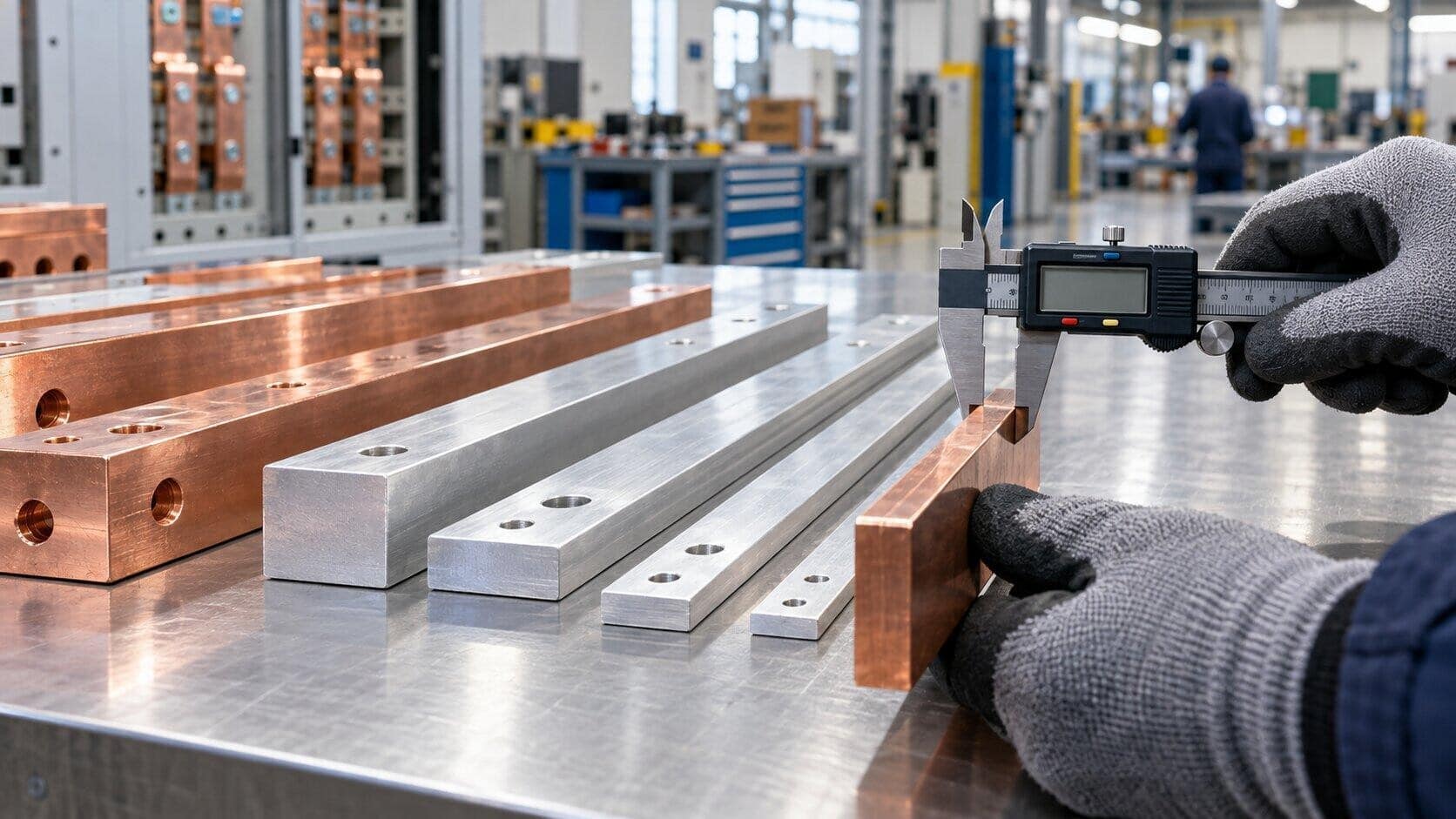
The first step is to determine the type and size of the busbars which your facility handles. Copper and aluminum are different material properties, impacting on cutting, punching and bending needs.
Consider:
- The largest width and thickness of the busbar should be minimized.
- Copper and aluminum grades of material.
- The length of cuts and bends are required.
- The sizes and pattern of holes
For each machine consult the rated capacity of the machine for your material type. The limits for aluminum may vary from a machine used to process a certain thickness of copper.
Estimate Production Volume and Batch Size
Equipment selection can also be a function of production volume. Small batch workshops might focus on flexibility of tools and ease of operation.
If parts are produced in high volumes, it may help to have automated positioning and programmable settings.
Select the machine which is suitable for your regular job without generating unnecessary operation cost.
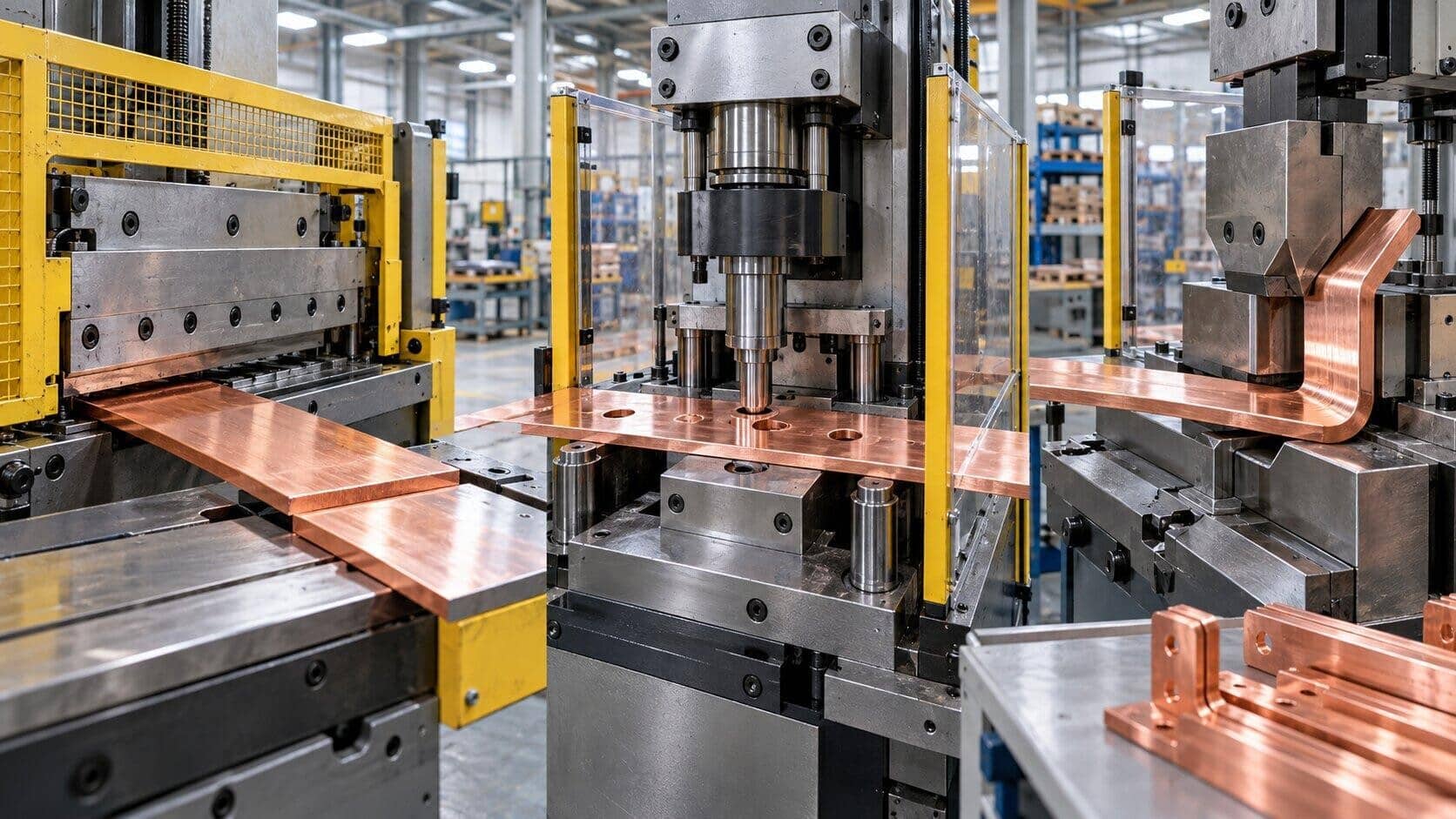
2. Check Cutting, Punching, and Bending Capabilities
A busbar processing machine needs to carry out the necessary processing process accurately and stability. Do not use the machine’s capacity rating as a measure of each processing function.
Cutting Capacity and Edge Quality
A good quality copper busbar cutting machine should ensure that the cut is straight, have no burrs and is only slightly bent.
Test the maximum cutting thickness, blade quality and dimensional accuracy. The poor cutting performance can lead to rework and may have an impact in the busbar fitting into electrical assemblies.
Punching Force, Hole Sizes, and Tooling
Punching is a crucial process for making holes into which screw heads are to be inserted, and for making electrical connection points.
When you are choosing the best busbar punching and bending machine, take a look at the punching force, hole shapes that the machine can support, the selection of available dies and how easily the tooling can be changed.
Ensure that the machine will accommodate the holes that you need in your parts without needing to make many adjustments.
Bending Angles, Radius, and Repeatability
The crucial point to note about a CNC busbar bending machine is that it should be able to bend the metal to a steady angle and while keeping the material’s minimum bend radius in mind. Test its bending force, angle control and tooling compatibility and repeatability.
If the busbar is going to be of a complex design, request the manufacturer to show the various bends with your material and drawings.
3. Compare CNC Automation with Hydraulic Machine Configurations
The use of automation has an effect on productivity, operator involvement and the consistency of production. But CNC and hydraulic systems do not have to be mutually exclusive systems.
CNC Controls, Programmable Settings, and Automatic Positioning
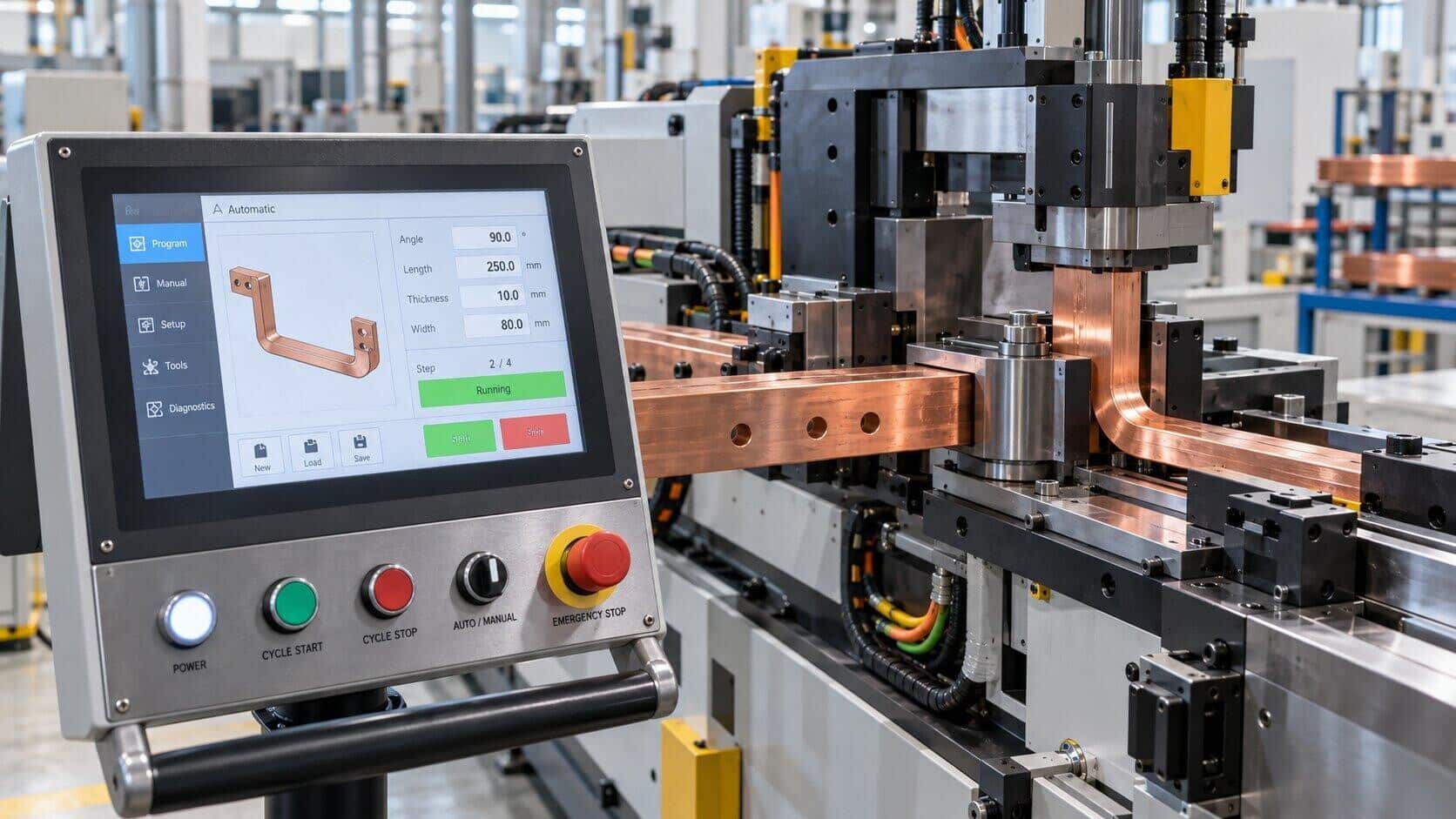
Common CNC busbar machine may be equipped with the following functions:
- Programmable bending angles
- Automatic material positioning
- Stored processing programs
- Digital operating controls
- Repeatable machining sequences
Some of the more advanced systems will also offer import or integration of drawing.
Ensure that the functions that are actually CNC controlled are correct. Some machines can be used to bend without still needing cutting or punching to be performed by hand.
When a Hydraulic Busbar Processing Machine Makes Sense
A hydraulic busbar processing machine is a machine that can be operated by hydraulic force to cut, punch and bend the busbar.
For workshops that require significant processing power and require little complexity, hydraulic equipment can be a good choice.
Note, however, that CNC machines can also be powered by hydraulics. The focus will be on the degree of automated control, rather than just a hydraulic system.
4. Verify Processing Accuracy and Consistent Output
For switchgear and electrical panels, processing accuracy is of crucial importance when making busbars. Assembling with incorrect hole positions or bending angles can cause assembly issues.
Positioning Tolerances and Bending Repeatability
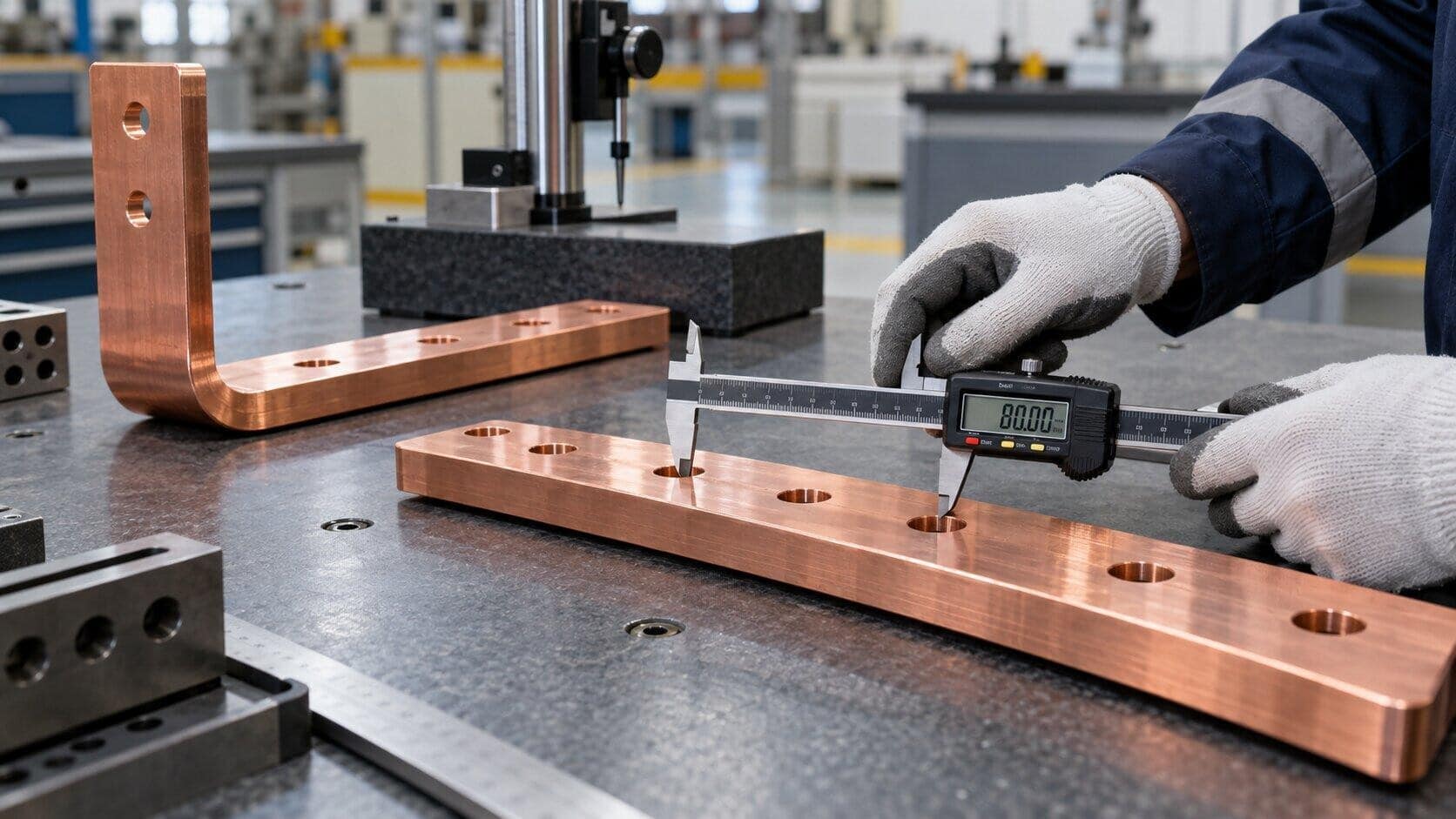
Verify the positioning accuracy, hole alignment tolerance, cutting tolerance and bending repeatability of the machine.
These measurements can’t be interchanged. A machine can place material in the correct position, but the material’s bending properties vary due to variation or springback.
Inquire from suppliers on how each of the specifications is being measured.
Request Sample-Part Testing Before Purchase
Send to the manufacturer actual production drawings and material samples.
Draw all parts and compare with the desired tolerances. The demonstration should be repeated and not be a single successful demonstration.
A documented factory acceptance test that provides evidence of machine performance gives more credibility to the machine’s performance than brochure specifications alone.
5. Evaluate Production Speed, Tool Changes, and Workflow Efficiency
The production need should be taken into consideration when assessing the machine. There is no guarantee of the highest overall output for a machine that has a short operating cycle.
Calculate Real Output Beyond Advertised Cycle Times
Think of all production process, such as material loading, positioning, cutting, punching, bending and unloading.
When creating multiple busbar designs, frequent changeovers to different tools may result in higher downtime.
Inquire about the lead time from your common production batch from suppliers.
Consider Multi-Function and 3-in-1 Machine Designs
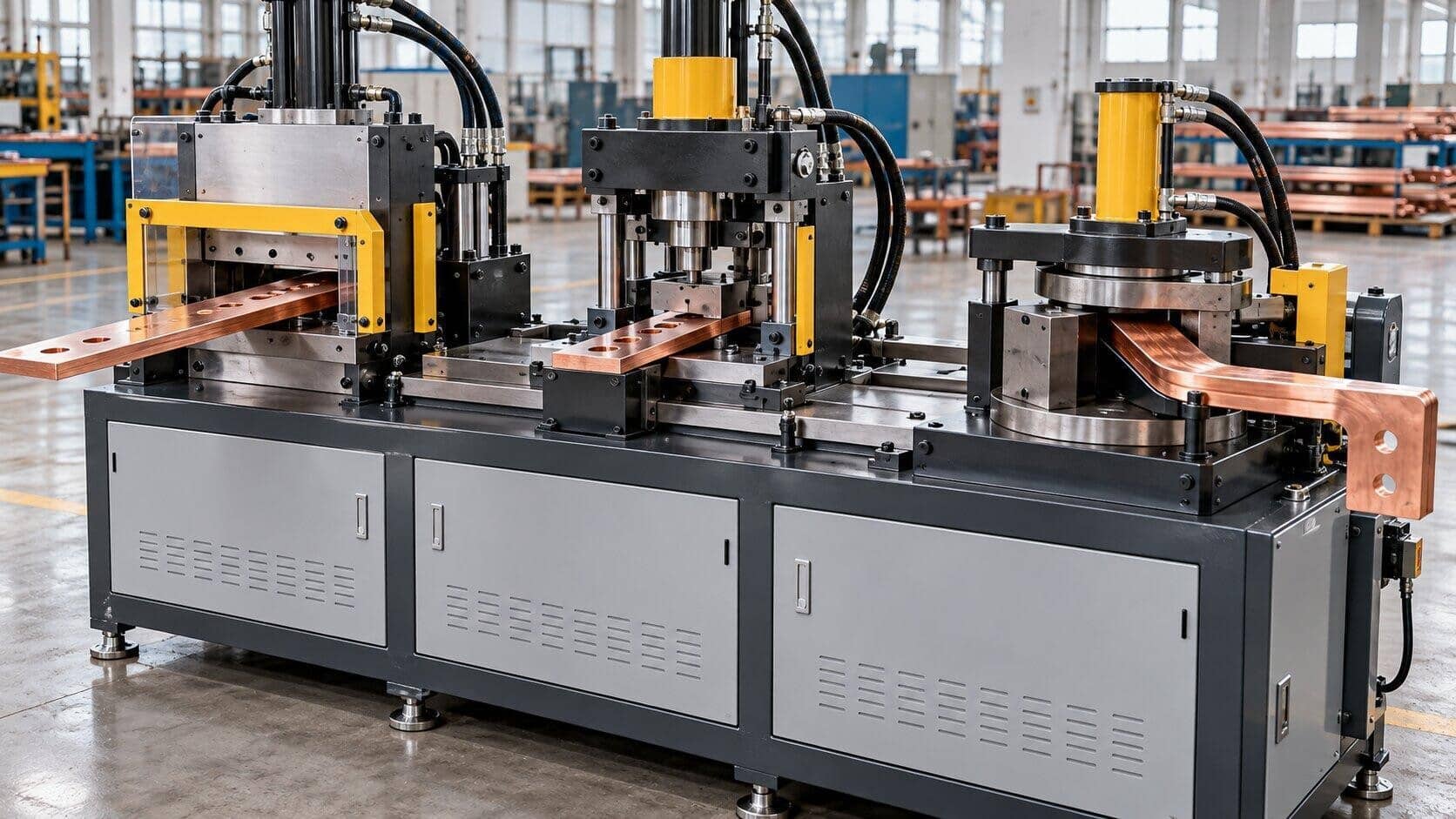
There are some busbar fabrication machines that have the cutting, punching and bending stations all integrated.These setups may be employed in a workshop with a restricted floor space or for different production needs.
When one step is the limiting factor in the production process, however, it may be desirable to have dedicated machines or automated production lines which can offer greater throughput. Make a comparison for actual production before making your decision.
6. Assess Machine Durability, Maintenance, and Operator Safety
Industrial equipment needs to be reliable when operating under standard conditions. The poor construction and maintenance can lead to more downtime and long term costs.
Three of the most significant factors: Frame Strength, Tooling Wear, and Maintenance Access
Frame Strength, Tooling Wear, and Maintenance Access
Find convenient maintenance locations, tooling that can be replaced and instructions that are easy to understand for lubrication.
Take into account availability and replacement costs of frequently-used parts.
Safety Guards, Emergency Stops, and Operator Training
The safety of the operator should be considered when evaluating equipment.Inspect for appropriate guards, stop controls, electrical protection and guarding of moving parts.
The supplier is responsible for giving the operating instructions, maintenance and training information. Ensure safe working practices and machine operation standards are adhered to.
7. Calculate Total Ownership Costs, Not Just Purchase Price
The actual machine purchase price is just one of the entire life costs of a machine. This can be the case with a cheaper model if it needs to be repaired often or scrap is produced excessively.
Compare Equipment, Tooling, and Operating Expenses
When evaluating quotations take into account the following costs:
- The complete cost of a machine: the price of the machine and delivery.
- Installation and commissioning
- Pressing, punching and bending instruments; applications of pressure tools and stamping.
- Electricity and consumables
- Parts, tools and supplies for maintenance and replacement.
- Operator training
Get a detailed quote to make a level comparison of equipment packages.
Estimate Payback Through Labor and Scrap Savings
Estimate the cost savings and the time savings due to the elimination of manual tasks, time and parts rejection. Calculate these savings in comparison to the complete investment price.
Rely on your own generation experiences as opposed to unsupported claims by suppliers of productivity or return on investment.
8. Review Manufacturer Reliability and After-Sales Support
Sophisticated supplier support can make a wide variance following set up.
Warranty, Spare Parts, and Technical Assistance
When ordering, ask questions related to warranty, parts availability, technical assistance and response time for services.
Check to see if the manufacturer provides installation instructions, operator training and remote troubleshooting.
One should also check if they can do the replacement in the country or have to import replacement tooling.
To gain a better understanding of the machine configurations available, consult the supplier’s CNC busbar machine product specifications, and compare them to the production requirements.
9. CNC Busbar Processing Machine Buying Checklist
This is a checklist that you can use to compare several models of busbar processing machines before you make a selection.
| Selection Factor | What to Check |
|---|---|
| Material compatibility | Copper and aluminum grades |
| Processing dimensions | Maximum width, thickness, and length |
| Cutting performance | Edge quality and cutting accuracy |
| Punching capabilities | Force, hole sizes, available dies |
| Bending performance | Angle control and repeatability |
| CNC automation | Programmable operations and positioning |
| Production efficiency | Output, setup time, changeovers |
| Maintenance | Spare parts and service requirements |
| Supplier support | Warranty, training, technical assistance |
Follow the checklist for all suppliers. This will help you detect any significant difference rather than comparing just based on the price of machines.
FAQs
What is a CNC busbar processing machine used for?
Copper and aluminum busbar is the material of electrical equipment, which is processed by cutting, punching, bending or other processing methods with a CNC busbar processing machine. The functions vary with configuration of the machine.
Can one CNC busbar machine cut, punch, and bend copper busbars?
Yes. Some multi-function CNC busbar machines are able to carry out all three functions. Buyers are advised however to check the capacity of each station and degree of automation before buying them.
What is the difference between CNC and hydraulic busbar processing machines?
CNC is a system of computer-controlled machines and hydraulic systems are systems for generating force. Some machines are hybrid machines and use both technologies to achieve hydraulic powered automated processing.
How do I choose the right processing capacity for my busbars?
Refer to your Max Material Width, thickness, grade and operations. Choose equipment that has an adequate rated capacity and test it by testing samples.
What affects the cost of a CNC busbar processing machine?
The price is dependent upon the capacity of the processing, the CNC functions, the level of automation, the type of tooling, the construction quality and the level of support provided by the supplier. Ownership costs also include the installation and maintenance costs.
Final Thoughts:
When considering the best CNC busbar processing machine, you should consider much more than just the price or promoted features. Pay attention to material compatibility, processing precision, manufacturing efficiency, maintenance requirements, and suppliers’ reliability.
Ask for detailed specifications and sample testing prior to buying.To learn more about suitable machine options, consult an established equipment supplier and compare models against your actual production requirements.