


The Centers for Medicare & Medicaid Services is preparing one-time $90 payments for an estimated 20.8 million people enrolled in Original Medicare Part B, using money from the Medicare Improvement Fund. Most eligible beneficiaries are expected to receive a direct deposit from the Social Security Administration on or around Oct. 8, 2026; those without direct deposit are slated to receive Treasury checks later this month.
The payment is sizable in aggregate but narrowly targeted. It does not go to everyone on Medicare, or even everyone with Part B. CMS limits eligibility to U.S.-based Original Medicare Part B beneficiaries who do not receive Medicaid premium assistance and are not subject to the Income-Related Monthly Adjustment Amount, known as IRMAA. Medicare Advantage enrollees are excluded.

Who qualifies and how payment will work
CMS set out the implementation rules in an Oct. 7 frequently asked questions document. A beneficiary must be enrolled in both Medicare Part A and Part B under Original Medicare, live in the United States, and meet the income- and assistance-related conditions. The agency says eligibility is determined from its records rather than through an application process.
For recipients whose Social Security benefits already arrive electronically, the $90 is expected as a separate direct deposit from the Social Security Administration, not as a recurring change in their benefit or Part B bill. People without direct deposit should receive a Treasury check at the mailing address Medicare has on file. CMS says beneficiaries may begin contacting Social Security about a missing payment on Oct. 15.
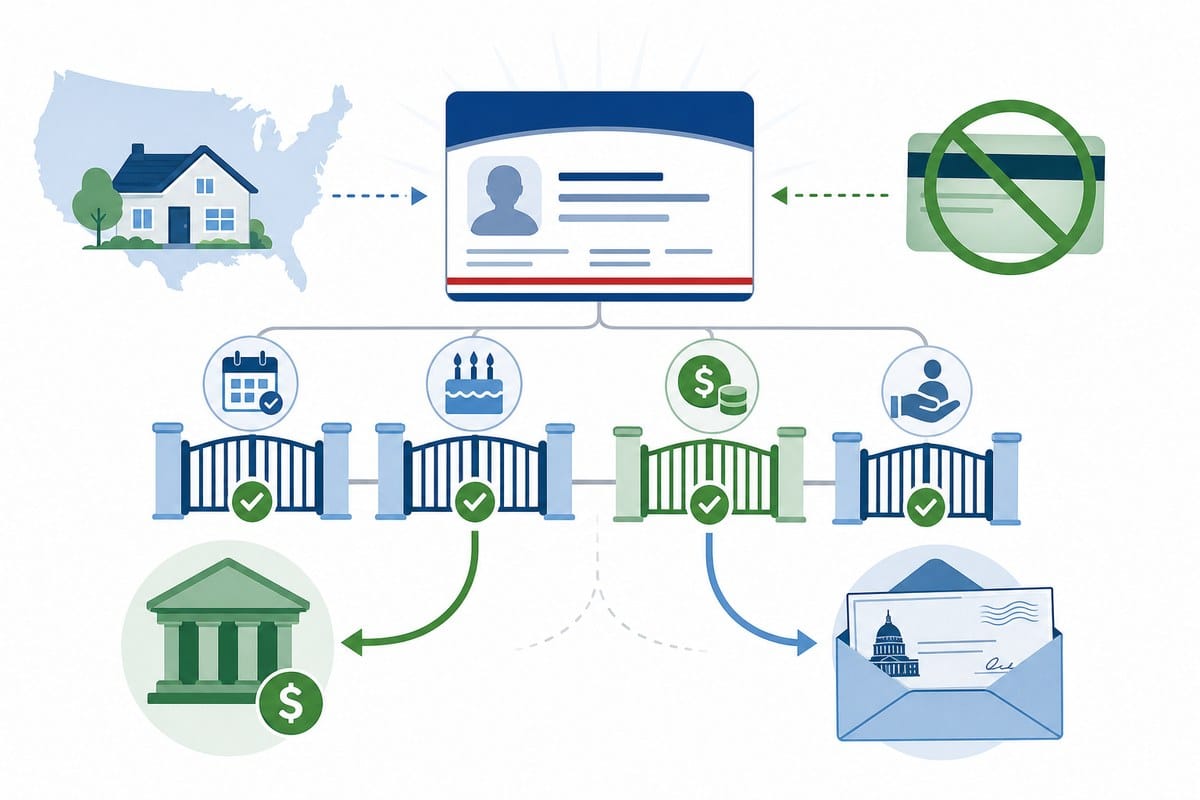
The exclusions are material because Medicare Advantage is a major coverage channel within Medicare, yet its members will not receive this rebate. The program is also unavailable to beneficiaries whose Part B premiums are paid with Medicaid assistance and to higher-income beneficiaries who pay IRMAA. The administration announced the initiative Oct. 3, and the White House fact sheet described it as a way to use the Medicare Improvement Fund to lower beneficiaries’ costs.
A limited offset against the Part B premium
The payment equals less than half of a standard month of Part B premiums. The standard 2026 monthly Part B premium is $202.90, according to CNBC’s reporting on the announcement. On that measure, $90 covers about 44% of one month’s standard premium. It is a cash payment, not a permanent $90 reduction in the premium charged in future months.
The reach is also narrower than the headline number can suggest. CNBC cited Medicare Part B enrollment of roughly 62.9 million people. CMS’s 20.8 million eligible-recipient estimate therefore represents about one-third of Part B enrollment, based on those figures. The difference reflects both the Original Medicare requirement and the exclusions tied to Medicaid premium assistance, IRMAA and residence outside the United States.
For households that qualify, the timing places the payment alongside a year in which beneficiaries face the $202.90 standard monthly premium. But its purchasing power is fixed at $90 regardless of a recipient’s monthly premium obligation, and CMS has not presented it as an ongoing premium policy.
Fund math leaves little disclosed cushion
At CMS’s estimate of 20.8 million recipients, multiplying the $90 payment by the eligible population produces an implied outlay of about $1.872 billion. The White House said Congress provided the Medicare Improvement Fund with $2 billion. That simple comparison suggests the rebates account for roughly 94% of that stated amount.
It does not establish that the program will spend exactly $1.872 billion or that the fund will have $128 million remaining. CMS’s recipient estimate may not equal the final number paid, and neither CMS nor the White House materials establish the fund’s current balance after any prior uses or the administrative costs of issuing deposits and checks.
CMS says the fund was created in the 2008 Supplemental Appropriations Act for improvements under Original Medicare’s fee-for-service Parts A and B. The administration’s argument that the payment makes Medicare more affordable is its policy rationale; the operational record is more specific: a single $90 payment, a defined pool of 20.8 million estimated recipients, and an October delivery schedule split between electronic deposits and paper checks.