


Yes, but with clear limitations. Cheap thermal cameras can be worth it for basic heat visualization, learning purposes, and occasional home checks. However, their lower resolution, reduced sensitivity, and limited accuracy mean they are not designed for professional inspections or situations where precise temperature data is critical.
Whether they are “worth it” ultimately depends on how much detail and reliability the user actually needs.
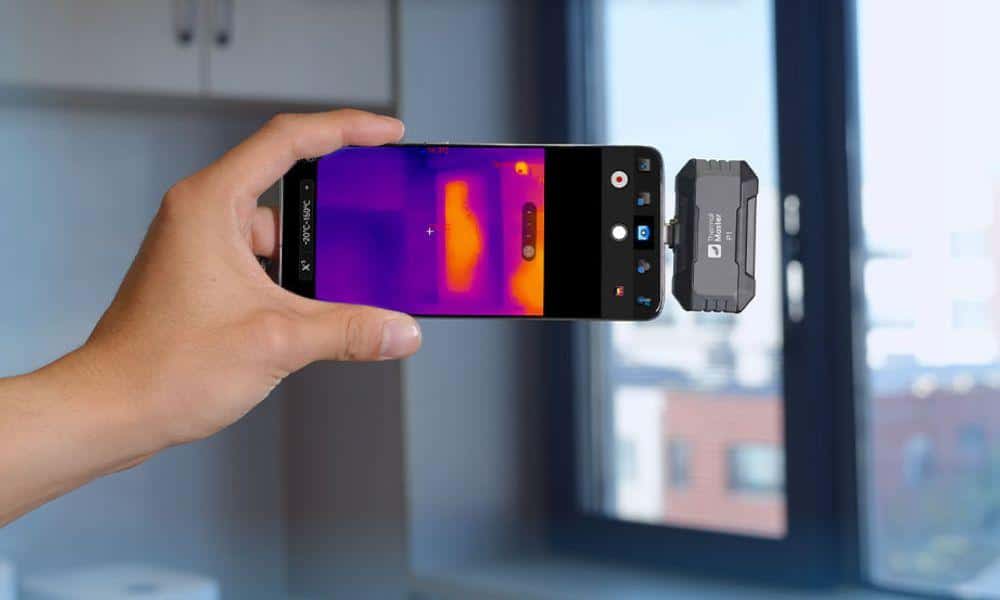
What Counts as a “Cheap” Thermal Camera Today?
In today’s market, a “cheap” thermal camera generally refers to entry-level devices priced significantly below professional inspection tools. These models are designed to make thermal imaging more accessible by reducing hardware complexity and limiting advanced features.
Compared to mid-range or professional systems, lower-cost thermal cameras typically use simpler infrared sensors, offer lower image resolution, and provide fewer analysis tools. While they still function as genuine thermal imaging devices, their capabilities are intentionally streamlined to keep costs down.
This does not mean they are unusable—but it does mean they are built for a different type of user.
What You Gain and Lose with Cheap Thermal Cameras?
The main advantage of a cheap thermal camera is accessibility. These devices allow users to visualize heat patterns without the high upfront cost traditionally associated with thermal imaging. For beginners, this can be an effective way to understand how thermal imaging works and explore basic applications.
Affordable models often offer:
- Simple operation with minimal setup
- Portable and lightweight designs
- Basic thermal visualization suitable for general observation
However, these benefits come with trade-offs. Lower-cost therma imagingl cameras typically have reduced resolution, making fine details harder to see. Temperature accuracy may be less consistent, especially when measuring small or distant objects. Software features such as advanced analysis, reporting, or customizable measurement tools are often limited or unavailable.
In practice, this means cheap thermal cameras are best viewed as visual tools rather than precision instruments.
Where Cheap Thermal Cameras Make Sense?
For certain use cases, affordable thermal cameras can be surprisingly useful. Casual users who want to explore thermal imaging without professional requirements often find that budget models meet their expectations.
Common scenarios where cheap thermal cameras make sense include:
- Basic home checks, such as identifying obvious heat loss or warm spots
- Educational use or learning how thermal imaging works
- Occasional, non-critical inspections where precision is not essential
In these situations, the goal is usually to spot noticeable temperature differences rather than measure exact values. For users who understand these limitations, a low-cost thermal camera can provide good value.
Where Cheap Thermal Cameras Fall Short?
Problems arise when cheap thermal cameras are used beyond their intended scope. Tasks that require precise temperature measurement, high image clarity, or reliable repeatability often exceed what budget devices are designed to deliver.
Situations where low-cost thermal cameras may fall short include:
- Professional home or building inspections
- Electrical diagnostics where small temperature differences matter
- HVAC analysis requiring consistent accuracy
- Long-term monitoring or documentation
In these cases, limited resolution and sensor sensitivity can lead to missed details or misleading results. Users may still see thermal patterns, but subtle issues can go undetected. Over time, these limitations can reduce confidence in the data being collected.
Making a Practical Decision
Whether a cheap thermal camera is “worth it” ultimately depends on how it will be used. For first-time users, hobbyists, or those with occasional needs, affordable models can offer an accessible introduction to thermal imaging. They provide real thermal data at a price point that lowers the barrier to entry.
For users who rely on thermal imaging as a diagnostic or professional tool, however, investing in higher-quality equipment is often justified. Greater resolution, accuracy, and software support translate directly into more reliable results and fewer uncertainties.
Rather than focusing solely on price, buyers should consider:
- How often will the camera be used
- Whether decisions depend on accurate temperature readings
- The level of detail required for their applications
Conclusion
Cheap thermal cameras are neither useless nor universally sufficient. They occupy a clear space in the market, offering basic thermal imaging at an affordable cost. For casual use and general observation, they can be a practical and educational tool.
However, when accuracy, reliability, and detailed analysis are essential, the limitations of low-cost thermal cameras become more apparent. In these cases, spending more is not just about better features—it’s about confidence in the results.
Understanding these trade-offs allows users to choose a thermal camera that aligns with their real needs, rather than being guided by price alone.