


Ask ChatGPT about abortion and you might encounter the new information gatekeeper in action. The chatbot is narrow in scope, directing users to reputable resources more often than delivering caveats or contradictions that may mislead people seeking care. The result is a fast-expanding pipeline of abortion information, and with it, the parallel peril that misinformation can make its way in.
AI becomes the new front door for abortion information seekers
“Now general-purpose chatbots are being turned into referral engines,” abortion organizations say. Plan C, a leading provider of medication-abortion information, saw traffic from ChatGPT spike 300 percent in one month once the tool started surfacing its guides more prominently. Online health service Women on Web, a global telehealth provider, says users who arrive through ChatGPT complete online consultations to a greater extent than people who come from traditional search or social platforms.
- AI becomes the new front door for abortion information seekers
- Helpfulness meets high stakes in sensitive reproductive health
- Personalization can help or hinder people seeking abortions
- What advocates want from AI firms on accuracy and safety
- Specialized health chatbots step in with safer guidance
- How users can work with AI answers and verify sources
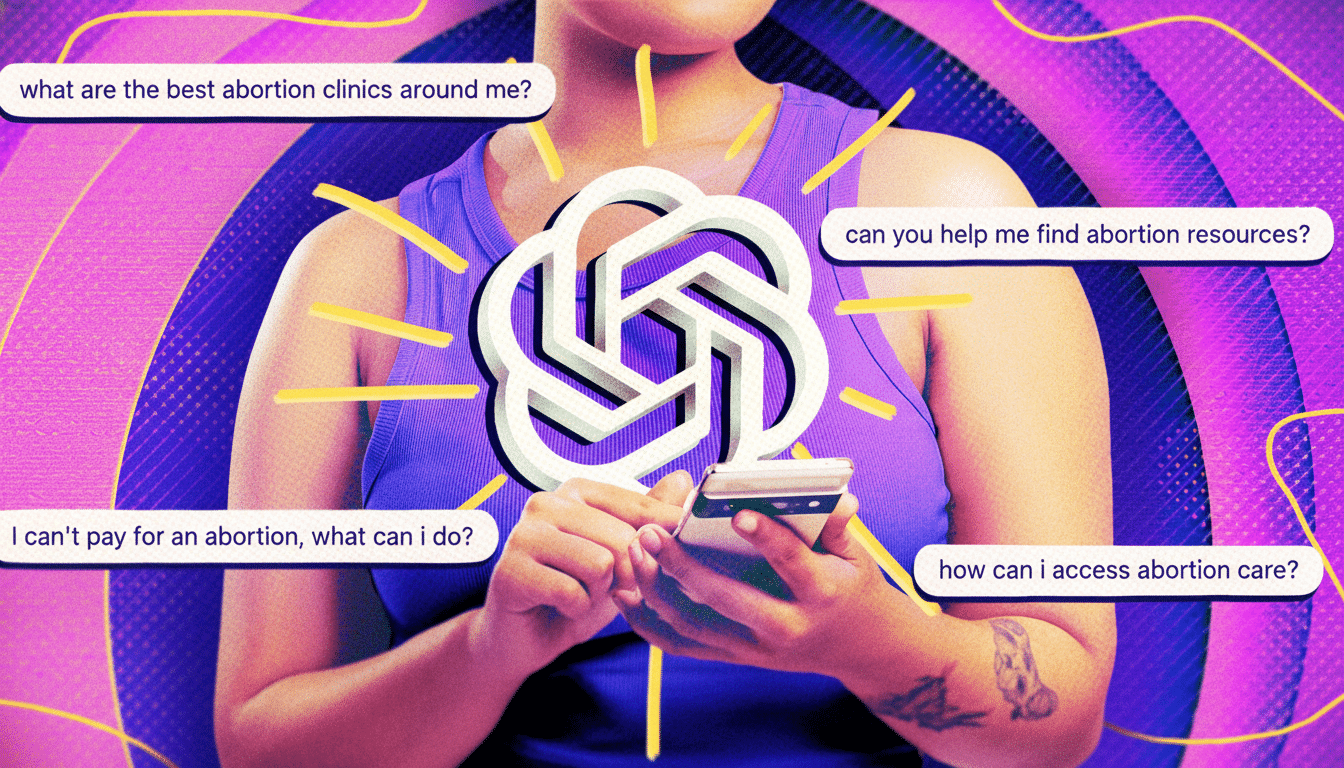
That influence derives from the way the large language models prioritize responses. They combine training data, current web offerings, and signals such as repetition and perceived authority — and they personalize answers based on chat history and location. In practice, two people can pose almost the exact same question and get very different answers — a phenomenon that matters in such time-sensitive and legally complex subject matter.
Early testing by advocates suggests that this may be the case; Google’s AI Overview and chat mode can often point to local, vetted resources more reliably than ChatGPT. For all that, ChatGPT now dominates referral logs at a number of abortion rights groups, making its strengths and blind spots unusually significant.
Helpfulness meets high stakes in sensitive reproductive health
Abortion experts describe a split screen: incredibly helpful overviews about laws, timelines, and support organizations alongside errors or even deceptive sources.
One consistent issue concerns the rise of Crisis Pregnancy Centers (CPCs), which often pretend to be clinics and then send people away from abortion. Health policy researchers estimate that there are about three times as many CPCs in the U.S. as legitimate abortion clinics, which gives them a disproportionately large presence online.
Those dynamics reinforce price and access myths. CPCs, for example, have for years sown erroneous cost data online. And when chatbots scrape and synthesize that content, even the most nuanced of answers can be twisted by lopsided citation. Advocates caution that this risks adding to stigma, especially when legal disclaimers drown out practical information or chatbots list CPC hotlines as trusted resources.
The stakes are higher now that medication abortion is the most common type of abortion in the United States. The Guttmacher Institute estimates that more than 60 percent of abortions were pill-induced in recent years, a trend that makes accurate, timely digital guidance even more important. But there is scant peer-reviewed research on how AI phrasing, tone, and interface influence care-seeking behavior — gaps that reproductive health scholars are diligently working to fill.
Personalization can help or hinder people seeking abortions
Location-aware responses can be useful for directing people to resources: financial aid or legal resources in their own area, but they can also rapidly narrow the frame. Experts say even in extremely restrictive environments users may see more responses ruled by legal risk than links to support help or information hubs. And because the models’ answers are affected by chat history, the same person can receive different advice from one session to another.

Privacy is a looming concern. Reproductive health organizations are demanding that AI companies limit what data they collect and for how long, make it clear whether chats are used to train algorithms, and create easy options for disabling personalization. The risk calculus similarly has changed for many users, who increasingly approach a chatbot as they would a search engine — unaware of how much personal context may dictate the reply.
What advocates want from AI firms on accuracy and safety
Groups influencing abortion access are calling on AI developers for transparent sourcing, stronger guardrails against the amplification of CPCs, and partnerships that elevate high-quality, vetted health content. They also want regular disclosures when answers are uncertain or laws change, as well as independent audits of accuracy and harm in sensitive health topics.
They look to respected authorities — the World Health Organization, American College of Obstetricians and Gynecologists, National Abortion Federation, and Guttmacher Institute — as moorings for medical accuracy. The ask isn’t to editorialize, they say, but to favor evidence-based medicine over search-engine gamesmanship.
Specialized health chatbots step in with safer guidance
Simultaneously, there is a burst of domain-specific tools.
- Charley, in partnership with Planned Parenthood and the National Abortion Federation: a scripted chatbot that offers scope-limited information about getting an abortion.
- Roo: a 24/7 sexual health question-answering service provided by Planned Parenthood.
- Ally, from Women First Digital: evidence-based guidance for finding an abortion or contraception.
Start-ups like Ema blend general language models with tight reins on clinician-reviewed content to tamp down hallucinations and exclude unreliable sources.
These systems make a bet that breadth will be sacrificed for safety. By limiting what they’ll answer and relying on verified sources, they hope to provide more stable, contextually relevant guidance that doesn’t change with each passing fad. For many proponents, that’s a better match for high-stakes health subjects than a general chatbot geared to answer everything from recipe advice to car troubles.
How users can work with AI answers and verify sources
Experts say to treat the results of AI systems as the beginning, not the end.
- Seek out explicit source attributions.
- Watch for CPC indicators like mysterious medical services and heavy reliance on free ultrasounds.
- Cross-reference with established medical organizations and reputable reproductive health groups.
- If an answer feels so legalistic that it becomes paralyzing, consider whether it was filtered for personalization or location.
What’s clear, advocates say, is that chatbots are shaping how millions of people encounter information about abortion — for better or worse. With clearer policies, better sourcing, and privacy-first design, AI might ease the friction for people seeking reliable information. But without that, the same technology that opens doors risks leading users down the wrong hallway.