


Today, the global digital economy is shaping the landscape of financial transactions, and in this, digital wallet apps are playing an essential part.
All the tech-savvy customers and individuals around the world are making the best out of these apps. From paying utility bills to shopping online, money transactions, and others, the digital wallet apps are making it all fast, convenient, and secure. With the growing adoption of these apps comes several complexities.
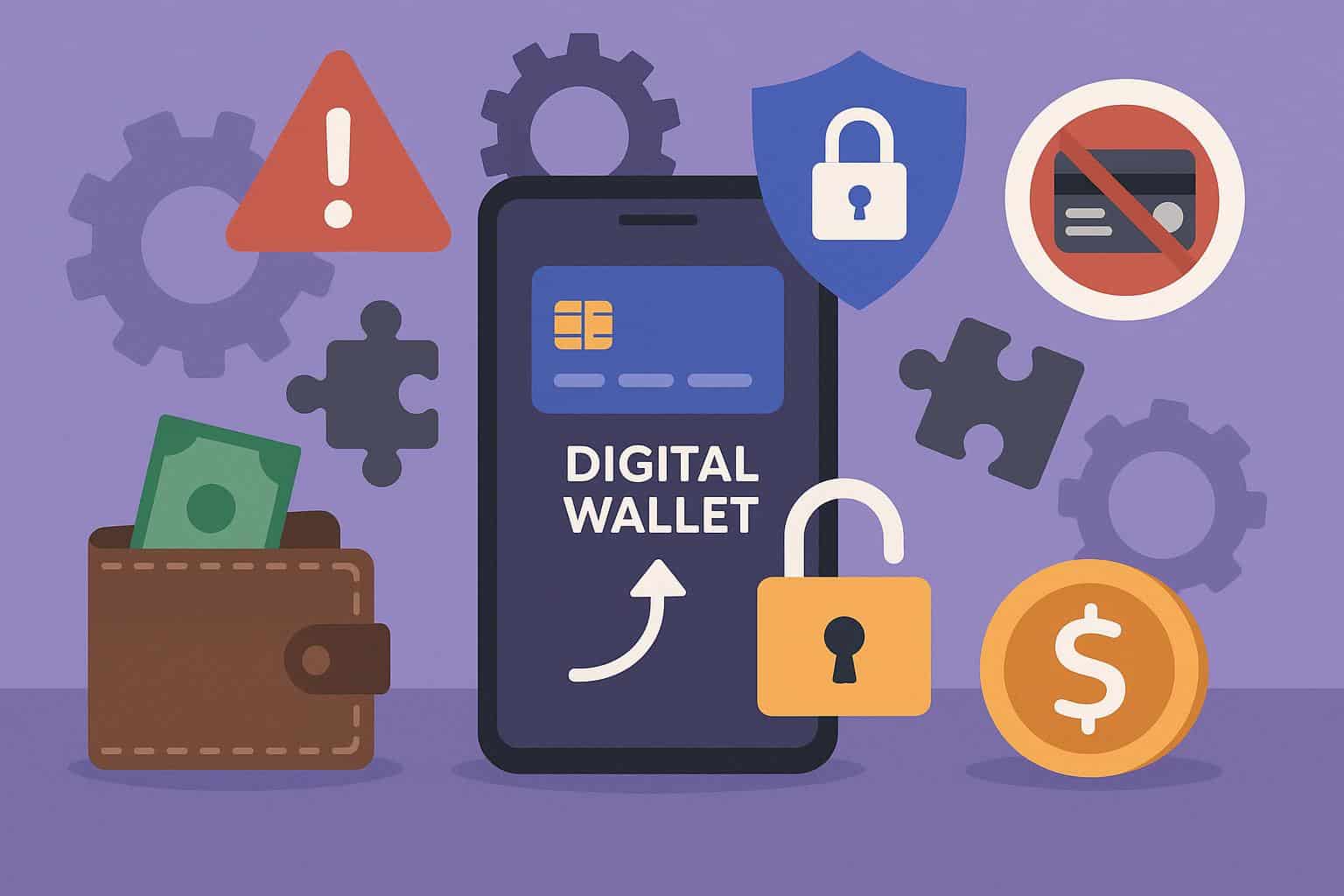
Fintech companies are facing several challenges, such as technical, operational, and regulatory challenges, which are affecting their growth and losing user trust. Implementing a strategic solution by understanding these challenges can help to build a successful digital wallet app. A Fintech App Development Company can help a lot in this process.
Do you want to know about the challenges and their solutions?
Major Problems Faced By Digital Wallet Apps & Their Solution
Digital wallet apps, though made life for users quite easy, offering seamless financial transactions, but come with several challenges. Understanding these challenges and practically solving them can help to build a successful digital wallet app.
We have listed the major problems faced by digital wallet apps and also provided their solution :
- Security Threats and Fraud Risks
The Challenge :
Security is the most critical concern for any digital wallet. With sensitive financial data stored and transmitted, digital wallets are prime targets for cybercriminals.
Common threats include :
- Phishing and social engineering
- Account takeovers
- Malware attacks
- Unauthorized transactions
- Data breaches
- SIM swapping
How to Solve It :
- Multi-factor Authentication (MFA): Combine passwords, biometrics, and device verification.
- AI-driven fraud detection: Machine learning models can identify unusual behavior in real time.
- Tokenization and end-to-end encryption: Prevents exposure of sensitive card or account details.
- Behavioral biometrics: Track typing speed, geolocation, and interaction patterns.
- Regular security audits and compliance tests: Ensure vulnerabilities are detected early.
- Security awareness for users: In-app prompts and educational notifications can reduce phishing success.
- Complex Regulatory Requirements
The Challenge :
Digital wallets operate in a heavily regulated sector. Requirements differ across countries and may involve:
- KYC (Know Your Customer)
- AML (Anti-Money Laundering)
- GDPR and data protection laws
- PCI DSS for card transactions
- Licensing for e-money services
- Transaction reporting
- Data localization regulations
How to Solve It :
- Flexible compliance frameworks: Build modular systems that adapt to regional laws.
- Automated KYC/AML tools: Use OCR, biometrics, and AI to streamline verification.
- Legal consultants or compliance partners: Helps navigate country-specific requirements.
- Transparent user data policies: Build trust and align with privacy expectations.
- Poor User Experience and Slow Performance
The Challenge :
Users expect smooth, fast, and intuitive experiences. Bad UX leads to high uninstall rates and low user retention.
Common UX issues include :
- Slow loading and transaction delays
- Confusing navigation
- Limited payment options
- High failure rates during peak usage
- Poor onboarding process
- Overwhelming verification steps
How to Solve It :
- Optimize app performance: Reduce API latency and increase server capacity.
- User-centered design: Conduct usability studies and test real-world user flows.
- One-click or same-day onboarding: Simplify account creation and KYC.
- Offer multiple payment methods: Cards, UPI, bank accounts, QR, NFC, BNPL, etc.
- Clear feedback: Progress bars, success notifications, and error messages improve clarity.
- Personalization: Use AI to tailor recommendations and promote relevant features.
- Integration With Banks and Third-Party Systems
The Challenge :
Digital wallets depend on banks, credit card networks, payment gateways, and other fintech systems. Each integration has its own API structure, uptime, and reliability.
Problems arise when :
- Third-party APIs go down
- Settlement cycles vary
- Compatibility issues occur between financial networks
- Manual reconciliation becomes burdensome
How to Solve It:
- API management platforms: Use robust middleware to handle multiple integrations.
- Redundancy with multiple service providers: Reduce dependency on a single gateway.
- Automated reconciliation systems: Help match transactions quickly and accurately.
- Sandbox testing environments: Ensure reliability before launching new integrations.
- Real-time monitoring dashboards: Detect API failures immediately.
- Building User Trust
The Challenge :
Fintech apps must work harder than other apps to build trust. A lack of trust directly affects adoption rates.
Many users hesitate to store financial information online due to concerns about:
- Data misuse
- Privacy invasion
- Fraud
- App instability
- Hidden fees
How to Solve It :
- Transparency: Show clear, upfront information about fees, limits, and policies.
- Strong branding & credibility: Certifications, compliance badges, and financial institution partnerships increase trust.
- Social proof: Reviews, testimonials, and ratings boost confidence.
- Consistent reliability: Apps must function smoothly without frequent downtime.
- Responsive customer support: Quick resolution builds long-term loyalty.
- Maintaining High Transaction Success Rates
The Challenge :
Users expect digital payments to work instantly. Frequent failures lead to frustration and churn.
However, transaction failures still happen due to:
- Connectivity issues
- Banking downtimes
- OTP delays
- Incorrect information
- Server overload
- Network congestion
How to Solve It :
- Smart routing: Automatically choose the best-performing payment gateway in real time.
- Retry logic: Reattempt failed transactions within seconds.
- UPI deep-linking: Reduces manual steps for mobile payments.
- Pre-validation: Check user details before initiating a transaction.
- Performance monitoring: Track success rates and optimize high-failure paths.
- Scalability Challenges
The Challenge :
As digital wallets grow, they must support millions of users and thousands of transactions per second. Without proper scaling, apps become unstable.
Issues include :
- Server overload
- Database bottlenecks
- Delays during peak sales periods
- Inefficient infrastructure
How to Solve It :
- Cloud-native architectures: Auto-scale based on traffic.
- Microservices: Break monolithic systems into independent services.
- Caching: Reduce redundant server calls.
- Load balancing: Distribute traffic efficiently.
- Event-driven systems: Handle high-volume transactions smoothly.
- Competition and Differentiation
The Challenge :
The digital wallet industry is crowded. Competing apps often offer similar features like QR payments, bill payments, and rewards programs. Standing out requires innovation and superior user value.
How to Solve It :
- Add value-added services: Insurance, investments, microloans, and subscriptions.
- Gamification: Reward systems, challenges, and loyalty points encourage usage.
- AI-driven insights: Spending analysis and budgeting tools add utility.
- Merchant partnerships: Exclusive offers and discounts attract users.
- Seamless cross-border payments: A major differentiator in emerging markets.
Conclusion
Digital wallet apps have transformed the whole scenario of financial transactions today. But the complexity with these apps is gradually increasing, whether it is with maintaining security, user satisfaction, or any other aspect.
You now know about the challenges that digital wallet apps are facing, and you have learned how they can be handled as well. This will surely help the digital wallet companies to build a high-performing and trustworthy digital wallet app that fulfills customers’ demands with the help of the eWallet App Development Company. Start designing a high-yielding digital wallet app.