


Most training advice stops at the gym door. Sets, reps, tempo, intensity, all carefully tracked and optimised. Then the session ends, and for the next eight hours, almost nobody pays attention to what’s happening inside the body at all.
That’s a problem, because the most important phase of muscle repair doesn’t happen during your workout. It happens after it, while your body is doing the quiet, unglamorous work of rebuilding what you just broke down.
- What Happens to Your Muscles While You Sleep
- The Foundation: Slow-Digesting Protein
- Creatine and Mineral Timing for Tissue Rebuilding
- Deep Sleep and Nervous System Recovery
- Omega-3 Fatty Acids to Manage Overnight Inflammation
- How Do You Build a Complete Recovery Stack
- Small Nightly Choices, Long -Term Training Progress
What Happens to Your Muscles While You Sleep
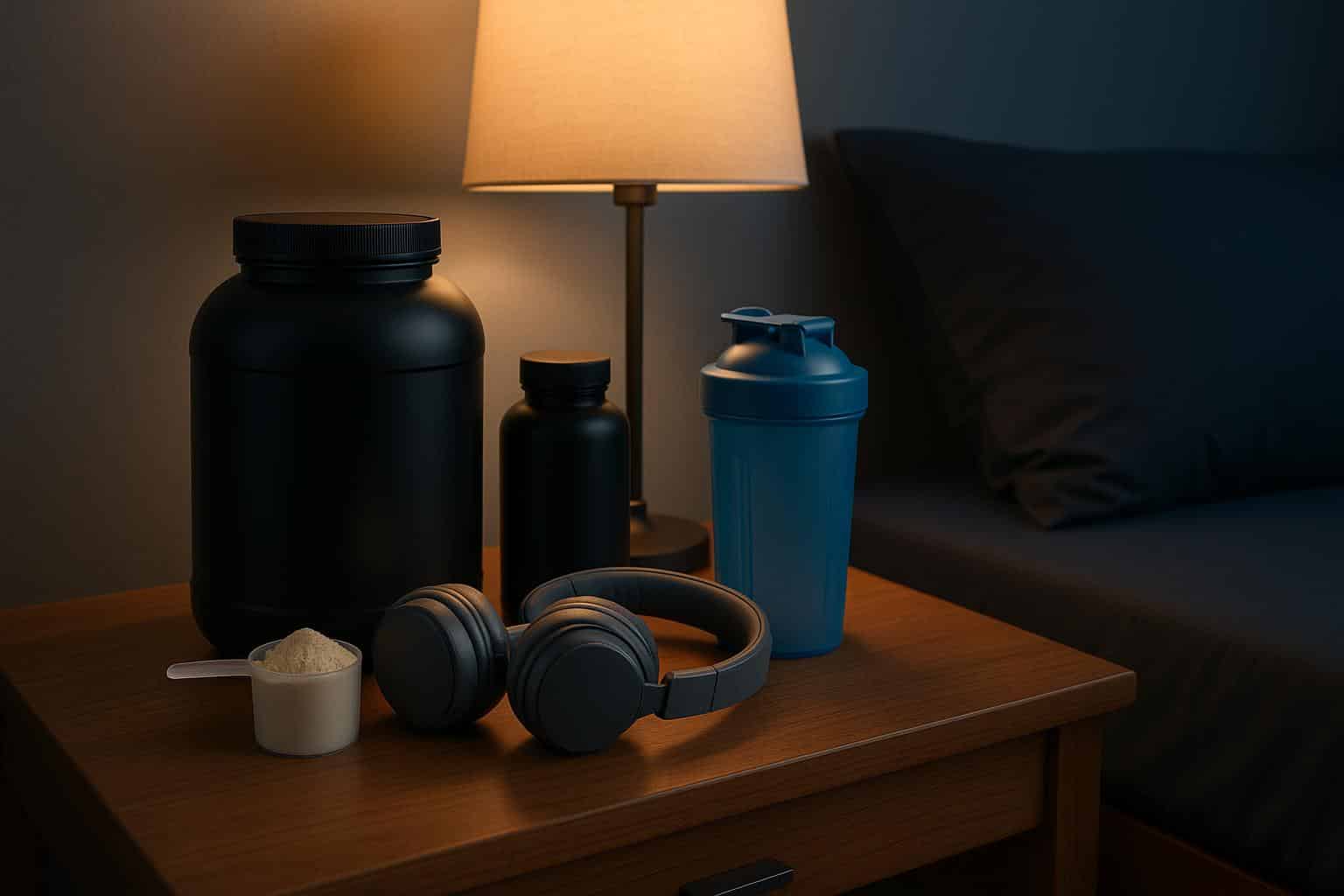
Training creates microscopic damage in muscle fibres. Repair, not the workout itself, is what makes a muscle stronger, and the bulk of that repair work happens during sleep, when growth hormone release peaks and the body redirects energy toward tissue rebuilding rather than daily activity.
This overnight window is also when your nervous system recovers from the stress of training. Without enough deep sleep, the recovery process slows, leaving muscles less prepared for the next session and increasing the risk of lingering soreness or fatigue that carries into the following day.
Supporting this window with the right nutrients can make a measurable difference to how you feel and perform, which is exactly where a thoughtful evening supplement routine comes in.
The Foundation: Slow-Digesting Protein
Whey protein digests quickly, which makes it ideal right after training but less useful once you’re asleep. Your muscles need a steady amino acid supply throughout that stretch, not a quick burst that’s gone within the first hour.
Micellar casein solves this well. It clots once it reaches the stomach, slowing digestion so amino acids are released gradually, often for up to seven hours. That steady release is what helps prevent muscle breakdown during the longest gap between meals in your entire day.
For anyone who finds dairy difficult to digest, collagen peptides and other amino acid supplements can be a solid alternative. They supply amino acids that support muscle tissue while also contributing to joint and connective tissue health, which becomes increasingly valuable as training volume builds over time.
Creatine and Mineral Timing for Tissue Rebuilding
Creatine is often treated as a pre-workout staple, but it’s non-stimulant, so taking it in the evening works just as well. What actually matters is hitting your daily intake consistently, and an evening dose keeps your levels topped up while your body focuses on rebuilding tissue overnight.
Zinc and magnesium round out this part of the stack by supporting two different processes at once. Zinc plays a direct role in protein synthesis, while magnesium helps regulate the nervous system and ease muscles that are still tight from training. Many people take both together, often alongside vitamin B6 in a ZMA formula, to cover this ground in a single dose.
Deep Sleep and Nervous System Recovery
Nutrition alone can’t compensate for poor sleep quality, which makes this stage of the stack just as important as anything aimed directly at muscle tissue. Deep sleep is when the most valuable repair work happens, so giving your nervous system the support it needs to get there matters.
Magnesium bisglycinate and magnesium threonate are more easily absorbed than standard forms and help quiet an overactive nervous system, making it easier to settle into deeper sleep stages and stay there longer without waking.
Tart cherry extract supports this same goal from a different angle. It’s been linked to lower levels of delayed-onset muscle soreness, and it’s also a natural source of melatonin, helping regulate the sleep-wake cycle alongside its physical benefits.
L-theanine adds to the group for anyone who struggles to switch off at night. This amino acid has a calming effect that eases pre-sleep anxiety, helping you fall asleep faster without the groggy feeling some sleep aids leave behind the next morning.
Omega-3 Fatty Acids to Manage Overnight Inflammation
Inflammation naturally rises overnight as part of the body’s repair response, and omega-3 fatty acids from fish oil can help keep that process in balance. EPA and DHA, the two main compounds found in fish oil, work by influencing the signalling molecules that control how intense and how long the inflammatory response runs. Keeping those signals balanced means tissue gets the chance to repair without staying inflamed longer than necessary.
This matters most for anyone training through heavy blocks, where soreness tends to build up faster than the body can clear it. Omega-3s have also been linked to better blood flow to working muscles, which supports the delivery of oxygen and nutrients during the repair process itself. Taken consistently, this addition can help muscles feel less stiff the morning after intense sessions and support steadier recovery across a full training week.
How Do You Build a Complete Recovery Stack
A complete evening stack brings these pieces together in a way that fits your own training load and how your body responds. Not every component needs to be part of every single night. The goal is to notice how you wake up, how sore you feel, and how quickly you bounce back into training, then adjust the mix based on what your body is telling you.
If you’re exploring supplements for workout recovery more broadly, pairing daytime options with an evening routine gives your body support across the full recovery cycle, not just the hours immediately after training.
For science-led guidance on combining nutrition with a structured training plan, the British Dietetic Association’s workout supplement for workout recovery resource is a useful reference point before adding anything new to your routine.
Small Nightly Choices, Long -Term Training Progress
Recovery builds gradually, through small choices repeated night after night. So, treat your evening routine with the same care you bring to your training plane, turning sleep into an active part of your progress instead of something that simply happens around it.