


BioticsAI has received U.S. Food and Drug Administration clearance for its artificial intelligence software that assists clinicians during fetal ultrasound exams, a milestone that moves AI deeper into routine prenatal care. The company’s system aims to reduce missed views, standardize measurements, and surface potential concerns in real time, addressing long-standing variability in how fetal scans are performed and interpreted.
What FDA clearance means for prenatal ultrasound AI
The green light classifies BioticsAI’s product as software as a medical device, meaning its safety and performance were reviewed against established predicates and clinical evidence. In practice, cleared AI tools are typically “locked” models validated on independent datasets, with manufacturers committing to post-market monitoring and quality systems aligned with the FDA’s Good Machine Learning Practice principles.
- What FDA clearance means for prenatal ultrasound AI
- Why prenatal imaging needs help from AI guidance
- How the system works during fetal ultrasound exams
- Validation and bias mitigation across diverse patients
- Market context and competitors in ultrasound AI
- Adoption path and impact on prenatal imaging workflows
- What to watch next as FDA-cleared ultrasound AI rolls out

For health systems, clearance signals that the tool can be integrated into clinical workflows alongside existing imaging platforms and reporting software. It does not replace clinician judgment; instead, it provides standardized quality checks and decision support to help sonographers and physicians capture required views and measurements efficiently.
Why prenatal imaging needs help from AI guidance
Obstetric ultrasound is the workhorse of prenatal care, yet outcomes depend heavily on operator skill, fetal position, and scan conditions. Research cited by the American College of Obstetricians and Gynecologists shows wide variability in detection of certain anomalies across sites, with performance influenced by training, equipment, and adherence to standardized protocols.
The stakes are heightened by persistent disparities in maternal health. CDC data show maternal mortality in the United States remains higher than in peer countries, and Black women face a risk of death related to pregnancy roughly three times that of white women. In parallel, the March of Dimes has documented widespread maternity care deserts, where access to experienced sonographers and maternal-fetal medicine specialists can be limited.
How the system works during fetal ultrasound exams
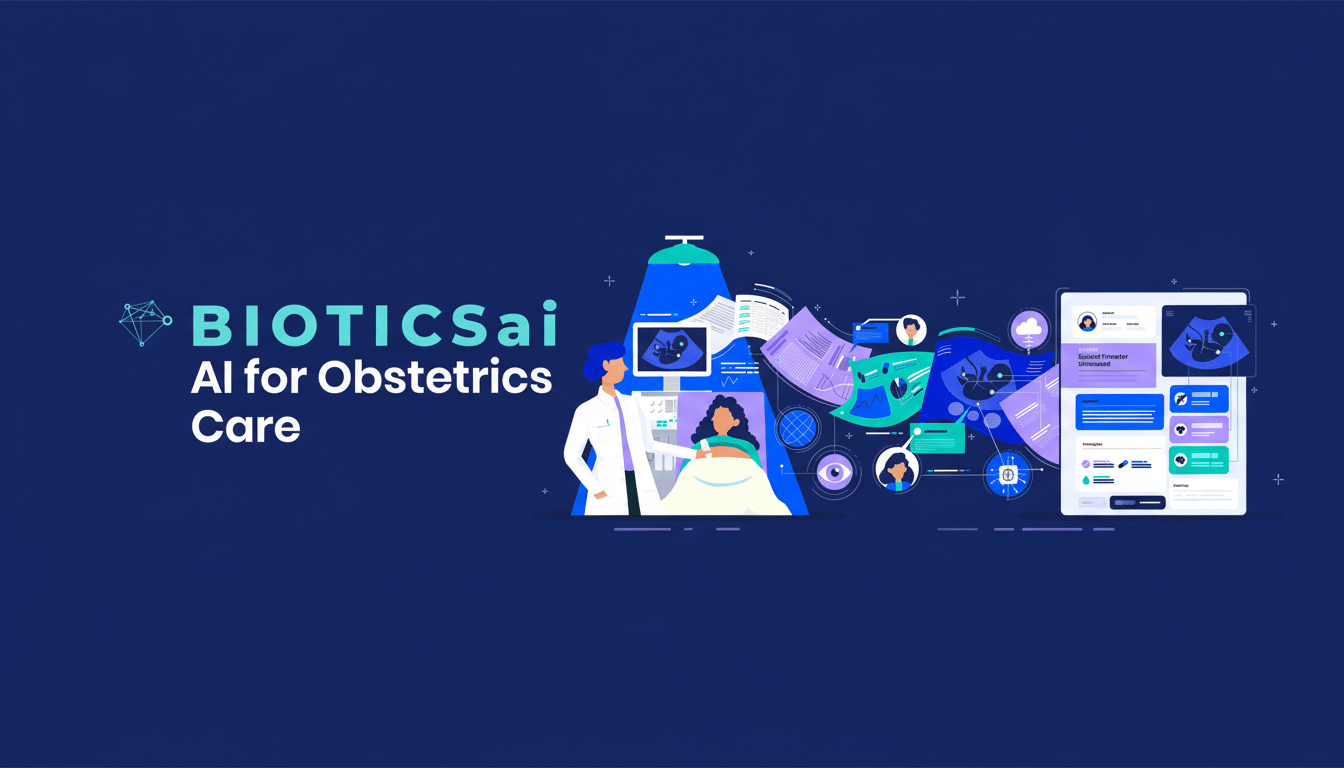
BioticsAI’s software analyzes ultrasound images as they are acquired, confirming whether required anatomical planes are obtained and flagging when a view is incomplete or suboptimal. It supports standardized biometry by assisting with common fetal measurements and generates structured reports designed to match clinical documentation standards, including checklists recommended by groups such as the International Society of Ultrasound in Obstetrics and Gynecology.
The company says its models were trained on a large, diverse corpus of de-identified fetal scans sourced from multiple clinical sites and major ultrasound vendors. That vendor neutrality matters: real-world workflows span different consoles and probes, and consistent performance across machines is essential for adoption beyond academic centers.
Validation and bias mitigation across diverse patients
According to the company, clinical validation emphasized robustness across patient subgroups, gestational ages, and imaging conditions—an area regulators and clinicians increasingly scrutinize for AI tools. Rather than optimizing solely for clean, ideal images, the system was tested on the messy edge cases that frequently drive repeat scans and missed diagnoses.
The goal is high sensitivity for critical findings while maintaining clinically acceptable false-positive rates so that workloads do not surge. Independent site testing and reader studies are standard for such submissions, and continued real-world performance tracking is expected as the software scales.
Market context and competitors in ultrasound AI
BioticsAI joins a growing cohort of FDA-cleared ultrasound AI tools. Caption Health introduced AI guidance to help non-experts capture cardiac views, and GE HealthCare and Philips have released AI-assisted measurement and workflow features in various modalities. In fetal medicine, companies such as Sonio have secured clearance for decision-support capabilities that complement anomaly screening and reporting.
The differentiation for BioticsAI appears to center on real-time quality assurance and standardized obstetric workflows tuned to everyday conditions, rather than niche anomaly classification alone. That positioning aligns with how most community practices operate, where consistency and time savings can have immediate impact.
Adoption path and impact on prenatal imaging workflows
Health systems will look for seamless integration with PACS, DICOM, and EHRs, along with straightforward IT policies for data security and audit trails. Reimbursement for ultrasound remains tied to existing CPT codes, so AI’s near-term value proposition hinges on higher first-pass yield, fewer repeat exams, and more consistent documentation that supports guideline adherence.
If the technology reliably reduces missed views and standardizes reports, it could be especially useful in resource-constrained settings where access to subspecialists is limited. WHO and ACOG emphasize the importance of timely detection and referral; AI that helps generalists capture the right images the first time may shorten the path to definitive care.
What to watch next as FDA-cleared ultrasound AI rolls out
With clearance in hand, BioticsAI’s next hurdles are scale and trust: expanding across diverse health systems while maintaining consistent performance and clear human oversight. Expect incremental feature additions in fetal medicine and reproductive health and a steady drumbeat of post-market data as clinicians put the software to work in everyday practice.
The promise is straightforward but ambitious—use AI to make fetal ultrasound more reliable, equitable, and efficient. If the system delivers on those metrics at scale, the downstream effects could touch everything from early anomaly detection to reduced repeat scans and more uniform prenatal care across communities.