


Introduction
The at-home skincare device market has matured considerably. Where early versions of consumer tech tools offered novelty more than results, the current generation, particularly in the handheld segment, includes legitimately effective technologies backed by clinical research. Here is a breakdown of the main categories worth considering in 2026, and what each actually does for the skin.
Red Light Therapy Wands
Among handheld devices, red light therapy wands have earned one of the strongest evidence bases. A quality red light wand for face delivers wavelengths in the 630–850 nm range directly to the skin, stimulating collagen production, reducing inflammation, and supporting cellular repair. The handheld format gives users control over treatment area and time per zone, making these well-suited to targeted anti-aging work.
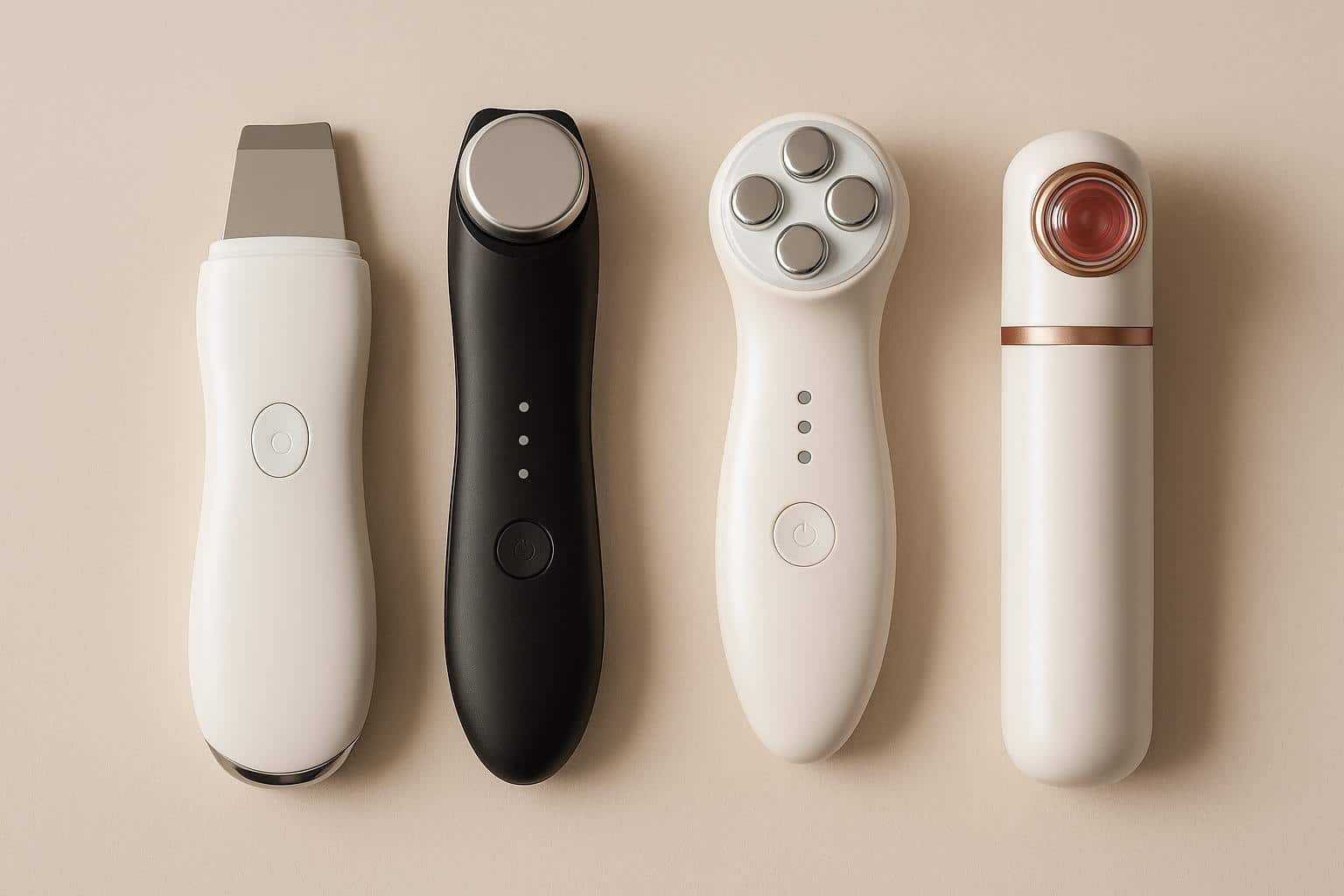
Best for: fine lines, skin texture, inflammation, overall tone improvement.
Microcurrent Devices
Microcurrent technology uses low-level electrical current to stimulate facial muscles, producing a lifting and toning effect that some compare, cautiously, to a non-surgical facelift. Results are immediate but temporary without consistent use, and the technology works differently from light therapy: it targets muscle tone rather than skin biology.
Best for: facial contouring, jawline definition, lifting effects.
Ultrasound Devices
Consumer ultrasound devices use sound waves to promote product penetration and collagen production. They work at a different tissue depth than surface-level light therapy and can be effective for skin firmness and elasticity.
Best for: improving serum absorption, general firmness.
Radio Frequency (RF) Devices
RF technology uses electromagnetic energy to heat the dermis, stimulating collagen remodelling. Professional RF treatments are well-established for skin tightening; consumer devices offer a lower-intensity version of the same principle.
Best for: deeper skin laxity, especially around the jaw and neck.
LED Combination Devices
Some handheld devices combine multiple LED wavelengths, red, near-infrared, and sometimes blue or amber, allowing users to switch between treatment goals. These offer versatility but require users to understand which setting applies to which concern.
How to Choose the Right Device
- Define your primary concern: fine lines, texture, laxity, or overall brightness
- Consider device quality indicators: clinical evidence, regulatory clearances, brand transparency
- Assess your routine: how much time can you realistically commit, and is a wand or mask format more practical for you?
- Think long-term: devices that require ongoing consumables (gels, replacement heads) add to the total cost of ownership
The Case for Starting With Red Light
For most people new to at-home devices, a red light therapy wand represents the best starting point: the research is solid, the risk profile is low, the use case is broad, and the technology addresses multiple concerns (texture, tone, collagen, inflammation) simultaneously.
Conclusion
The 2026 handheld device landscape offers genuine options for meaningful skin improvement at home. Choosing wisely means matching device type to your specific concerns, prioritizing clinical evidence, and committing to consistent use. For additional skincare device guidance, visit . For evidence-based guidance on anti-aging skincare, the Mayo Clinic anti-aging resource is a helpful reference.