


The widely rumored return of a slider-style gaming phone is finally real, and its headline feature is squarely aimed at competitive players. The AYANEO Pocket PLAY, a current-gen reimagining of the old Xperia Play idea, is set to be equipped with a 6.8-inch OLED screen that allegedly operates at esports-grade refresh rates of up to 165Hz and offers a full-on slide-out controller under all that glass.
OLED display designed for competitive mobile gaming
AYANEO claims the Pocket PLAY’s 2400 x 1080 OLED panel has both deep contrast and an ultra-fast 165Hz refresh rate, putting it in the same league as elite gaming phones from companies like ASUS and RedMagic.
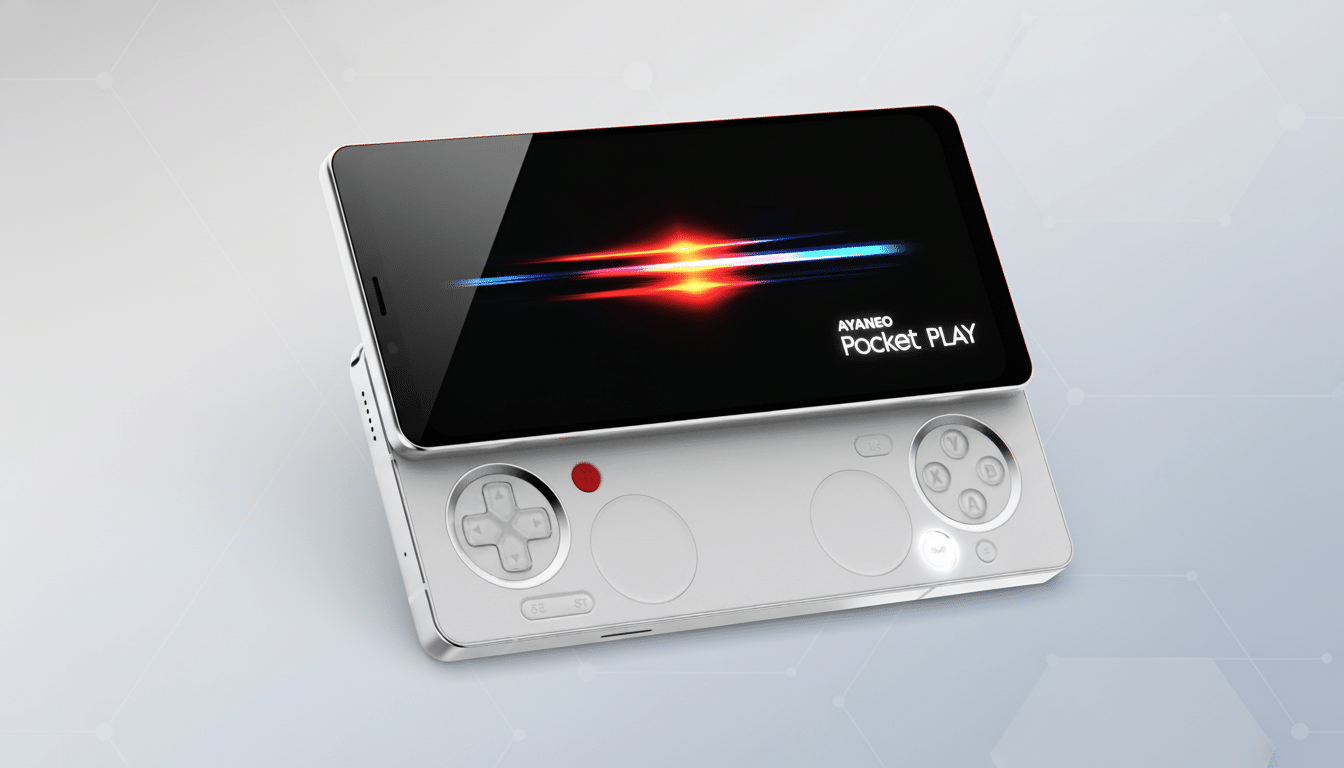
You’ll notice a significant difference when you step up from 60Hz to 165Hz in terms of reduced perceived blur and better target tracking, especially if you play shooters or MOBAs. OLED’s near-instant pixel response should further minimize smearing during rapid strafes and camera pans.
Crucially for getting lost in a film or TV show, the front camera is housed in the bezel rather than poking through a punch hole. That keeps a nice, clean viewport, so crosshairs and HUD elements aren’t sliced by a cutout — a small nicety that competitive players will likely appreciate. The company also mentions a dual-camera setup on the back, as photography isn’t the product’s focus here.
Just when mobile was done with gamepads, sliders return
The Pocket PLAY resurrects a form factor that has more or less been missing from phones in some shape or another for almost 15 years: a springy, horizontal slider that uncovers an integrated controller.
Its layout consists of a d-pad, four face buttons, shoulder buttons, and two capacitive touchpads that register L3/R3-style clicks. That latter part’s crucial for modern games which map sprints or melees to stick-in presses.
Handhelds such as the Anbernic RG Slide and modular shells have dabbled with this concept, but finding a full-blown smartphone with integrated, console-like controls is pretty much unheard of. On top of ergonomics, the hardwired controller means no Bluetooth latency (we’re looking at you, Android clip-on gamepads) or battery drain, and it removes wobble from telescopic grips — two functional advantages through long play sessions.
Design decisions put gaming first with cooling and grip
AYANEO makes it clear that active cooling is included, which you’d expect to see if performance were being throttled for the sake of this thin form factor. That has implications if the phone ends up shipping with a current flagship Snapdragon-class chip; today’s high-performance cores can throttle under sustained load without airflow. In the handheld arena, such active cooling helps maintain prolonged, stable frame times during an hour-long session — something casual phones can struggle with.
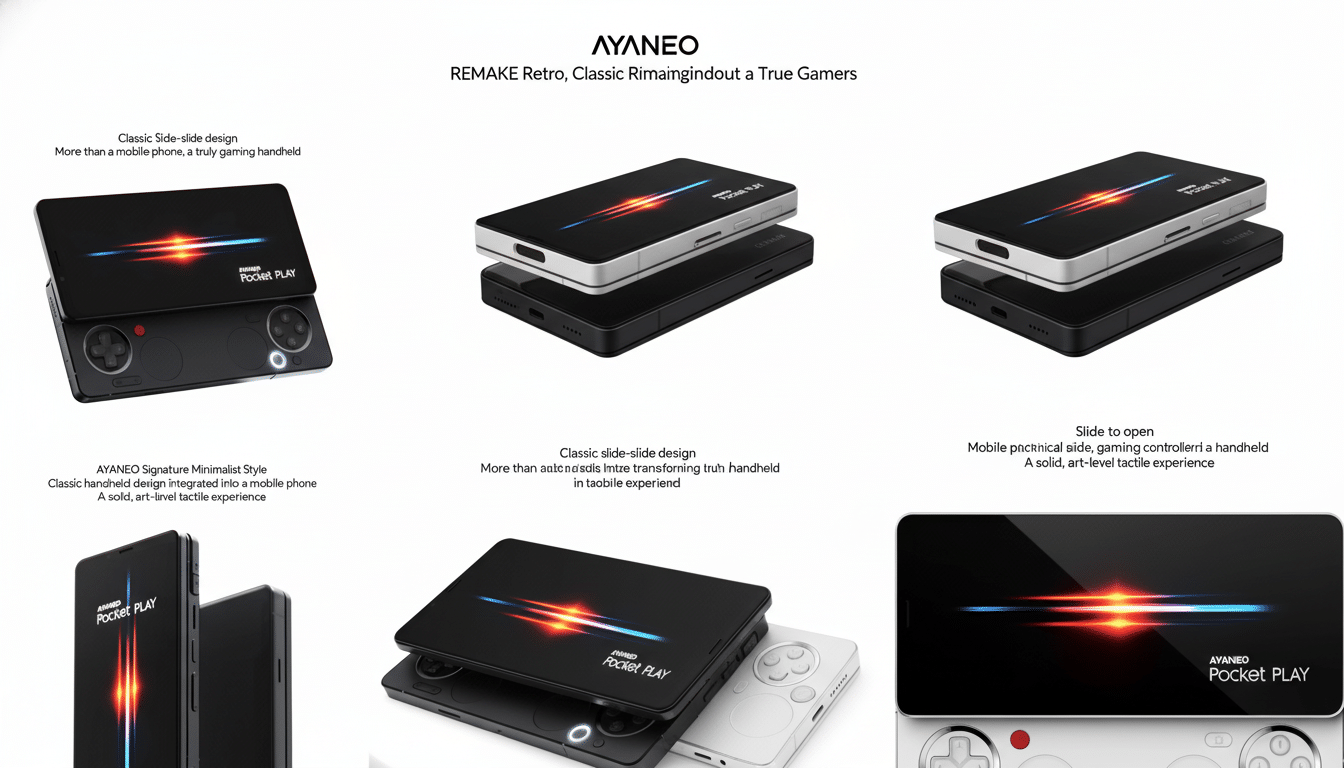
The back is flat to give you something solid to grip against, a small but smart change when your fingers are already busy with shoulder buttons sticking out. Yes, expect a thicker body than most typical flagships — presumably the cost of a sliding mechanism, heatsink, and fan — but with that heft can come more thermal headroom as well as room for an even larger battery. Final dimensions and weight have yet to be released.
Specs, price, and timing for Pocket PLAY remain unknown
Right now, they have only an availability window of early 2026; full specifications and pricing are still forthcoming.
The Pocket PLAY will see the company return to Kickstarter after not funding through these means for some time. And like any crowdfunded hardware, there might be delays in the timeline; AYANEO’s previous campaigns have sometimes taken longer to deliver than initially promised, so prospective early supporters should calibrate their expectations accordingly.
There are still open questions about the chipset, battery capacity, storage tiers, and the base touch-sampling rate for its display, as well as software features like customizable key mapping or per-game performance profiles. AYANEO’s handheld history would indicate that solid input remapping could still be a go, though the company has yet to outline its mobile UI stack.
Why this matters for mobile gaming and competitive play
The Pocket PLAY arrives just as more mobile games are starting to embrace higher frame rates, with offerings like Call of Duty: Mobile, PUBG New State, Brawl Stars, and Dead Cells. A 165Hz-capable screen allows headroom for the 120fps modes that are popular in competitive play, and OLED’s contrast increases visibility in shadowy scenes. A recent forecast from Newzoo still has mobile as gaming’s largest segment by revenue, which makes it clear why there is an audience for hardware that’s tuned for performance.
With the show quality of AYANEO being matched by input precision (including button feel), if it can maintain performance levels over an extended period of time, Pocket PLAY could become Xperia Play’s spiritual successor that the world has been waiting for — modern OLED, cooling, and integrated control in a single device where gaming is not just a side feature. Nor is the idea pure nostalgia: It’s a practical substitute for bulky add-ons we’d rather not carry or would easily lose, and an acknowledgment that dedicated hardware still has a role in the one-size-fits-most world of smartphones.