


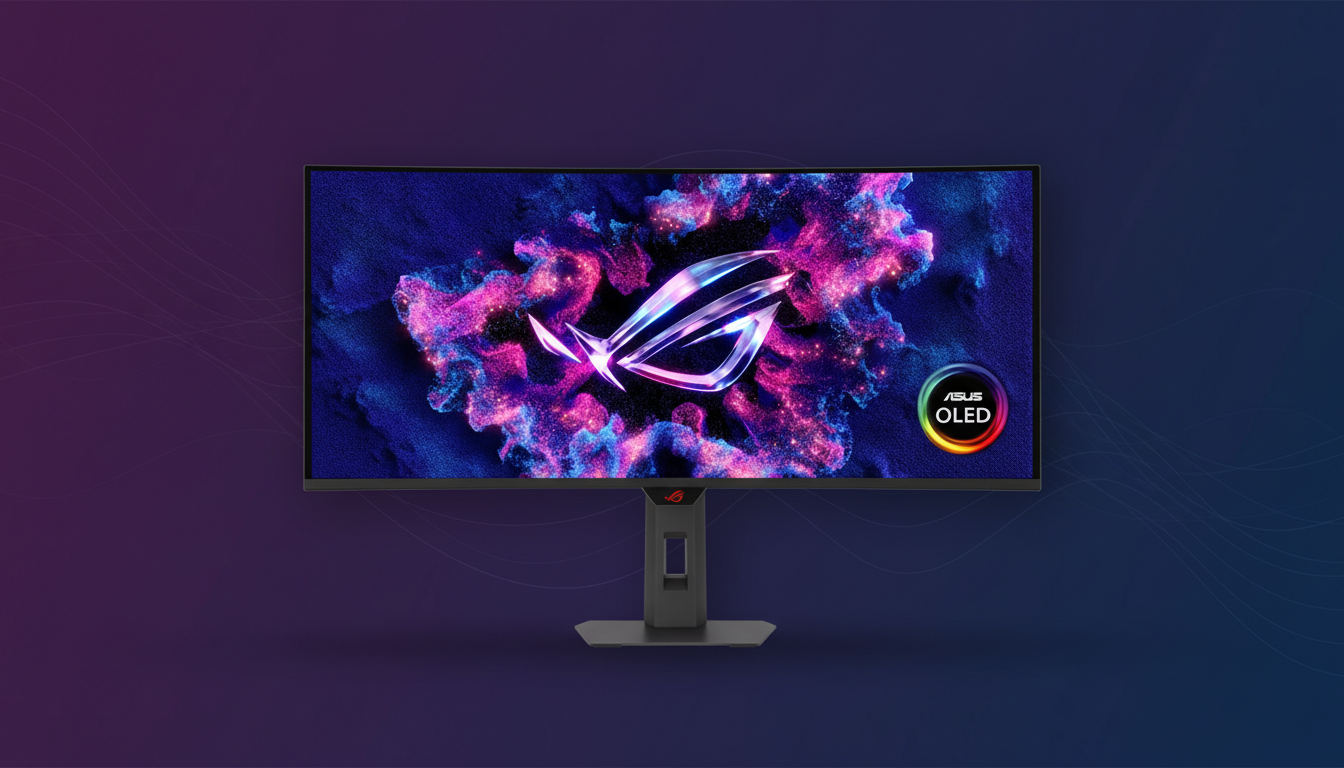
A rare price cut has brought the ASUS 34-inch ROG Strix curved QD-OLED gaming monitor down to $799, shaving $200 off its usual $999 list. That 20% discount puts a flagship ultrawide OLED within reach for players who want top-tier visuals without splurging four figures.
For anyone eyeing an upgrade, this is the kind of deal that makes the jump to OLED easy to justify. You’re getting the deep blacks, instant pixel response, and rich color of OLED, paired with a 21:9 ultrawide canvas that wraps games around your field of view—all at a price that’s competitive with the best alternatives.
What This ROG Strix Delivers in Performance and Picture
The 34-inch panel runs at 3440×1440 with a gentle 1800R curve—steep enough to pull you in, subtle enough to stay comfortable for work and web. This model uses QD-OLED, a variant that marries blue OLED emitters with quantum dots to expand color volume and boost highlights versus traditional WOLED designs. The result: inky blacks with punchy specular detail and color pop that IPS and VA struggle to match.
Gamers get a 175Hz refresh rate and manufacturer-rated 0.03ms response, plus support for variable refresh across both NVIDIA and AMD ecosystems. In practice, that combination trims input latency and eliminates tearing, while OLED’s per-pixel lighting banishes blooming in dark scenes. Reviewers at PCMag and RTINGS have consistently highlighted OLED’s class-leading motion clarity and contrast—precisely the strengths this panel leans on.
HDR is another standout. With pixel-level luminance control and near-infinite contrast, explosions, neon signage, and starfields gain depth and realism that edge-lit displays can’t fake. You won’t need to chase perfect darkness to notice the difference; even in a moderately lit room, the jump in perceived dynamic range is obvious.
Real-World Gains in Games with Ultrawide OLED Displays
Ultrawide 21:9 can be a tactical advantage. In shooters and racers, the extra horizontal real estate widens your peripheral view, helping you spot threats and apexes earlier without panning. In cinematic titles—think Cyberpunk 2077 or Horizon Zero Dawn—the curved canvas reads like a theater screen, with less head movement than a flat panel of similar width.
At 3440×1440, you’re pushing roughly 40% fewer pixels than 4K, which means a midrange GPU has a far easier time driving high frame rates to meet the 175Hz ceiling. That makes this monitor a smart pairing for cards in the RTX 4070 or Radeon RX 7800 XT class, delivering the smoothness that competitive players want without dialing visual settings to low.
Motion handling is where OLED shines. Fast camera pans stay clean, fine textures don’t smear, and you can track targets without distracting ghost trails. Combine that with adaptive sync and you get stable, stutter-free frames even when your GPU workload spikes in busy scenes.
OLED Care and Everyday Use for Work and Gaming Comfort
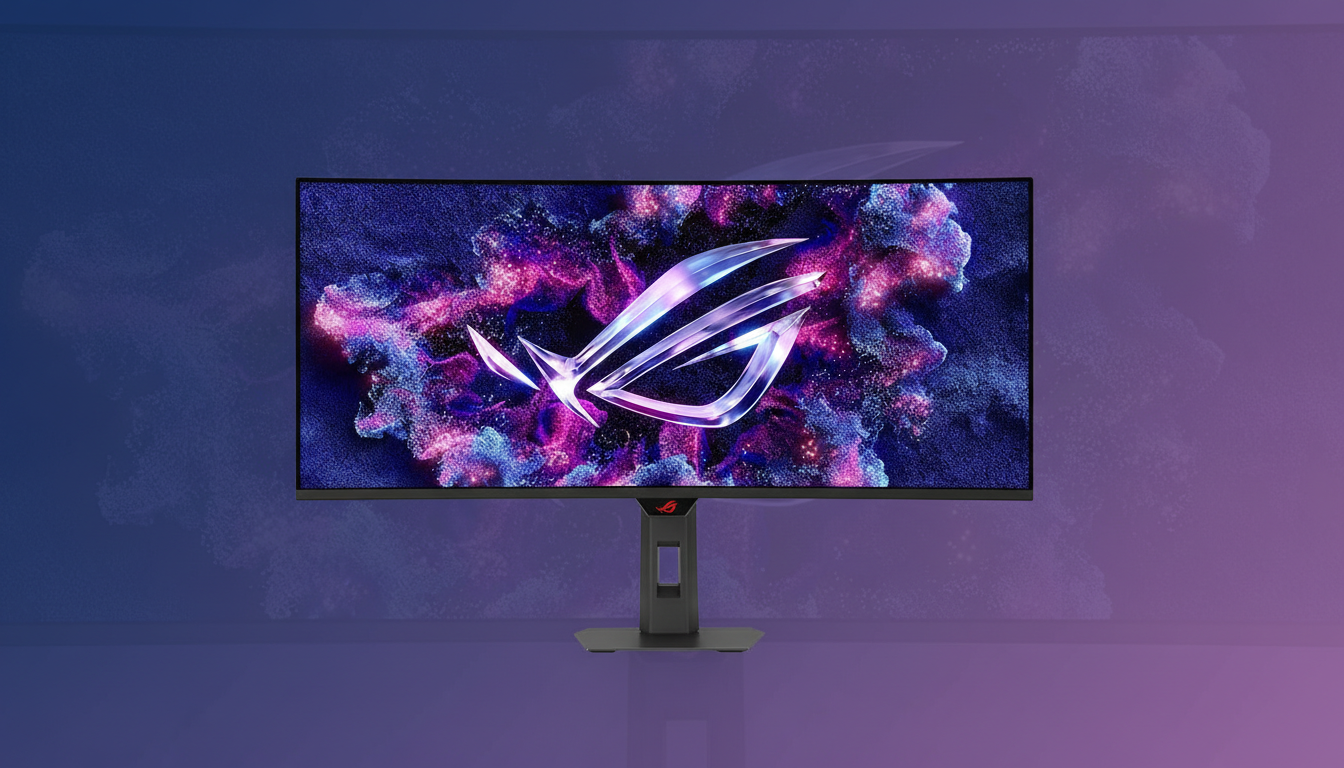
Modern OLED monitors include a suite of protections—pixel shifting, panel refresh routines, logo dimming, and uniform brightness management—to mitigate image retention in mixed use. ASUS also bakes in “OLED care” tools you can schedule during idle time, making maintenance mostly hands-off. For everyday tasks, the 1800R curve is mild enough for spreadsheets and browsing, and text clarity on QD-OLED has improved generation over generation.
Connectivity covers the gaming basics with high-bandwidth video inputs and a hub for peripherals, so swapping between a desktop and a console is straightforward. The stand offers the ergonomic adjustability you want for long sessions, and the footprint is manageable for standard 27–32-inch desk setups despite the wider screen.
Price Context and Competitors in the Ultrawide OLED Market
Ultrawide OLEDs have been trending down in price as production scales, but $799 remains a sweet spot—especially for a 175Hz QD-OLED with a gentle curve. It undercuts or matches frequent sale prices for rivals like Alienware’s AW3423DWF and Corsair’s Xeneon 34-series, while delivering comparable core performance. If you’ve been waiting for a sub-$800 ticket to OLED immersion, this is it.
It’s worth noting that mainstream interest in ultrawide continues to grow. The Steam Hardware Survey has shown steady year-over-year momentum for 21:9 resolutions, and esports organizations increasingly test on high-refresh OLEDs for their unbeatable pixel response. That broader adoption tends to push better support in games and drivers—another reason deals like this carry extra weight.
Who Should Buy Now and Which Gamers Will Benefit Most
If you play fast-paced shooters, racers, or MMOs and want the best balance of speed, contrast, and immersion, this discounted ROG Strix hits the mark. Creators who color grade in SDR will also appreciate OLED’s uniformity and shadow detail, with the caveat that static UI elements should be managed with sensible screen-time habits.
Bottom line: a $200 saving on a 34-inch curved QD-OLED is more than a routine markdown—it’s an invitation to upgrade to the display tech reviewers keep calling the new gold standard. At $799, it’s one of the most compelling ways to transform your setup today.