


Business laptops aren’t supposed to flirt with style, yet the Asus ExpertBook Ultra makes a strong first impression and keeps getting better once in hand. Our hands-on time with this 14-inch machine suggests Asus has built a rigorously engineered ultra-light that refuses to be boring—balancing materials science, modern silicon, and everyday practicality in a sub-2.2-pound chassis.
Design and build: ultra-light chassis with premium feel
At roughly 2.1 pounds and just under 11mm thick, the ExpertBook Ultra is the kind of device you double-check for a battery because it feels improbably light. The chassis blends a magnesium-aluminum alloy with a Nano Ceramic coating that adds hardness and scratch resistance. The result is a lid and deck that resist flex better than most ultra-thins we’ve handled, with a matte finish that shrugs off fingerprints.
- Design and build: ultra-light chassis with premium feel
- Ports and practicality: generous I/O in a thin body
- Display that beats expectations with tandem OLED
- Performance and thermals in a surprisingly thin laptop
- Enterprise readiness, security, and deployment outlook
- Where it fits and why it matters in today’s market
- Early take and availability for the ExpertBook Ultra
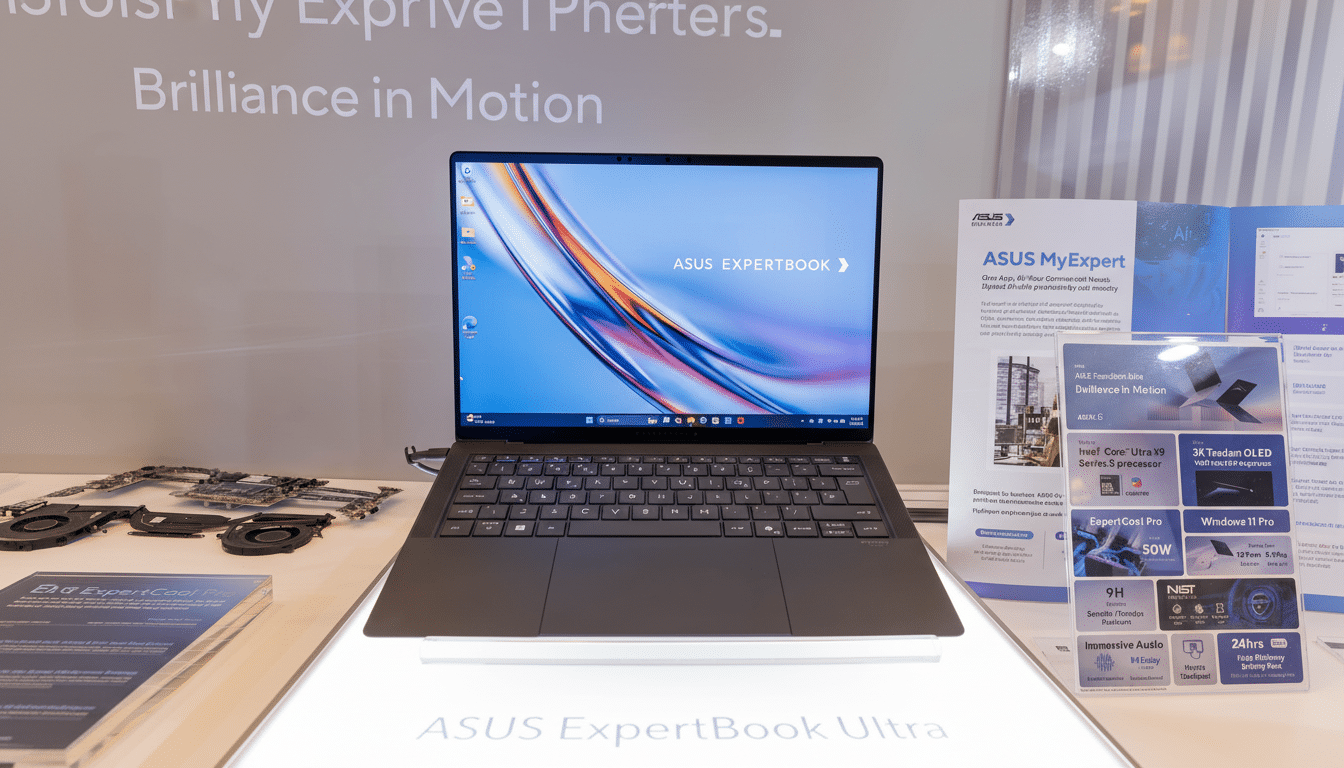
The keyboard has crisp, fast return for such a slim frame, and while the half-height arrow keys won’t thrill spreadsheet jockeys, they’re usable. The oversized haptic touchpad is the headliner here—uniform click feel across the surface and zero physical wobble—delivering premium laptop vibes without the premium bulk.
Ports and practicality: generous I/O in a thin body
Connectivity looks more like a 3-pounder than a featherweight: two Thunderbolt/USB-C (one per side), two USB-A, full-size HDMI, and a headset jack. Asus subtly thickens the chassis at the edges to fit the legacy ports without spoiling the silhouette. For travelers and conference-room regulars, the no-dongle life is a meaningful quality-of-work upgrade.
Display that beats expectations with tandem OLED
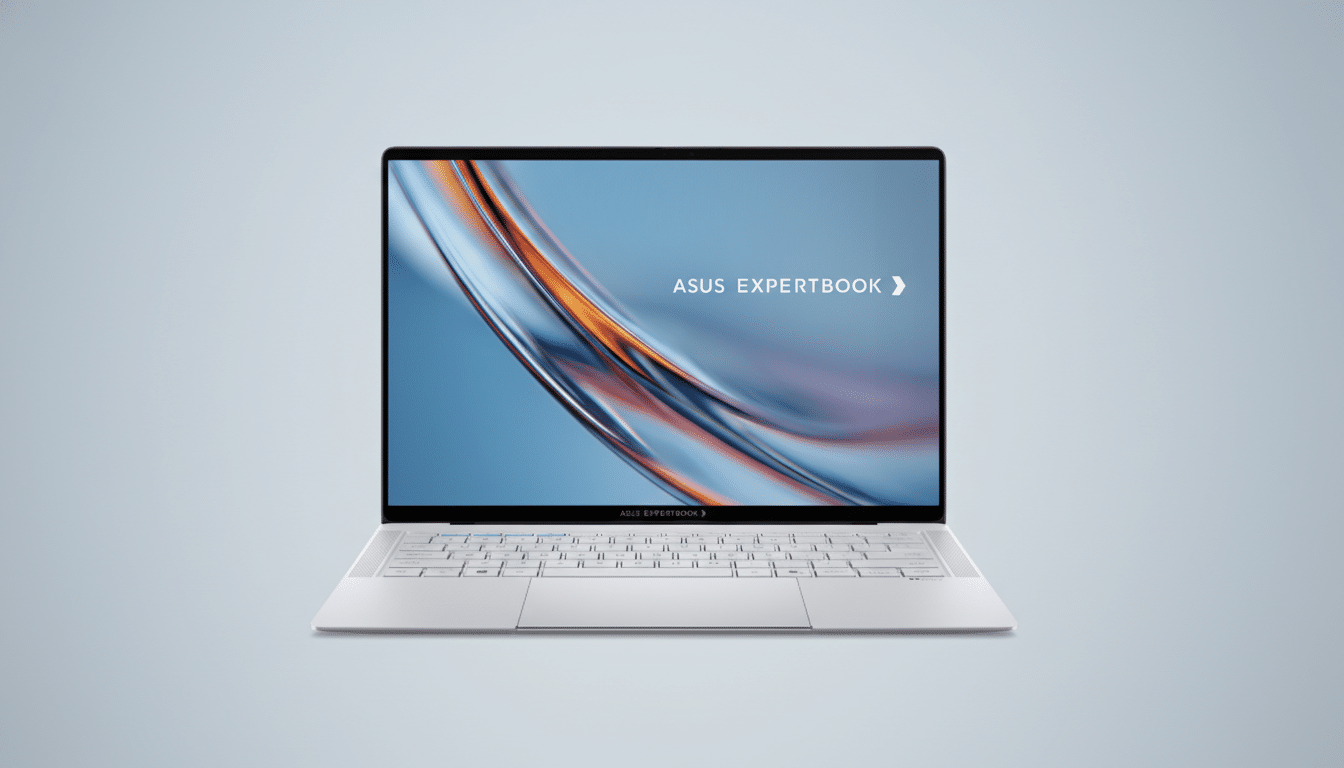
The 14-inch 3K Tandem OLED panel (2,880 by 1,800) at up to 120Hz is the piece that makes you linger. Tandem—or dual-stack—OLED places two emission layers in the panel, improving efficiency and longevity. Display Supply Chain Consultants has long highlighted dual-stack’s benefits for sustained brightness and lifetime, and it shows here with rich color without obvious heat shimmer or glare-induced washout.
An anti-glare micro-etched surface, reminiscent of the best matte treatments on premium notebooks, keeps reflections in check without dulling contrast. Corning Gorilla Glass Victus on the front adds welcome scuff resistance, and touch support is included. This is the kind of display that makes spreadsheets look crisp and creative work actually inviting.
Performance and thermals in a surprisingly thin laptop
Inside is Intel’s new Core Ultra 300 series (codenamed Panther Lake) configured up to 50W—unusually high for a machine this thin. Configurations climb to a Core Ultra X9 with a 12-core integrated GPU, and early demos hint at integrated graphics performance that could encroach on entry-level discrete GPUs in certain workflows. The system supports PCIe 5.0 storage, though it ships with PCIe 4.0 SSDs to keep thermals sensible. Memory options top out at 64GB.
Cooling is more aggressive than you’d expect: a positive-airflow design with three heat pipes and upsized fans moves heat quickly while a denser 70Wh battery preserves runtime. PCIe 5.0 drives are known to run hot; here, careful ducting and component placement (including RAM tucked beneath the SSD to save space) indicate Asus prioritized sustained performance, not just bursty benchmarks. Microsoft’s Copilot key and Copilot+ readiness also play to the AI-PC narrative that Microsoft and Intel have been championing for on-device assistance and media acceleration.
Enterprise readiness, security, and deployment outlook
Enterprises will want to see Intel’s vPro details for the Core Ultra 300 family before mass deployment; device management and stability assurances still matter. Asus cites rapid-deployment and BIOS-security features, aligning with best practices advocated by organizations like NIST around measured boot and firmware protection. On durability, the Nano Ceramic treatment and Gorilla Glass lend confidence for frequent flyers, though we’ll reserve judgment until formal certifications and lab testing land.
Where it fits and why it matters in today’s market
Compared with the perennial business benchmarks—ThinkPad X1 Carbon and Dell Latitude flagships—the ExpertBook Ultra trades a touch of serviceability for shockingly low weight and a class-leading display. Against the MacBook Air, it answers with more ports, higher-refresh OLED, and Windows-first AI integrations. Industry trackers like IDC have noted that refresh cycles are accelerating as hybrid work normalizes and AI-capable PCs enter budgets; a device that blends executive-grade design with real horsepower is well timed.
Early take and availability for the ExpertBook Ultra
From the materials to the thermals, the ExpertBook Ultra looks engineered to be carried daily and pushed hard. Pricing remains to be confirmed, and availability is slated for the coming quarter, but the formula is compelling: a sub-2.2-pound build, dual-stack OLED, 50W-class silicon, and ports that respect real-life meetings. If Asus delivers on battery life and sustained performance in independent testing, this could be the rare business laptop that earns both the CTO’s approval and the design-obsessed executive’s smile.