


Apple is accelerating its consumer AI ambitions on two fronts, according to multiple reports: a wearable AI Pin designed to live on your clothing and a major overhaul that turns Siri into a conversational chatbot. If delivered as described, the moves would shift Apple from quiet observer to forceful participant in the race to blend ambient hardware with generative AI.
Reporting from The Information describes a compact, AirTag-like Pin with cameras and microphones, while Bloomberg’s Mark Gurman says Siri is being rebuilt on a custom version of Google’s Gemini to handle rich, multi-turn conversations. Together, they point to an Apple strategy that marries new form factors with a fundamentally different software assistant.
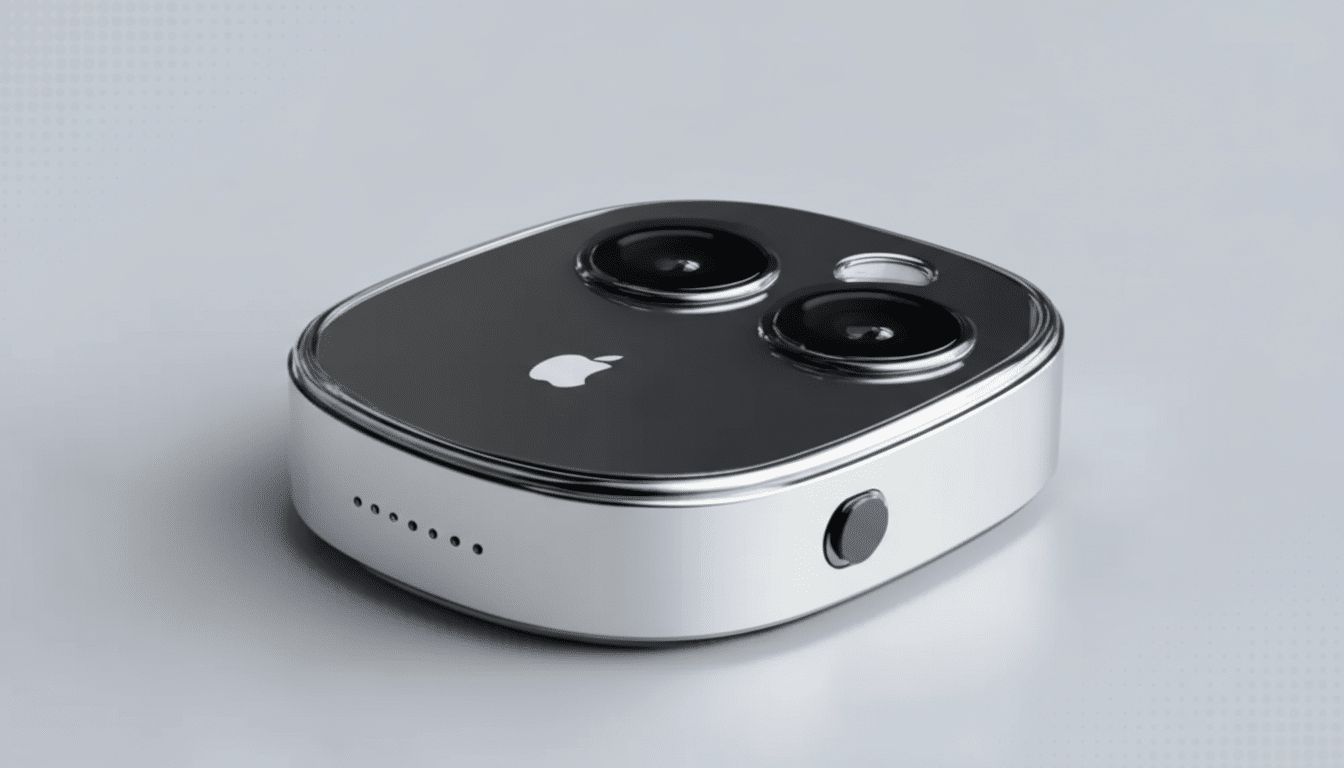
Inside Apple’s AI Pin Concept and Potential Features
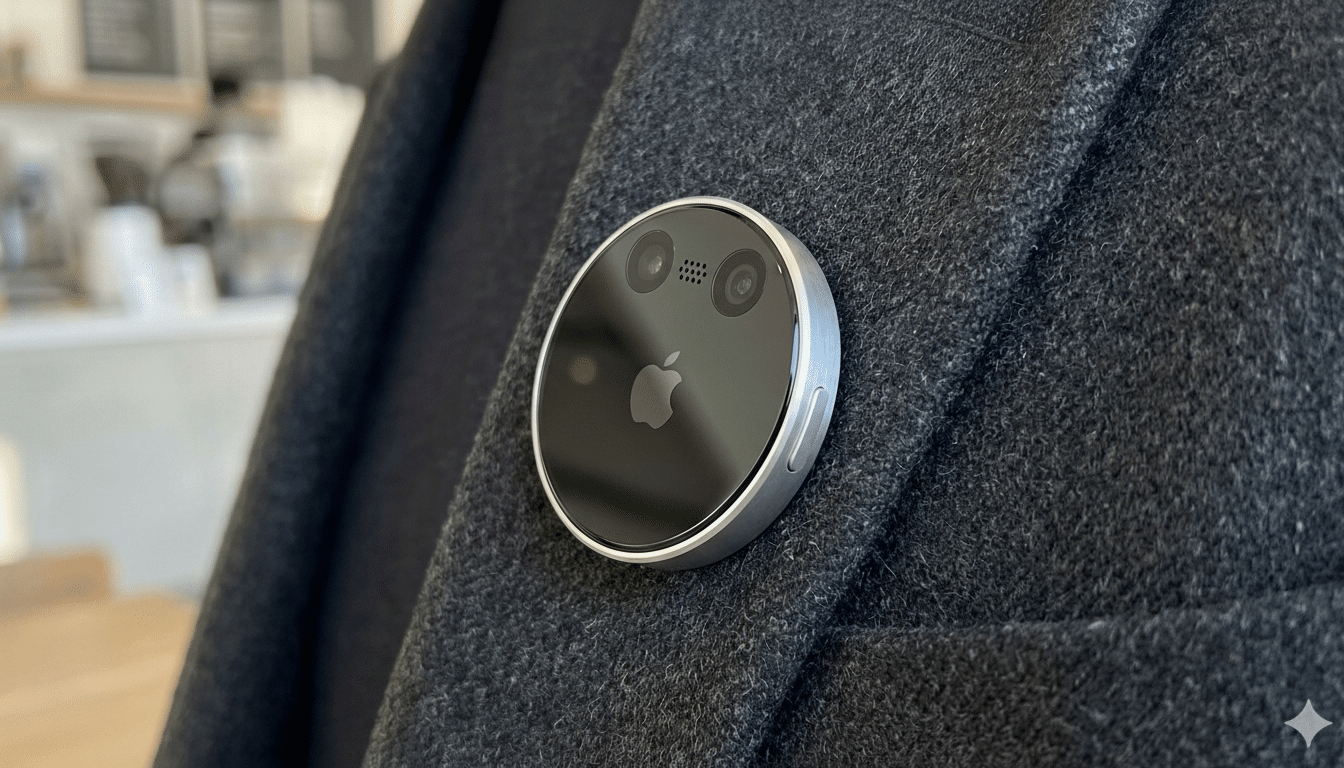
The rumored AI Pin is said to be thin, flat, and circular—closer to a badge than a phone accessory. The current design reportedly includes two cameras (standard and ultrawide) aimed at capturing the wearer’s environment, three microphones for far-field voice pickup, and a small speaker for quick responses. Wireless charging would simplify daily use, much like an Apple Watch.
Production targets reportedly contemplate as many as 20 million units at launch, though even sources caution the project is early and could change or be canceled. The scale hints at Apple’s confidence in a category others have struggled to define. Humane’s AI Pin sparked attention but was hampered by reliability concerns, a safety-related accessory recall, and a mismatch between promise and day-to-day utility.
Apple’s edge would be integration. A wearable that taps the company’s Ultra Wideband radios, Find My network, on-device sensors, and a vast developer ecosystem could feel less like a gadget and more like an extension of the iPhone. With more than two billion active Apple devices in use globally (as disclosed by Apple on earnings calls), even a niche success could reach meaningful scale.
The competitive field is heating up. OpenAI is developing a consumer device with former Apple design chief Jony Ive, aiming at the same “ambient AI” problem. Apple’s response appears to center on a tight loop between hardware, privacy-centric compute, and a reinvented Siri.
Siri’s Chatbot Turn with Gemini-Powered Enhancements
Per Bloomberg, Apple has struck a deal to use Gemini and is training a customized model to make Siri feel like a modern chatbot—capable of sustained voice or text conversations, retrieving current information from the web, drafting messages and documents, generating images, and even analyzing files you share. Crucially, it would tap personal context (calendar, mail, locations) with user permission to complete tasks more autonomously.
Despite the overhaul, Apple reportedly plans to keep Siri’s familiar summon methods, avoiding the disruption of a new app or invocation phrase. Internally codenamed Campos, the upgrade is expected to roll out alongside major OS releases across iPhone, iPad, and Mac, positioning Siri as a system-level capability rather than a standalone destination.
Privacy will be the make-or-break. Apple has argued that sensitive requests should run on-device when possible and route heavier tasks to its own hardened cloud infrastructure. A Gemini-powered Siri adds complexity: Apple will be expected to show how data stays compartmentalized, how permissions are enforced, and how users can see and control what the assistant knows. That transparency is now table stakes.
Why It Matters for Apple’s AI and Wearable Strategy
Generative AI has changed consumer expectations for assistants. OpenAI has said ChatGPT serves more than 100 million weekly users, and Google has moved rapidly to infuse Gemini across products. Apple’s opportunity is different: turn AI into something people don’t need to think about. If Siri reliably handles intent—booking, summarizing, planning, creating—without friction, it could give the iPhone experience a step-change upgrade.
The risks are familiar. Wearable cameras raise social and regulatory questions. Battery life and heat can torpedo small devices. And LLMs still hallucinate. Apple’s brand is built on polish; it will have to prove that a more capable Siri is also more accurate, accountable, and safe, not merely more talkative.
What to Watch Next at Apple’s Developer Conference and Beyond
Look for signals at Apple’s developer conference: deep OS hooks for intent handling, new APIs for multimodal input, and guardrails for data access could preview Siri’s new brain. For the Pin, watch hiring in camera, acoustics, and low-power silicon, plus patents around wearable interaction models. Supply chain chatter about miniature imaging modules or UWB accessories would also be telling.
If these reports hold, Apple isn’t just catching up on AI—it’s teeing up a world where assistance lives on your lapel and in your OS, ready before you even ask. The question is execution. With the right blend of model quality, privacy, and hardware design, Apple could turn ambient AI from a novelty into a daily habit.