


Apple is exploring how to let AI chatbots like ChatGPT run inside CarPlay, according to Bloomberg reporting, a move that would bring third-party conversational agents into millions of vehicles already equipped with Apple’s in‑car interface. The effort signals a new phase for CarPlay, extending beyond mirroring and voice commands toward richer, context-aware assistance on the road.
Why Chatbots in the Car Cabin Matter to Drivers
Drivers increasingly want help that goes beyond dictating a text or starting a playlist. A modern chatbot could summarize a barrage of messages while you drive, turn a tangled email thread into the three things you need to do next, explain an unfamiliar dashboard warning, or plan a detour with live context like fuel, charging stops, and calendar constraints. That’s a different class of capability than today’s command-and-control voice assistants, and it’s exactly the kind of scenario where large language models shine.
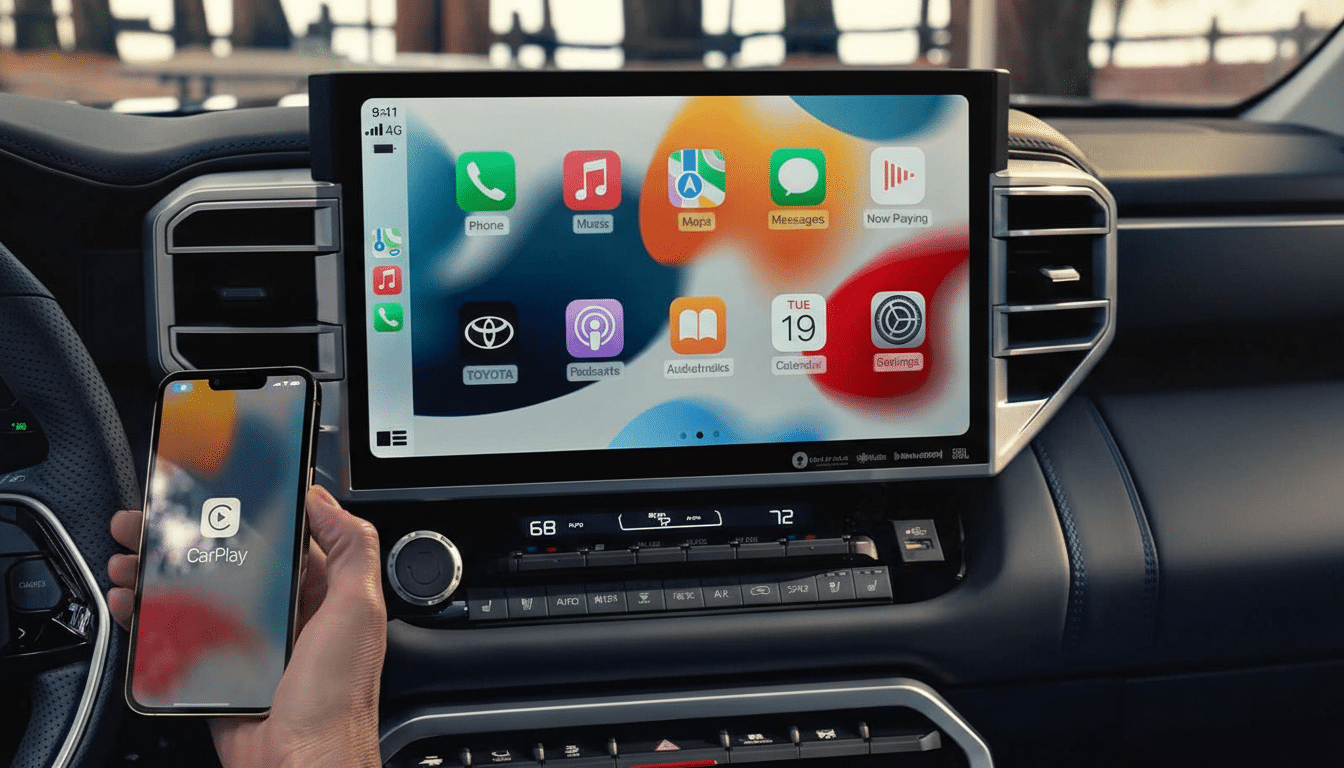
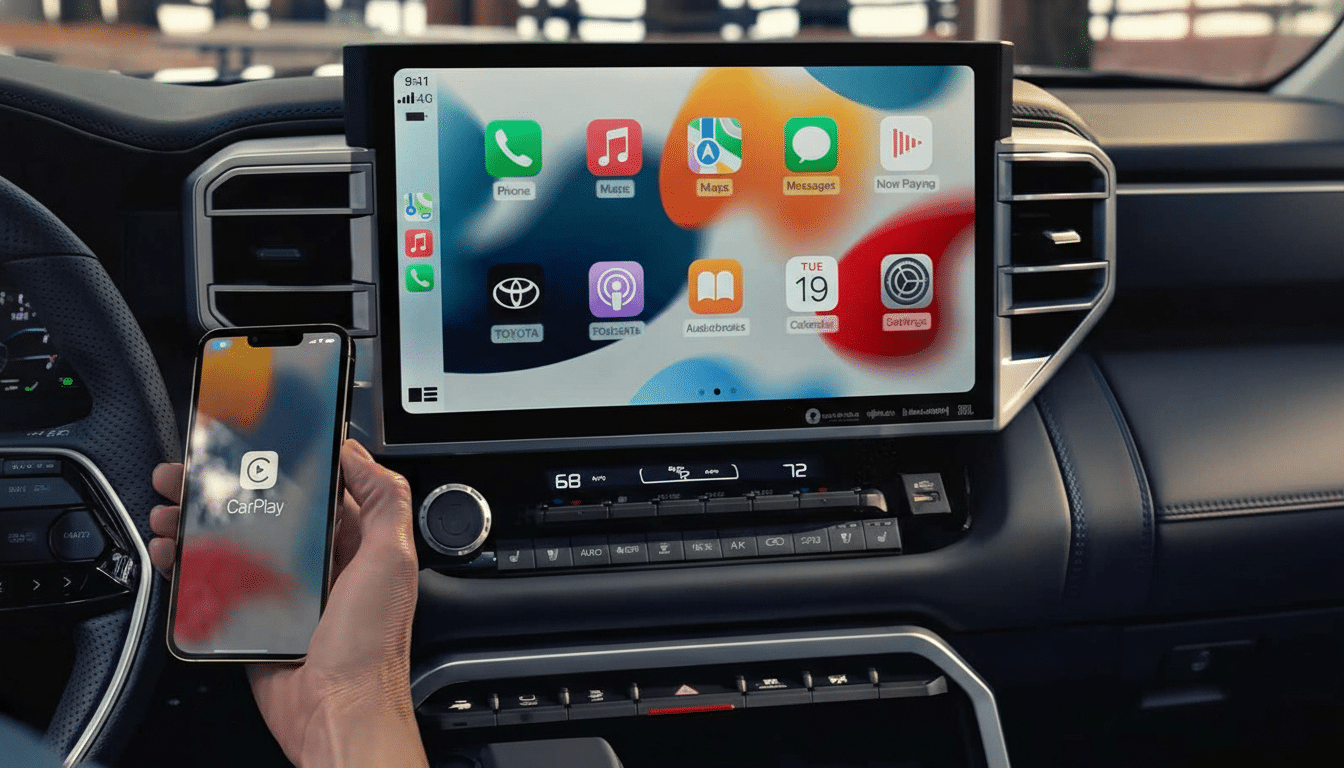
Apple has already previewed a next-generation CarPlay experience that spans the central display and instrument cluster and can surface vehicle data. Folding AI chatbots into that canvas would let the assistant “see” more of the driving context and respond more intelligently—while keeping everything hands-free.
The Stakes Are High Given CarPlay’s Reach
CarPlay ubiquity makes this more than an experiment. Apple has said the vast majority of new cars offer CarPlay, and past Apple presentations cited that 79% of buyers in the U.S. prioritize it when shopping for a vehicle. Independent research backs up the demand: S&P Global Mobility has tracked steady adoption of smartphone mirroring across mass-market and premium segments, and J.D. Power routinely ranks it among the most-liked in-vehicle technologies.
If Apple enables sanctioned chatbot apps—think OpenAI’s ChatGPT, Google’s Gemini, or Anthropic’s Claude—developers gain a standardized way to operate safely in cars, and users get choice without switching ecosystems. For Apple, it’s a way to modernize Siri’s in-car role without ceding the interface.
Safety And UX Will Dictate What’s Allowed
Safety is the make-or-break factor. The AAA Foundation for Traffic Safety has shown that complex infotainment tasks can keep eyes off the road for dangerously long intervals, and U.S. NHTSA guidelines urge minimal visual-manual interaction while driving. Expect Apple to gate chatbot behavior: voice-first interactions, concise spoken responses, and restrictions on long text, images, or tappable elements while the vehicle is in motion.
A likely pattern is “listen, confirm, act”: you ask a question, the assistant formulates an answer, and you approve any action via a short prompt or steering-wheel control. For generative responses, CarPlay could summarize to a few spoken bullet points, with full detail available only when parked.
How Apple Could Architect the CarPlay Hand-Off
The most plausible design puts Siri as the traffic cop. Siri would capture your request, determine whether an on-device model can handle it, and, with explicit consent, relay the query to a third-party chatbot app registered for CarPlay. That mirrors Apple’s broader approach to AI hand-offs in iOS, where users approve when outside services are consulted.
Privacy will be central. Apple has invested in on-device processing and server-side techniques like Private Cloud Compute to minimize data exposure. In the car, that likely means tight scoping of what a chatbot can access—perhaps your spoken request, message snippets you approve, and limited vehicle context such as speed state or battery level—without granting raw access to location history or sensor streams unless you opt in.
Competition Is Already Moving on In-Car AI
Google has begun weaving Gemini into Android Auto to summarize messages and suggest smart replies, and automakers from Mercedes-Benz to BMW are deploying their own AI assistants powered by vendors like Cerence. The differentiator for Apple is distribution: CarPlay reaches an enormous installed base across brands, from economy models to luxury flagships, and Apple can unify developer rules and safety constraints in one framework.
Automakers will watch for guardrails. Some OEMs are cautious about third-party assistants that could surface inaccurate advice or distract drivers. A curated, permissions-based model inside CarPlay could be the compromise that keeps control in the automaker’s cabin while letting customers use the AI they prefer.
What To Watch Next As Apple Tests CarPlay Chatbots
Key signals will be developer documentation that outlines a CarPlay chatbot API, early automaker partners—Porsche and Aston Martin have already showcased the next-gen CarPlay—and whether Apple supports offline or hybrid responses for spotty coverage areas. Another open question is billing: if premium chatbot tiers offer better reasoning, CarPlay may need account switching and clear visual indicators for who is answering—Siri or a third party.
If Apple threads the needle on safety, privacy, and UX, CarPlay could evolve from a projection layer into a genuinely helpful co-pilot. The result wouldn’t sideline Siri so much as recast it as the orchestrator, letting specialized AI agents handle the nuanced tasks drivers increasingly expect from their cars.