


Apple has quietly retired the Mac Pro, removing its last tower from the online store and confirming to 9to5Mac that no new Mac Pro hardware is planned. In a tidy bit of symbolism, the famously pricey $700 stainless-steel wheels have rolled off into history as well.
The Mac page now routes buyers to the remaining desktop lineup: Mac Studio, iMac, and Mac mini. For creative pros who valued internal expansion and a chassis built for serviceability, this marks a clean break from Apple’s long-running modular tradition.
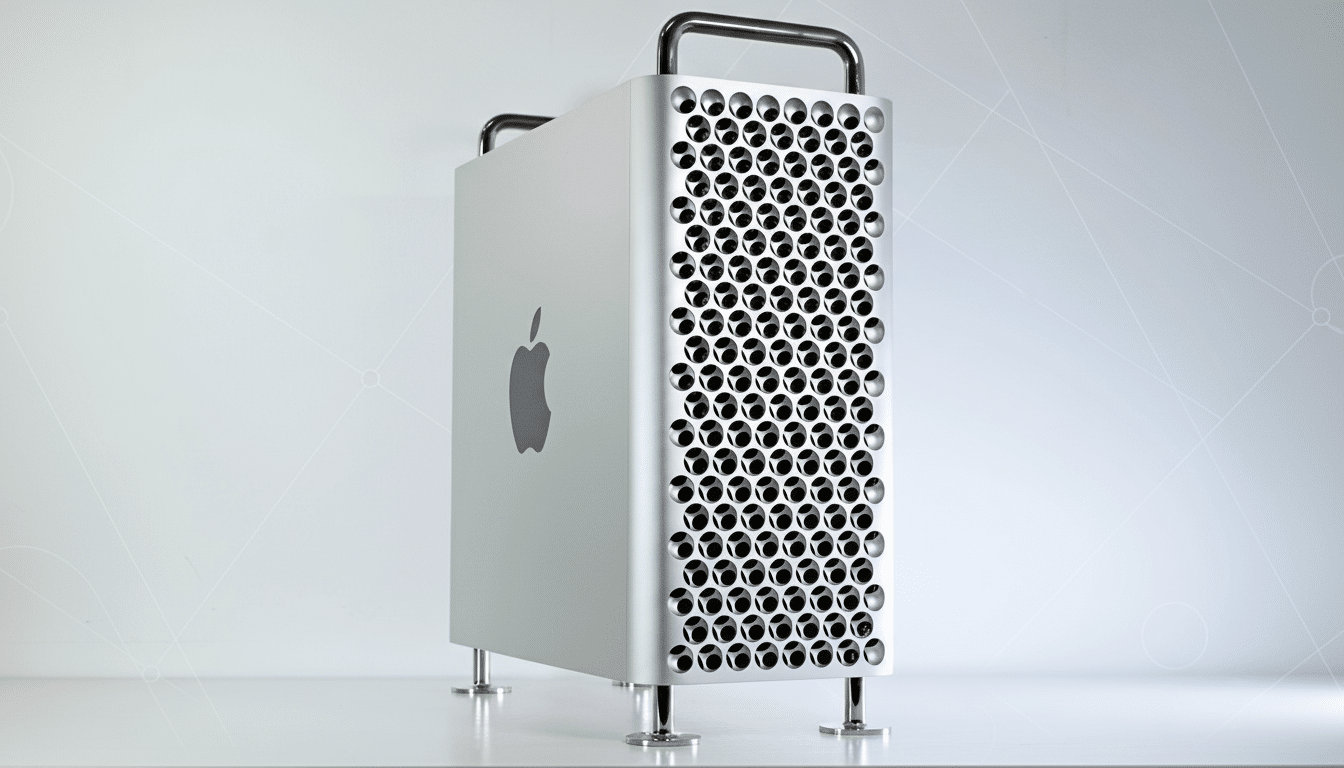
The End of Apple’s Modular Mac Pro Tower Era
Reintroduced in 2019 after the polarizing cylindrical model, the Intel-based Mac Pro returned with a classic tower design, massive thermal headroom, and up to eight PCIe slots. It was praised for repairability and airflow, ribbed for its so-called “cheese grater” look, and positioned as the no-compromise workstation at a starting price of $5,999—with fully specced builds soaring well into five figures.
Even as Apple moved its lineup to Apple Silicon, the tower lingered as the sole machine promising internal expansion. The later Apple Silicon Mac Pro kept PCIe slots for high-speed I/O and specialized cards but could not accept third-party GPUs—an architectural reality of Apple’s integrated graphics approach. For many studios, that limitation undercut the point of a tower in the first place.
Farewell to the Mac Pro’s $700 Stainless-Steel Wheels
Few accessories captured tech’s luxury-meets-absurdity vibe quite like the Mac Pro wheels. Priced at $400 when added at purchase—or $699 if bought after the fact—they became a meme, a punchline, and a shorthand for Apple’s unapologetic premium tier. Discontinuing the wheels alongside the tower is more than housekeeping; it signals a full stop on the era of industrial-chic, rollable workstations in Apple’s world.
Mac Studio Takes Center Stage for Power Users
With the tower gone, Apple is clearly steering power users to Mac Studio. Configurable with an M4 Max or M3 Ultra, it offers workstation-class throughput, dedicated media engines for formats like ProRes and HEVC, unified memory up to 256GB, and internal storage up to 16TB. In real workflows—multicam 8K timelines, complex 3D scenes, or massive Lightroom catalogs—the Studio’s performance-per-watt advantage often outpaces older, hotter towers while occupying a fraction of the desk space.
That shift plays to Apple Silicon’s strengths: tightly integrated CPU, GPU, and neural engines, lower noise, and predictable thermals. It also simplifies Apple’s desktop story around three clear tiers. For many post houses and VFX teams that already rely on Thunderbolt arrays, fast networking, and shared storage, the Studio drops in neatly.
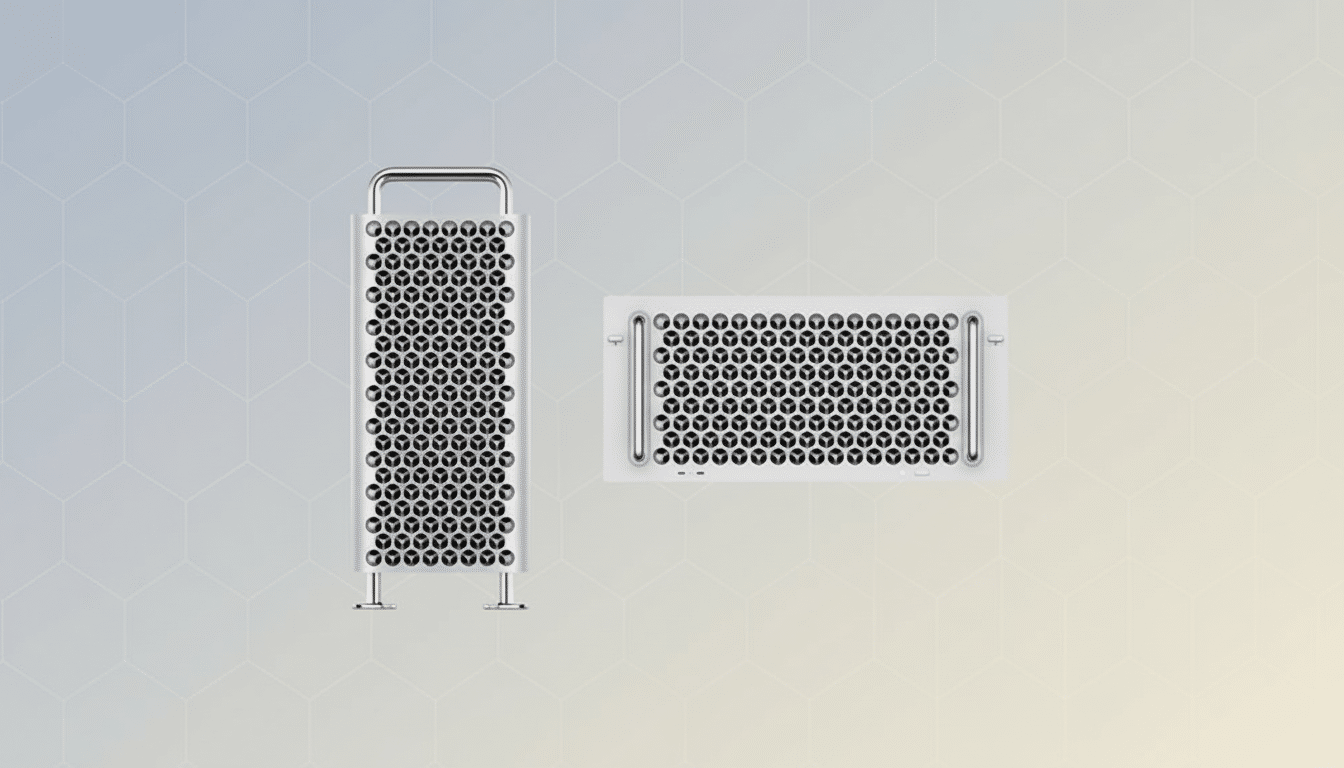
What Pros Lose And What They Gain With The Shift
The obvious loss is internal modularity. No more stacking PCIe capture cards next to Fibre Channel HBAs next to a GPU you swap every year. Those capabilities move external: Thunderbolt expansion chassis, 25/40GbE networking, and rack-mounted storage. Workflows that leaned on internal GPU upgrades will need rethinking, since Apple Silicon doesn’t support discrete third-party GPUs.
The upside is predictability and speed. Apple’s unified memory architecture cuts latency between CPU and GPU tasks, and hardware-accelerated codecs drastically reduce render and transcode times in apps like Final Cut Pro, DaVinci Resolve, and Adobe Premiere Pro. For a large slice of pro users—editors, colorists, audio engineers, photographers—the Studio delivers tower-class output with fewer moving parts and lower operating costs.
Why Apple Made The Call To Retire The Mac Pro
Analyst firms such as IDC and Canalys have long pegged the Mac’s global PC share in single digits, with desktops representing a minority of those units. Within that slice, high-end workstations are a niche. By consolidating around the Studio, Apple streamlines engineering and inventory while pushing buyers toward the silicon roadmap that has driven its recent performance gains.
There’s also a practical market shift: many studios increasingly offload specialized workloads to network appliances, on-prem render farms, or cloud GPU instances. In that world, a compact, quiet, highly efficient local machine is more valuable than a big, user-upgradable tower—especially when total throughput depends on distributed resources rather than one maxed-out box.
What It Means For Current Mac Pro Owners
Existing towers don’t turn into pumpkins. Apple typically provides macOS updates for years and maintains service parts for a defined period after discontinuation; hardware is labeled “vintage” and later “obsolete” on a known cadence. Studios can continue running mission-critical cards in place while planning a staged migration to Mac Studio systems with Thunderbolt expansion or to rack-based Mac alternatives.
The smarter move now is to audit which tasks truly need internal PCIe and which can shift to external or networked solutions. For many, the answer will be: fewer than expected. And that’s the strategic bet Apple is making in retiring the Mac Pro—ending the era of the rolling workstation and betting that modern pro workflows are ready to leave the wheels behind.