


Apple is reportedly building a camera-equipped AI wearable the size of an AirTag, a device concept that echoes the ambition of the ill-fated Humane AI Pin but leans on Apple’s deep hardware, software, and services stack. Sources cited by The Information say the project is early, could still be canceled, and is tentatively aimed at a 2027 debut with an aggressive plan to manufacture around 20 million units at launch.
What the Device May Look Like and Its Core Hardware
Internally described as a thin, flat, circular disc, the pin is said to be slightly thicker than an AirTag and built with an aluminum-and-glass shell. The current prototype reportedly includes two cameras (standard and wide), three microphones, a speaker, and a physical button. Charging is expected to use a magnetic inductive interface similar to Apple Watch.
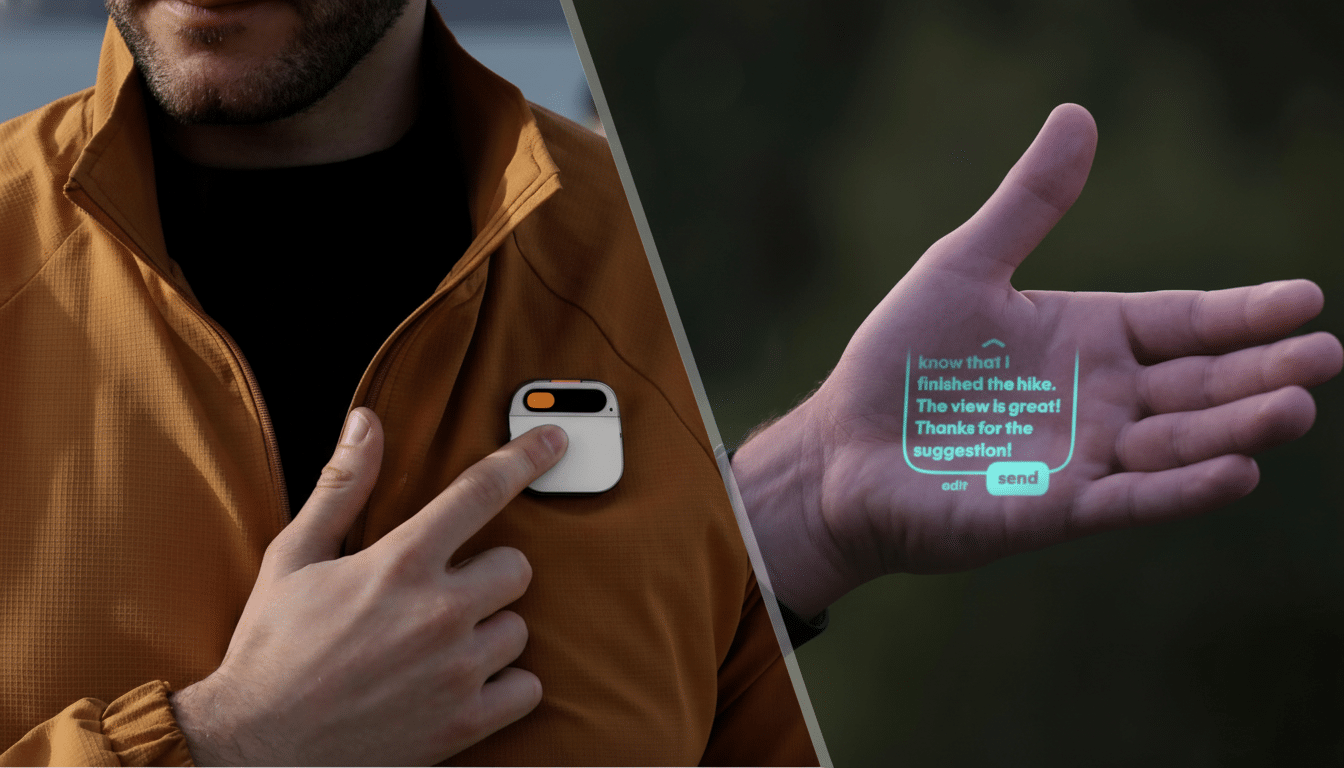
It remains unclear whether the pin would stand alone or pair tightly with an iPhone or other Apple hardware. The reported inclusion of onboard audio and a button suggests direct interaction is planned, yet Apple’s history favors tight ecosystem integration—think Handoff, Continuity, Find My, and UWB—making a companion model plausible. Early designs would require accessories to attach the device to clothing or bags, though that could change before release.
Lessons From Humane And The Wearable Reality
The Humane AI Pin showed the promise and pitfalls of an always-there AI assistant. Reviewers at outlets like The Verge and The Wall Street Journal criticized battery life, heat, latency, and core usability, and Humane later advised customers to stop using its charging case due to a potential fire risk from a battery supplier. The episode highlighted how difficult it is to balance compute, heat, privacy, and comfort in a tiny device that’s always listening and sometimes recording.
Apple’s potential edge is integration and silicon. With custom chips that prioritize efficiency and neural processing, plus on-device AI advances tied to its Apple Intelligence and Siri overhaul, Apple can reduce cloud dependency and shrink latency—two key friction points in Humane’s experience. Apple also has privacy guardrails built into iOS and its ecosystem, which could help address social acceptability and transparency when cameras and microphones are involved.
Scale and Timing for Apple’s Rumored AI Wearable
Targeting 20 million units for launch would be a bold bet on demand. For context, Strategy Analytics estimated Apple shipped roughly 12 million Apple Watches in its first year—a strong debut for a new category. A multi-year runway to 2027 gives Apple time to refine battery chemistry, camera pipelines, and on-device models, and to harden privacy features and controls that will be scrutinized by regulators and consumers alike.
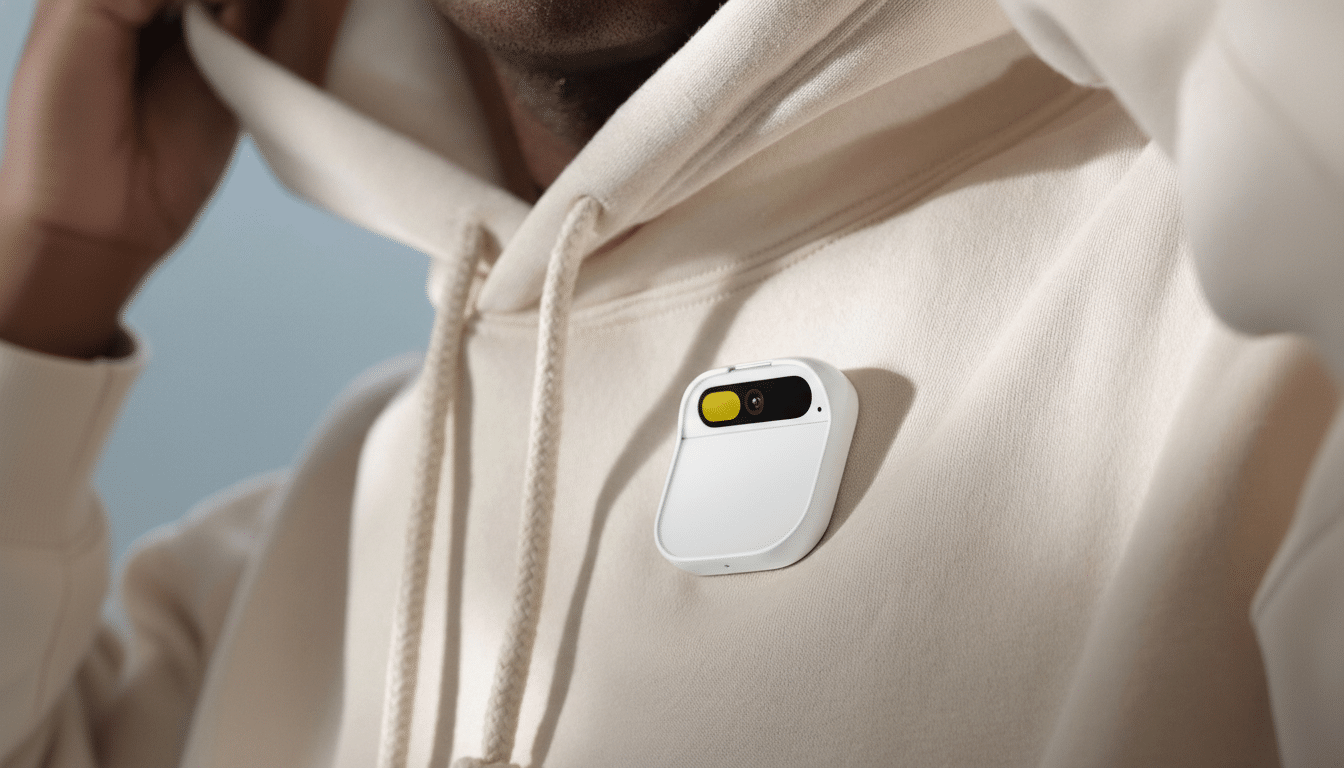
Scale also matters for components. Miniaturized camera systems and microphone arrays can stress power budgets and thermal envelopes when paired with continuous AI workloads. Apple’s supply chain discipline—and its ability to co-design hardware and software—could be decisive in keeping heat down and battery life up without sacrificing capability.
Competitive Pressure and Use Cases for an Apple AI Pin
The Information frames the project within a broader race among AI-first wearables. OpenAI has reportedly explored AI earbuds that could rival mainstream hearables. Meta’s camera-enabled Ray-Ban glasses have shown that ambient capture and hands-free assistance can resonate when the form factor fits daily life. Meanwhile, Samsung, Google, and others are pushing multimodal assistants into phones, watches, and earbuds.
An Apple AI pin would likely focus on tasks where a chest-mounted perspective and quick interactions shine: instant photo and video capture with semantic tagging, live translation, object recognition, contextual reminders, and real-time assistance that understands what’s in front of you. Deep hooks into Photos, Notes, Maps, Messages, and Shortcuts—plus private on-device processing—could make those experiences feel seamless rather than bolt-on.
What to Watch Next as Apple Tests an AI Wearable Path
Key variables include whether Apple positions the pin as a must-have companion to iPhone and AirPods or as a standalone computer; how it signals recording and protects bystander privacy; whether it opens APIs so developers can build novel “ambient” apps; and how Siri’s new multimodal capabilities translate into fast, reliable real-world help.
Apple’s installed base now spans more than two billion active devices globally, giving any new wearable a ready-made audience and distribution network. If Apple can solve the battery, thermal, and social-acceptability challenges that dogged Humane, an AI pin could evolve from curiosity to category—turning ambient intelligence into an everyday utility rather than a tech demo.