


A new code leak indicates Apple is working on a significant upgrade to AirTag’s location capabilities, with fresh software hooks referring to improved tracking for moving objects, more precise Precision Finding functionality, and smarter behavior in busy locations. The changes may come through a software update for existing tags, or could be released with new hardware, and would further justify Apple’s investment in its Find My ecosystem.
What the iOS code leak reveals about AirTag tracking
References in a released internal iOS build, Macworld discovered, describe things that are laser-targeted at AirTag’s core job: helping you find stuff faster and more consistently.
- What the iOS code leak reveals about AirTag tracking
- Why improved moving tracking is important for AirTag
- Whether the AirTag upgrades arrive via hardware or software
- Why privacy and safety questions remain potentially murky
- Competitive pressure on AirTag tracking continues to rise
- What to watch next as Apple advances AirTag tracking
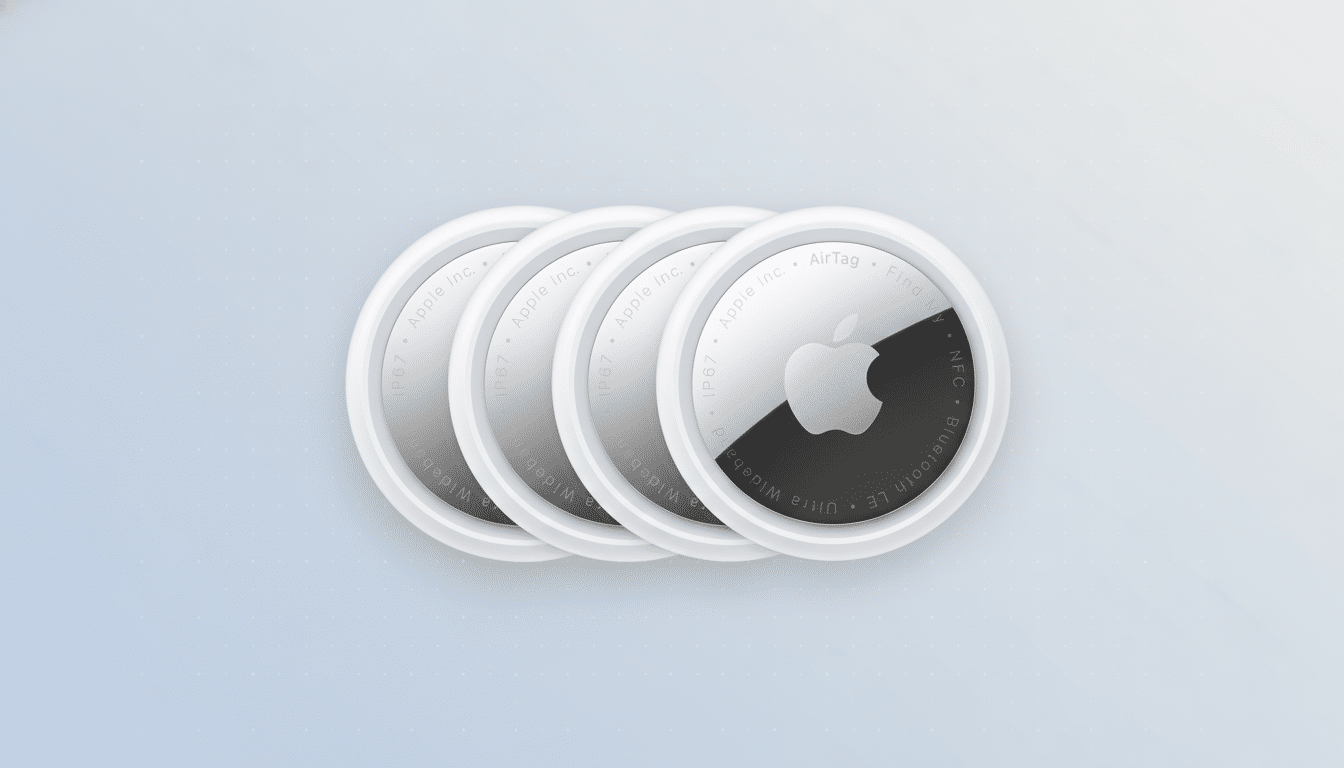
One such flag, referred to as “Improved Moving,” suggests that tighter tracking will be possible when an AirTag is moving — which historically has been by far the most difficult scenario for Bluetooth and ultra‑wideband systems since signal handoffs and changing conditions can introduce jitter.
The same code also references enhancements to Precision Finding — the on‑screen directional guidance that triggers close‑up — upgrades to pairing, and more detailed battery reporting.
Another reference calls out optimizations for finding things in dense environments, the RF soup that you find yourself swimming in at stadiums, transit centers, or crowded urban streets.
Why improved moving tracking is important for AirTag
Already, AirTag is a great product when something is stationary — particularly in the home or office. The Achilles’ heel has been dynamic tracking: the bike rolling down a block, the bag along a conveyor, or the package in transit. In such cases, location pings can lag behind or jump ahead as signals bounce and devices hand off across the network.
Advances here have disproportionate real‑world effects. Travelers have used AirTags to retrieve suitcases strayed in airport backrooms and across cross‑country flights; SITA’s global baggage reports place mishandling between 7–8 bags per 1,000 passengers in years past, no small figure for frequent flyers. Cyclists and car owners have also thanked AirTags for expedited recoveries, in which every minute is important. Smoother motion tracking could shorten the time from “it’s nearby” to “it’s in that left‑turning vehicle.”

Whether the AirTag upgrades arrive via hardware or software
Some of these improvements could derive from algorithms alone — for example, changing how AirTag fuses signals from Bluetooth, ultra‑wideband, and the network, or altering the frequency with which it chirps its location when in motion. But there are enough indications to suggest some hardware assist. Apple’s more recent U2 ultra‑wideband chip, found in its recent iPhones and wearables, promises to offer more precise ranging that can reach further distances for Precision Finding; Apple has announced a significantly stronger level of performance when devices are using the U2, extending potentially all the way to increasingly reliable directional guidance across rooms and hallways.
Industry watchers, such as Bloomberg’s Mark Gurman, have previously written that an updated AirTag has been on the roadmap. And if Apple combines that leak‑driven feature set with a U2‑based tag, expect faster lock‑ons at close distances, greater reliability in RF‑noisy environments, and fewer “last seen” holes as items shift between Find My partners.
Why privacy and safety questions remain potentially murky
Any increase in tracking fidelity should come with more protection against abuse. Apple and Google announced a joint industry standard for unwanted tracker alerts, attaching cross‑platform notifications for iOS/Android whenever an unknown tag is tracking someone’s movements. If AirTag becomes more effective at following motion, the anti‑stalking safeguards must be just as noticeable — perhaps with quicker notifications, clearer guidance, or sound that’s loud enough for when a tag is out of its owner’s proximity.
Competitive pressure on AirTag tracking continues to rise
The Find My network that Apple uses is backed by enormous scale — it recently referred to over 2.2 billion active devices — so AirTag gets a dense mesh for location relays. But the landscape is shifting. Google has turned on its Find My Device network across the Android ecosystem, and established players like Tile and emergent Chipolo are keeping pace with multi‑platform iteration. Accuracy and speed — in movement, especially, and crowd control — are no longer just nice‑to‑haves.
What to watch next as Apple advances AirTag tracking
Look for hints in the next couple of iOS releases and accessory announcements. Should Apple roll out these features widely into software, current AirTags could instantly get a benefit here — at least better battery reporting and pairing. If the company starts off with the largest gains being new silicon, we can expect a next‑gen AirTag topping out with better Precision Finding capability, more reliable tracking of moving items, and improved performance in RF‑dense environments.
Either way, the direction is obvious: The next chapter of AirTag is all about making real‑time location — something that’s felt a bit like a dot that updates — feel more like a steady, precise arrow pointing you to your stuff in need — whether it has jammed itself under another couch cushion or rolled away at the back of a rideshare.