


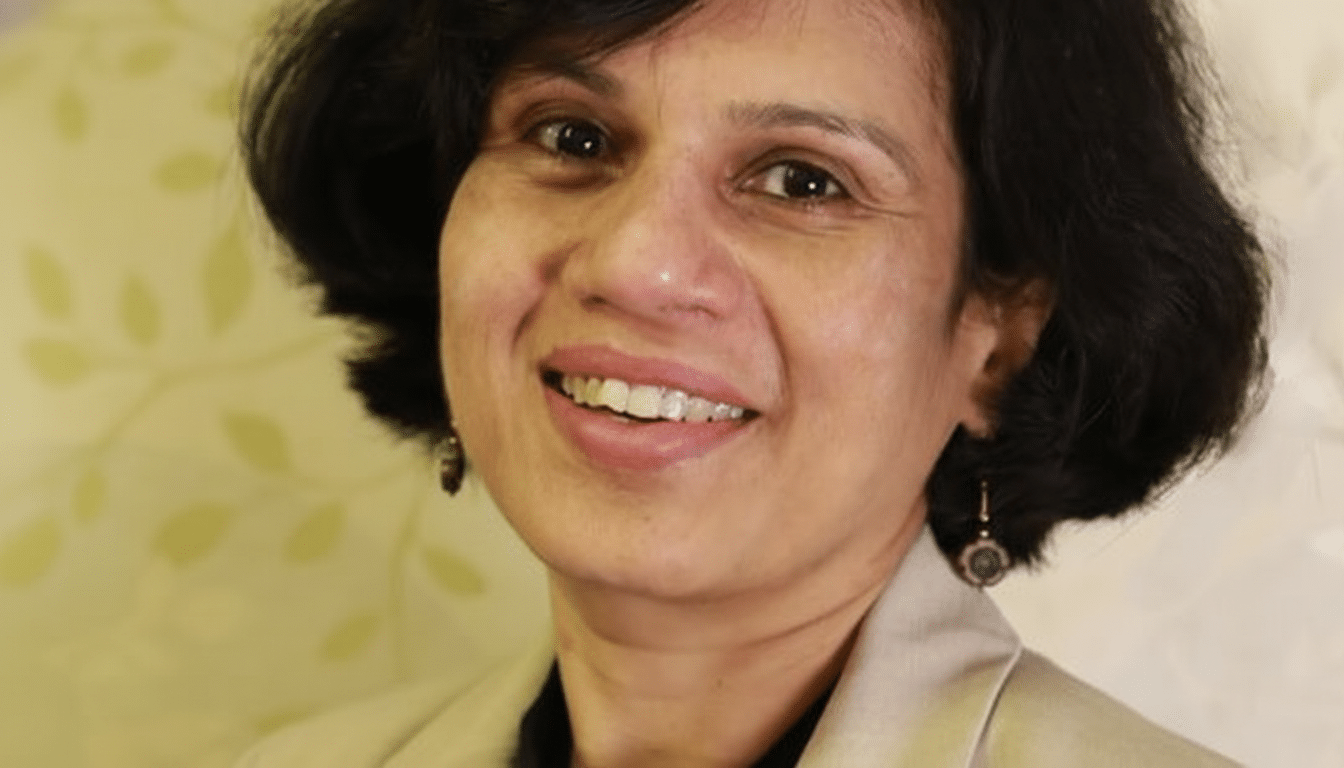
Anthropic has named Irina Ghose, the former managing director of Microsoft India, to spearhead its Bengaluru expansion and lead its India business, signaling a decisive push by the AI company to convert strong user adoption into enterprise-scale revenue in one of the world’s most dynamic tech markets.
The appointment puts a seasoned operator with deep local relationships at the center of Anthropic’s on-the-ground buildout. The company is preparing a Bengaluru office and ramping hiring as global AI competition intensifies across India’s enterprise, developer, and public-sector segments.

Bengaluru Emerges as Anthropic’s India Hub
Bengaluru, home to India’s densest concentration of AI talent and global capability centers, offers Anthropic access to experienced researchers, product engineers, and go-to-market leaders. The city also anchors major enterprise customers across banking, telecom, IT services, and healthcare—segments that are accelerating pilots and production deployments of generative AI.
India’s scale makes the bet compelling. The country counts more than a billion internet subscriptions and over 700 million smartphone users, according to data from regulators and industry bodies. GitHub has noted that India is one of its fastest-growing developer communities, bolstering the addressable base for AI tooling and APIs.
A Veteran Operator To Unlock Enterprise Demand
Ghose brings more than two decades of experience from Microsoft, including leadership roles across enterprise sales and cloud adoption. Those credentials matter in India, where large customers prize “high-trust” platforms, robust security controls, and reliable service levels before greenlighting mission-critical deployments.
Her remit will likely span building relationships with CIOs and CTOs, navigating government and regulated industries, and tailoring Anthropic’s offer to local procurement realities. That includes proving value in productivity, coding assistance, knowledge management, and customer operations—areas where Indian enterprises are piloting GenAI at scale.
Usage Surges While Monetization Lags Across India
India has already emerged as one of Anthropic’s largest user bases for Claude, with activity skewed toward technical and work-related tasks like software development. But turning adoption into sustained revenue remains the industry’s central challenge.
Appfigures data shows Claude app downloads in India rose 48% year over year in September to roughly 767,000, while consumer spending jumped 572% to about $195,000 for the month—still a fraction of the U.S., where September spending reached about $2.5 million. Rival OpenAI has leaned into aggressive pricing, introducing a sub-$5 plan and promotional access in India, highlighting the price sensitivity and competitive dynamics Anthropic must navigate.
Partnerships and Go-to-Market Strategies in India
Anthropic is staffing up with enterprise and startup account executives and a partner sales manager, indicating a channel-led strategy. In India, scale often runs through alliances with IT services firms, cloud marketplaces, and systems integrators that can embed AI into transformation programs and managed services.
Amazon’s multibillion-dollar investment in Anthropic and deep AWS penetration among Indian enterprises could create a natural route to market via cloud credits, co-selling, and private offers—especially for customers seeking virtual private cloud or on-prem-compatible deployments. Expect emphasis on compliance features aligned with India’s Digital Personal Data Protection Act and sectoral norms in BFSI and healthcare.
Local Language And Public Sector Opportunities
Ghose has signaled a focus on enterprise-grade AI tailored to Indian needs, including support for local languages and domain-specific guardrails. That approach aligns with demand from education providers, healthcare networks, telecoms, and state agencies seeking safer, auditable AI for knowledge retrieval, citizen services, and frontline workflows.
Momentum could build around national convenings such as the upcoming AI Impact Summit, where policymakers and industry leaders are expected to outline priorities for deployment and skills. With India’s homegrown foundation-model ecosystem still nascent, global providers that localize responsibly—and partner with domestic institutions—stand to gain early mindshare.
What to Watch Next in Anthropic’s India Strategy
Key indicators will include the pace of Anthropic’s local hiring, depth of distribution partnerships, and evidence of large enterprise wins across regulated sectors. Developer engagement—hackathons, API credits, and model fine-tuning programs—will signal how Anthropic plans to expand beyond pilots into production.
With OpenAI planning an office in New Delhi and other AI players sharpening India strategies, the race is on to pair trust and performance with economic value. Anthropic’s choice of a veteran enterprise leader in Bengaluru suggests a clear intent: compete on reliability, align tightly with compliance and partner ecosystems, and turn India’s surging AI usage into durable, long-term revenue.