


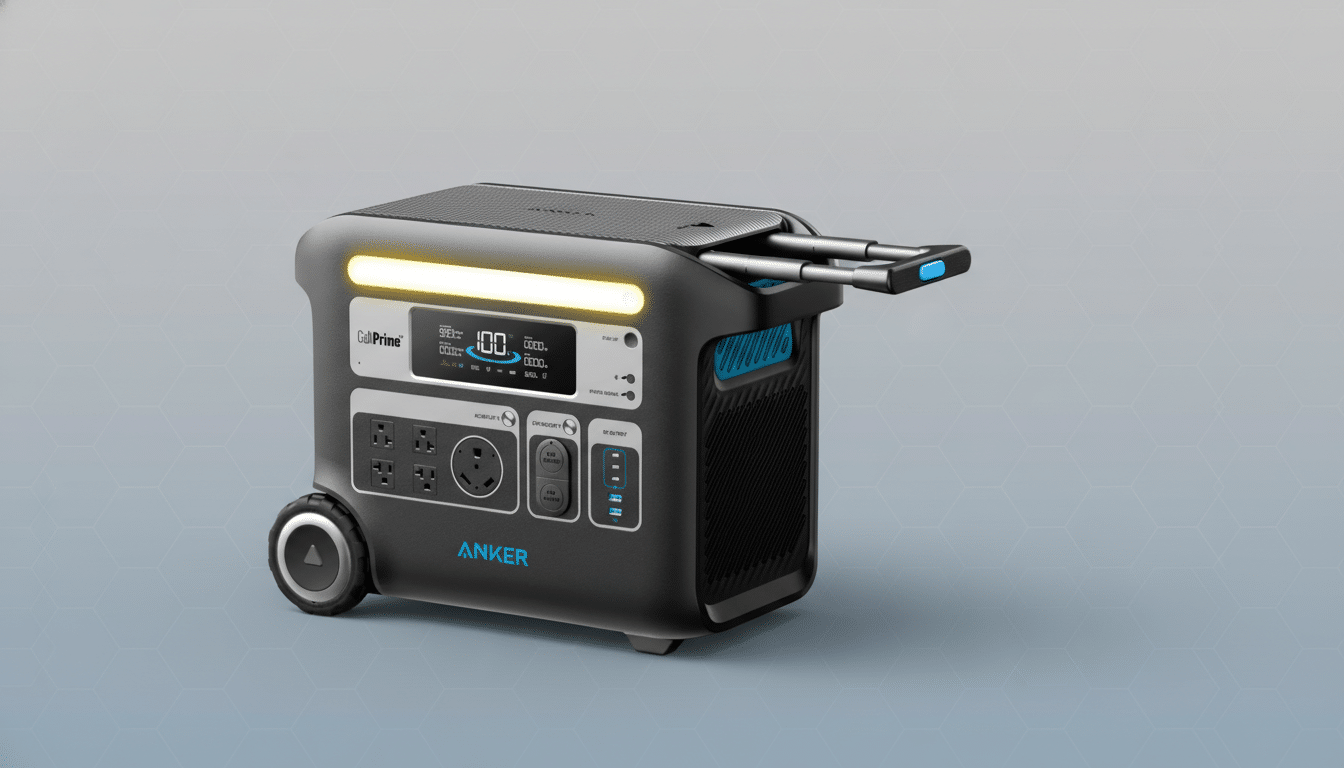
A rare deep discount just landed on one of the most capable portable power stations on the market. The Anker Solix F2000 is now selling for $849 at major retailers, down from a list price of $1,999—an eye-catching $1,150 off and a 58% cut that puts big-home backup within reach.
For shoppers tracking value per watt-hour, this deal is unusually aggressive. At roughly $0.41 per watt-hour for a 2,048Wh system, the F2000 undercuts many rivals that often hover close to $1/Wh in the 2kWh class, especially with lithium iron phosphate (LFP) batteries.
- Why This Deep Discount on the Anker Solix F2000 Truly Stands Out
- What the Anker Solix F2000 Can Power During Typical Outages
- Fast Recharging From AC Plus High-Input Solar Options Explained
- Build Quality, Portability, and Safety Considerations
- Context on Power Outages and Everyday Use Cases for the F2000
- How the Anker Solix F2000 Stacks Up Against Rivals at This Price
- Bottom Line: A Standout 2kWh LFP Power Station Deal Today
Why This Deep Discount on the Anker Solix F2000 Truly Stands Out
High-capacity stations with durable LFP cells typically command premium pricing because they offer long lifespans, safer chemistry, and higher cycle counts. Anker rates the Solix F2000 for thousands of charge cycles before noticeable capacity loss, a key differentiator if you plan to use it regularly rather than just for occasional outages.
At this drop, the F2000 competes not only with midrange units but also stakes a claim against popular 2kWh alternatives from EcoFlow and Bluetti, many of which still sell for four figures when comparably equipped.
What the Anker Solix F2000 Can Power During Typical Outages
With a 2,048Wh battery and a high-output inverter in the 2kW class, the Solix F2000 can run most household essentials during an outage. Think refrigerators, sump pumps, CPAP machines, modems and routers, laptops, and power tools. Anker estimates up to 10 hours for a typical fridge, and practical runtimes will vary with load and compressor cycles.
As a rule of thumb, divide 2,048Wh by an appliance’s watt draw, then factor in inverter efficiency. A 40W CPAP could run for well over a day; a 500W microwave will be fine for short bursts; a 1,500W space heater will drain the pack quickly and isn’t the best use case.
Multiple AC outlets, car sockets, and high-wattage USB-C ports make it easy to mix heavy appliances with device charging. For families, keeping lights, a router, and phones alive while the fridge stays cold is often the winning combination.
Fast Recharging From AC Plus High-Input Solar Options Explained
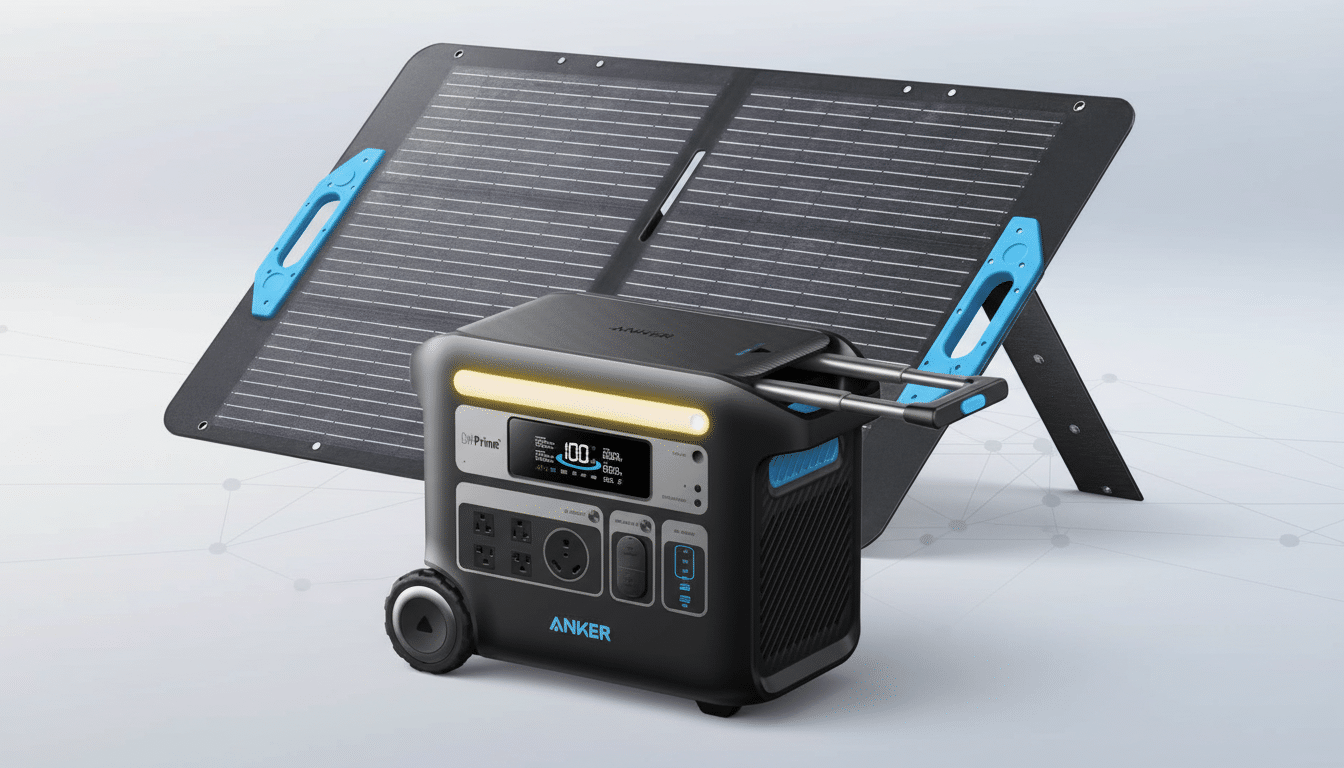
Speed matters in emergencies, and the F2000 recharges rapidly from the wall—Anker’s fast-charge tech brings it from low to a substantial top-up in roughly the time it takes to run errands. For off-grid use, it supports high-input solar charging (up to 1,000W, per manufacturer specs), letting a pair of robust panels refill the battery during daylight.
It’s also expandable. Add an Anker expansion battery to double capacity to 4,096Wh, turning a short-term backup into a long-haul solution for multi-day outages or extended RV trips.
Build Quality, Portability, and Safety Considerations
At over 60 pounds, the F2000 is solidly built, and the integrated wheels and telescoping handle make a real difference when moving it around the house, garage, or campsite. The rugged chassis is designed for repeated transport without babying it.
LFP chemistry provides strong thermal stability and longevity, and a multi-layer battery management system monitors temperature, voltage, and current to safeguard the pack and connected devices. Many buyers also use the unit in “UPS-like” pass-through mode for sensitive equipment; transfer times are quick enough for most electronics, though mission-critical servers still warrant dedicated UPS hardware.
Context on Power Outages and Everyday Use Cases for the F2000
The U.S. Energy Information Administration has reported multi-hour average annual outage durations for customers in recent years, with severe weather driving the longest interruptions. NOAA attributes many of the largest events to storms, high winds, and ice—exactly the scenarios that make a portable power station a practical hedge.
Beyond emergencies, contractors appreciate the high surge capacity for tools, and travelers use the F2000 to anchor off-grid setups for vans or RVs. Quiet operation and zero tailpipe emissions also make it campsite-friendly where gas generators aren’t allowed.
How the Anker Solix F2000 Stacks Up Against Rivals at This Price
Comparable 2kWh stations with fast AC charging, 1,000W-class solar input, and LFP cells typically run $1,200 to $1,700 when not discounted. At $849, the Solix F2000’s cost-per-Wh and feature set are tough to beat, especially with the option to expand to 4kWh later.
If you want lighter weight above all, a smaller 1kWh unit will be easier to carry but far less capable. If you need whole-home coverage, a larger 3kWh–5kWh system or transfer switch may be better. For most households seeking a portable, appliance-capable backup, the F2000 hits a sweet spot.
Bottom Line: A Standout 2kWh LFP Power Station Deal Today
This is one of the strongest deals we’ve seen on a 2kWh LFP power station. If you’ve been waiting to shore up storm preparedness, outfit a camper, or add reliable backup for essential gear, the Anker Solix F2000 at $849 is a standout buy while inventory lasts.