


The new Anker Solix E10 whole-home backup system just landed a standout discount, with prices cut by at least 26% depending on configuration. The entry package is as low as $4,299, down from a typical $5,799, translating to a minimum $1,500 in savings on a system designed to keep critical home circuits online when the grid goes dark.
Why This Anker Solix E10 Deal Truly Stands Out Now
Most portable power stations can run a campsite or a few home devices; the Solix E10 is built for whole-home resilience. This discount applies to multiple bundles, including the E10 Power Module and one B6000 Battery Module, and packages that add accessories like a 240V output cable and fixed bracket.
- Why This Anker Solix E10 Deal Truly Stands Out Now
- Capacity and Real-World Runtime for Whole-Home Backup
- Setup and Use Considerations for Whole-Home Systems
- How It Compares With Other Whole-Home Battery Systems
- Why Reliable Home Backup Power Matters Right Now
- Who Should Buy This Anker Solix E10 Backup System
- Bottom Line on Anker Solix E10 Discount and Value
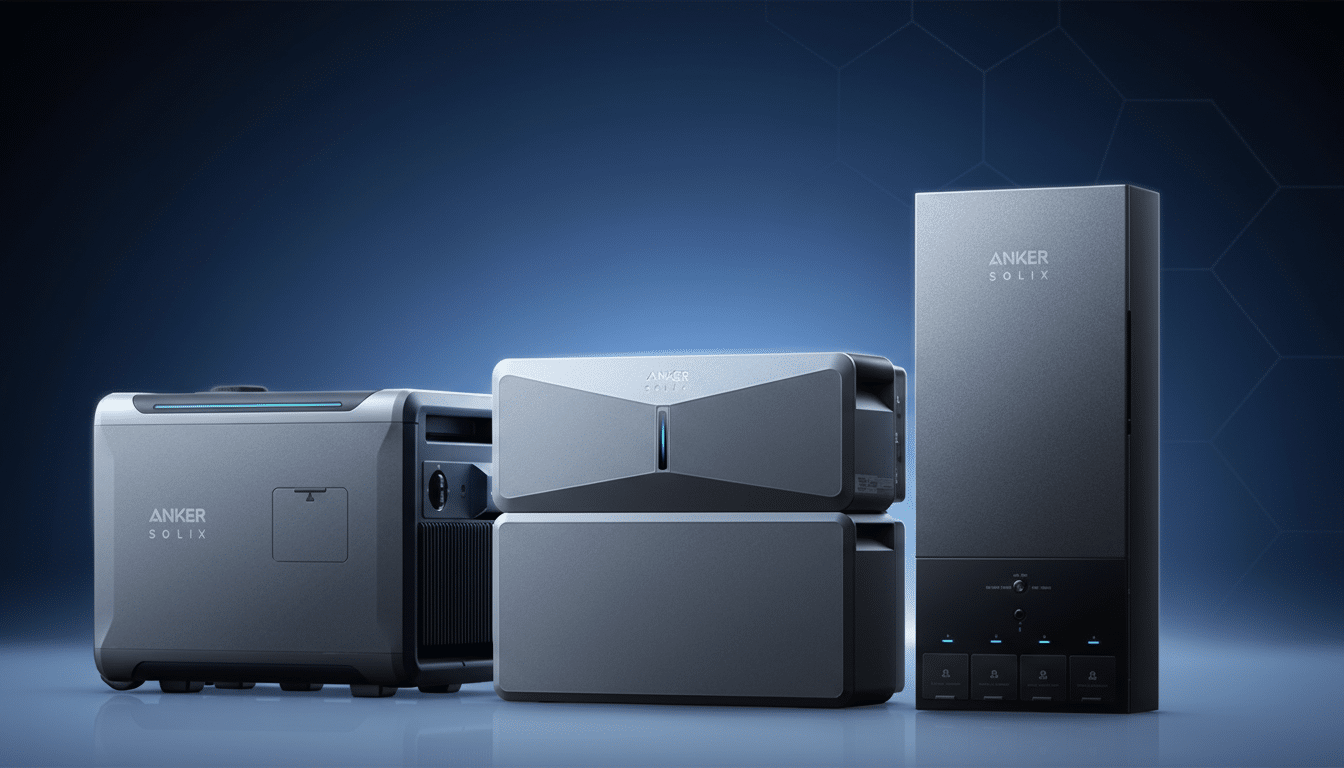
Promotional bundles may also include extras such as:
- 400W solar panel
- Power strip
- AC generator adapter
- Metal pad
- Extended 3-year warranty
These add meaningful value for first-time buyers.
The headline here is the economics. Large-scale home batteries have historically commanded premium prices per kilowatt-hour; shaving $1,500 or more immediately lowers the cost barrier for homeowners comparing battery backup to traditional standby generators, especially when factoring ongoing fuel, maintenance, and noise costs that batteries avoid.
Capacity and Real-World Runtime for Whole-Home Backup
Anker lists scalable storage that can be expanded by stacking units. A single E10 configuration is cited at up to 37.2 kWh of capacity, and a three-unit stack up to 90 kWh—enough, the company says, to run essentials for up to 15 days. To put that in context, the U.S. Energy Information Administration reports the average U.S. household uses roughly 29 kWh per day, but “essential loads” during an outage often drop to 8–15 kWh per day when you prioritize refrigeration, lighting, internet, a gas furnace blower, and a sump pump. On that basis, a high-capacity stack can stretch into multi-day coverage without aggressive conservation.
For everyday planning:
- A modern refrigerator typically consumes 1–2 kWh/day
- A gas furnace blower can draw 400–800 watts while running
- Networking gear sips 20–40 watts
High-wattage appliances like electric ranges, well pumps, or central air require split-phase 240V support, which the E10 addresses with a dedicated 240V output cable included in select bundles.
Setup and Use Considerations for Whole-Home Systems
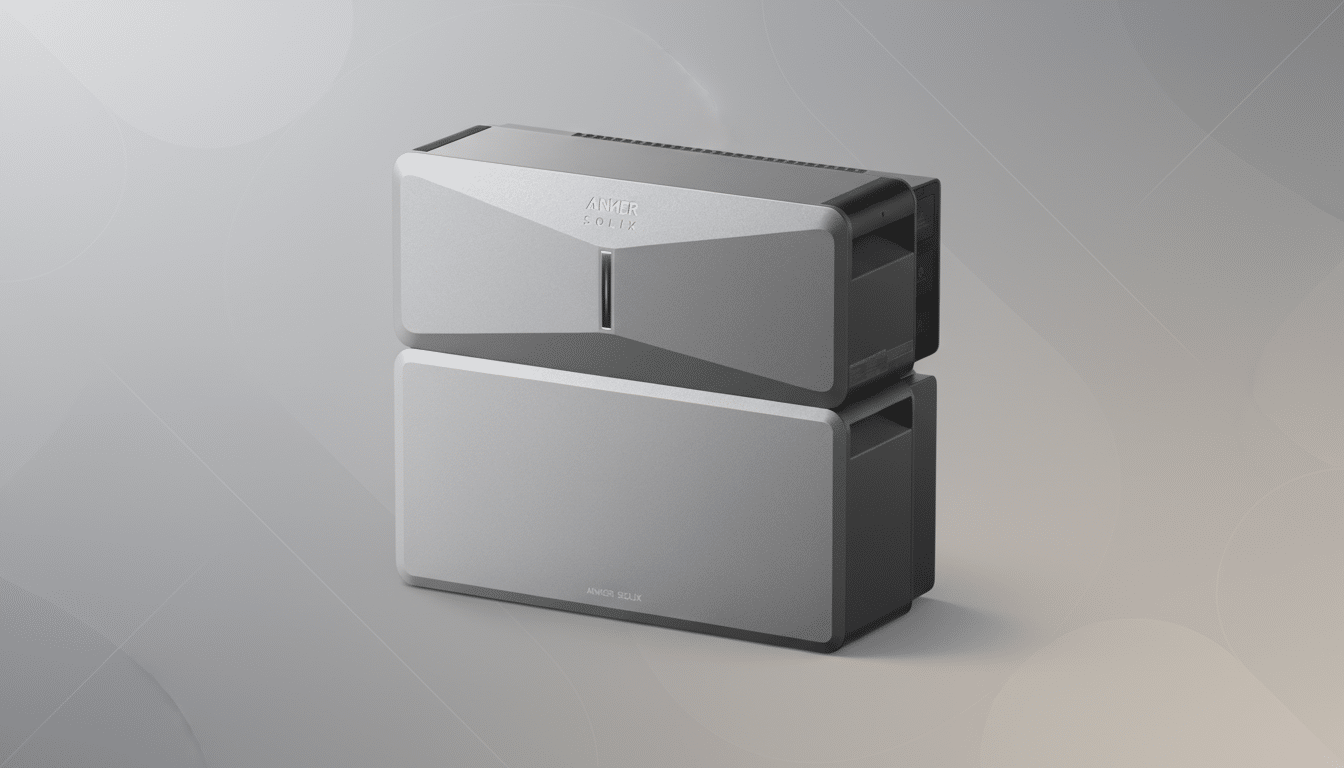
Anker emphasizes simple stacking and plug-in setup, with modular batteries you can expand over time. For whole-home integration, plan on a transfer switch or smart subpanel so you can safely isolate selected circuits during an outage. A licensed electrician should handle any panel work and confirm local code compliance.
Charging flexibility is a major plus. AC charging lets you top up ahead of storms, and the optional 400W solar panel can slow the drain during prolonged outages. While 400W is modest for a system this size, pairing multiple panels or integrating rooftop solar can meaningfully extend runtime. Many home batteries now use lithium iron phosphate (LFP) cells known for thermal stability and long cycle life; if the E10 follows suit, expect thousands of charge cycles before notable capacity fade—an advantage frequently cited by testing groups like the National Renewable Energy Laboratory.
How It Compares With Other Whole-Home Battery Systems
Competitors in this class include EcoFlow’s Delta Pro Ultra and Bluetti’s high-capacity systems, which also target whole-home or split-phase loads with modular expansion. On a price-per-kWh basis, the current E10 deal is highly competitive, especially considering the accessory bundle and the ability to scale beyond a single unit. Unlike gasoline or propane standby generators, battery systems deliver silent operation, no on-site emissions, and instant switchover for sensitive electronics, which Consumer Reports and other reviewers consistently highlight as quality-of-life advantages.
There may also be financial upside beyond the sale price. Under the federal Residential Clean Energy Credit, standalone home battery systems with at least 3 kWh capacity can qualify for a 30% tax credit, subject to IRS rules. Eligibility depends on installation specifics, so consult a licensed installer or tax professional to confirm what applies in your case.
Why Reliable Home Backup Power Matters Right Now
Outage risk is rising. NOAA has tracked a surge in billion-dollar weather disasters in recent years, and grid reliability reports from the North American Electric Reliability Corporation continue to flag weather-driven risks. The EIA reports average outage durations vary widely by region, with storms in some areas pushing interruptions to many hours or longer. A system like the E10 narrows the gap between grid power and everyday life by keeping refrigeration, communications, and key HVAC components running without the noise and fumes of combustion generators.
Who Should Buy This Anker Solix E10 Backup System
Homeowners who regularly lose power, remote workers who need always-on internet, and families running sump pumps, medical devices, or heat pumps stand to benefit most. If you’re already considering solar, pairing it with a battery unlocks time-of-use arbitrage and storm resilience. Renters may find value in the modular approach by powering select 120V circuits and appliances directly without panel integration.
Bottom Line on Anker Solix E10 Discount and Value
This is a rare markdown on a true whole-home backup platform. With at least 26% off and minimum savings of $1,500, the Anker Solix E10 lands in a compelling price-performance slot, especially with bundle extras. If you’ve been weighing a generator versus a battery system, this deal makes the cleaner, quieter option significantly easier to justify. As with any major purchase, confirm your home’s load needs, consult an electrician for integration, and move quickly—pricing and availability can change without notice.