


Anker’s 2026 charging accessories deserve far more attention than they’re getting. While splashier gadgets grabbed headlines, Anker quietly outlined a practical, well-engineered ecosystem that solves the headaches travelers, hybrid workers, and power users actually face—without overcomplicating the basics.
Why This Lineup Is Flying Under The Radar
Charging tech rarely gets the limelight at big shows, but it should. Standards bodies like the USB Implementers Forum and the Wireless Power Consortium have pushed major improvements—USB Power Delivery up to 240W and Qi2’s magnetic alignment that boosts efficiency—yet most users still juggle mismatched bricks and cables. Anker’s new range leans into those standards and packages them in designs that reduce friction in daily use.
- Why This Lineup Is Flying Under The Radar
- Nano Charger Puts Telemetry On The Outlet
- A Foldable 3‑in‑1 For Apple‑Centric Travelers
- Desk power solutions that hide the mess and save space
- A dock that doubles as a travel hub for hybrid workers
- What the experts would notice in this charging lineup
- Bottom line: practical charging gear that solves problems

The result: fewer adapters in the bag, fewer cables under the desk, and faster, cooler, more reliable charging—precisely the upgrades that matter when your phone is at 2% before boarding or your laptop dock runs your entire workspace.
Nano Charger Puts Telemetry On The Outlet
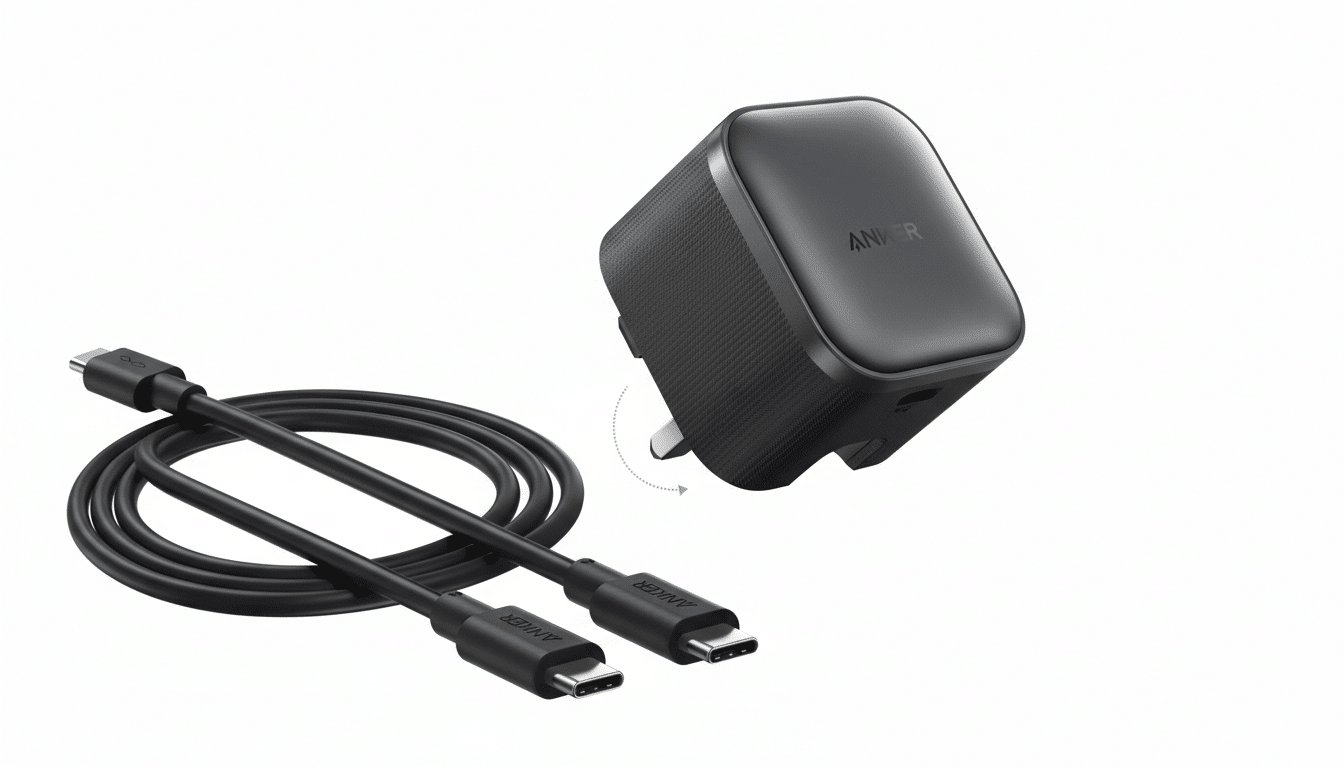
The standout is the 45W Nano Charger, a compact wall charger with a small display that shows live wattage, temperature, and device battery level—useful, not gimmicky. Anker’s “Care Mode” claims to keep your phone up to 9°F cooler than other 45W chargers, a nod to the reality that thermal control sustains speed and extends battery longevity when you’re topping up fast.
Real-world implications: a flagship phone like an iPhone 17 Pro can reportedly go from zero to 50% in under 20 minutes, then taper intelligently. The 180-degree foldable plug solves a common travel problem—outlets tucked behind furniture or too close to countertops—keeping the display legible whether you’re plugged in at 90 or 180 degrees. At $40 and shipping in late January, it’s an easy everyday upgrade.
A Foldable 3‑in‑1 For Apple‑Centric Travelers
The Prime Wireless Charging Station targets the multi-device commuter: iPhone at Qi2 25W, Apple Watch, and AirPods, all charging at once with active airflow to rein in heat. The fold-flat design packs down to roughly phone size, which matters when you’re balancing carry-on weight and cable clutter.
Qi2’s magnetic alignment (backed by the Wireless Power Consortium) is the quiet hero here. Better alignment means fewer charging stalls on bumpy train rides and improved efficiency, especially at higher wattages. At $150 and due in Q1, it’s a clear step up from older two-device mats that charge slower and run hotter.
Desk power solutions that hide the mess and save space
For the home office, the Nano Power Strip reflects a truth many setups ignore: most desks need both AC outlets and high-speed USB-C, but not all in the same place. The dual-zone 10‑in‑1 layout separates concealed AC outlets from front-facing USB for tidier cable runs. You get two 70W USB‑C ports, two USB‑A ports, and six AC outlets with 1500J surge protection—enough for monitors, lamps, and speakers, with headroom for brief spikes.
Practical tip: a pair of 70W USB‑C ports covers a modern laptop plus a tablet or phone without hunting for extra bricks. For context, USB‑IF’s Power Delivery 3.1 specification supports up to 240W overall—so a well-designed 70W port is a sweet spot for everyday productivity. At $70 and arriving in late January, this is a simple way to retire a tangle of extension cords.
A dock that doubles as a travel hub for hybrid workers
Anker’s 13‑in‑1 Nano Docking Station is the sleeper hit: a desktop dock that supports triple 4K displays at home, plus a built‑in 6‑in‑1 removable hub you can pop out for meetings or travel. It delivers 100W upstream charging and 10 Gbps data—enough for fast external SSDs and snappy peripheral response—without the usual “dock or dongle” compromise.
For hybrid workers, this modular approach trims your setup to a single cable at the desk while giving you portable I/O on the go. It’s also one of the rare show announcements you can actually buy now at $150, sidestepping the long wait that often follows CES reveals.
What the experts would notice in this charging lineup
Under the hood, this lineup reflects broader industry trends: gallium nitride components enabling higher power density and cooler operation, Qi2’s magnetic alignment cutting losses, and standardized USB‑C PD simplifying cross‑device charging. Safety markers matter too—look for UL certification on surge protection and compliance with USB‑IF and WPC guidelines to ensure advertised speeds and safeguards are real, not marketing.
Bottom line: practical charging gear that solves problems
These aren’t flashy gadgets; they’re thoughtful tools. A $40 smart charger that runs cooler, a $150 foldable 3‑in‑1 that consolidates your travel kit, a $70 power strip that declutters the desk, and a $150 modular dock that adapts to hybrid work—each addresses a specific pain point with just enough intelligence to matter.
If you’ve been overlooking Anker’s 2026 lineup, that’s understandable given the noise around big shows. But for anyone who charges multiple devices daily, this is the quiet news that will actually change how you work and travel.