


Google has released Android 16 Quarterly Platform Release 2, a mid-cycle home screen improvement device full of real quality-of-life updates to the base OS. QPRs typically focus on polish and fixes, but this one also introduces three tent-pole features intended to help you get in quicker, see less chaos from notifications, and maintain tighter control over your gadgets.
Lock Screen Widgets Are There When You Need Them
Android 16 QPR2 adds support for lock screen swipe-left widgets, making glanceable info indeed genuinely easy to flick through. You can turn it on from Settings > Display & touch > Lock screen > Widgets on lock screen, as spotted by 9to5Google.
That means in practice, with the phone locked, you are one gesture away from your calendar, camera, timers, and other essentials. Its design pays homage to the “at a glance” philosophy of Android and lets you choose which widgets appear. On sensitive tiles you can set them up to display only bits of information until you authenticate, for speed-versus-privacy moderation.
Commuters can pull up next departures on a transit widget without unlocking; productivity heads can use a notes or to-do tile to turn the lock screen into a lightweight dashboard. It’s a small thing that adds up to less unlocking for common tasks.
Artificial intelligence-driven notification organization and summaries
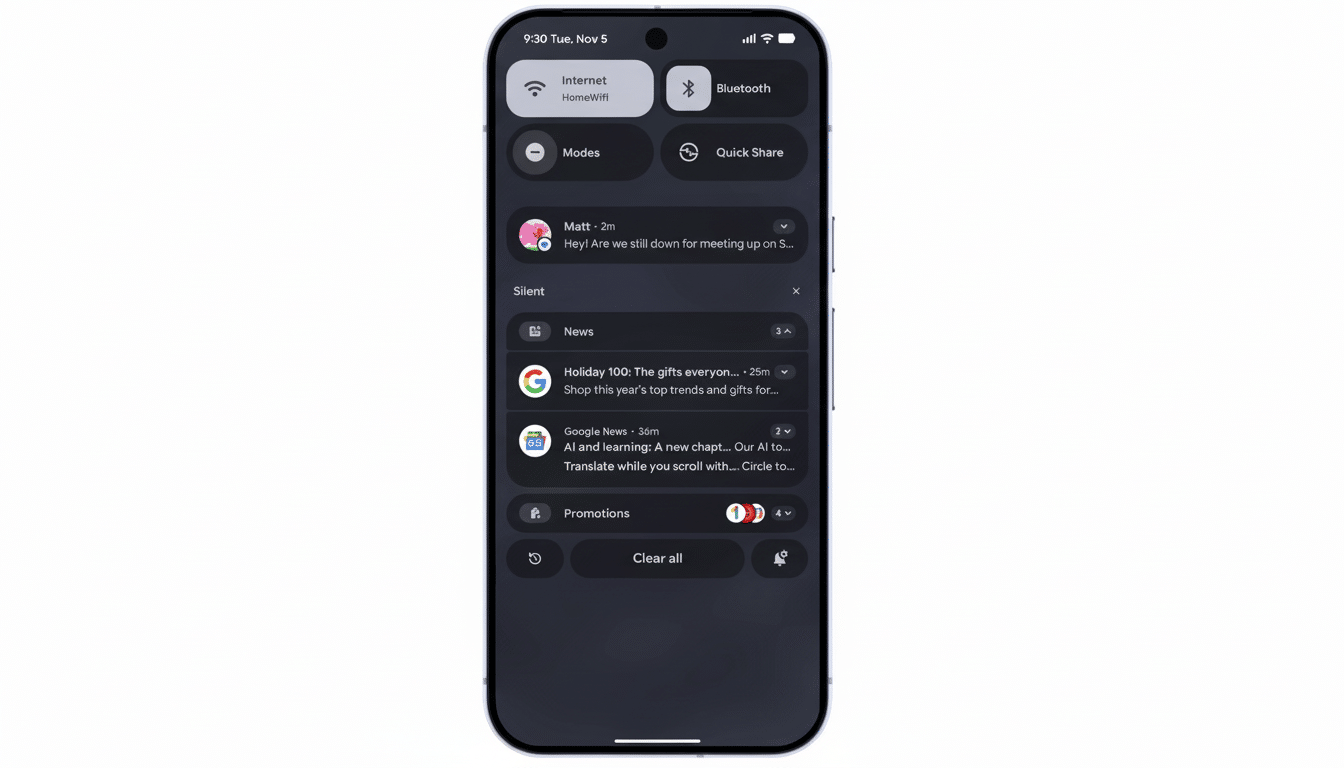
So, too, does notification overload continue to sabotage smartphone focus. Google’s Android team is addressing that in QPR2 with an AI-powered organizer that aggregates lower-priority alerts and creates short summaries for lengthy or noisy threads. Google says the organizer will be introduced gradually, and it will automatically silence promotions, mass news pings, and routine social alerts while bubbling critical messages to the top.
It uses on-device intelligence to determine context and importance—the same approach that it has used with its summary features in Gmail and Messages. The likes of a sprawling group chat update, for example, can be shrunk to display within just one line, which you can then expand as needed. Industry studies such as the Deloitte Mobile Consumer Survey note that people check their phones dozens of times per day; smarter triage aims to reduce those micro-distractions without making you mute your phone altogether.
Power users remain in control: browse grouped alerts, mark apps as priority, and tweak your categories as habits evolve.
Early adopters can anticipate gradual enhancements as the model is trained on real-world usage and feedback.
Parental controls you can manage remotely
The QPR2 also includes a Unified Parental Controls hub in the Settings menu, making it easier to manage kids’ phones and tablets. From one location, parents can establish daily screen-time limits, allow or block apps, and create a device shutdown that locks the screen during homework or bedtime.
The controls are built on the same framework that Family Link is, just easier to find within Android’s native menus. That has practical implications as well: to, say, cap short-form video at a certain window and only permit education apps while in school (or pause the device for dinner) required jumping between different apps or menus on previous models.
Significantly, the feature follows any age-appropriate settings and can do content filters by categories. In households where kids share or get hand-me-down devices, these tools can cut setup time and ensure boundaries are consistent across multiple screens.
Availability and update process for Android 16 QPR2
Android 16 QPR2 is rolling out right now, and Pixel-branded devices should generally receive it first (with others to follow, once manufacturer testing and certification are complete). To see if it’s available, go to Settings > System > System update and follow the prompts. Like other QPRs, we would expect stability/security under-the-hood fixes to be packed together with the above features in this release.
If you don’t see the AI notification organizer pop up right away, that’s normal — Google says it’s rolling out in stages. Keep an eye on Settings > Notifications as new options become available. For more information on the vision behind these updates, Google’s Android team has described it in several recent blog posts and developer notes.
Thanks to the lock screen widgets, AI-ranked notifications, and somehow easier-to-navigate parental controls, Android 16 QPR2 feels like a useful update. No, none of these bring the need to relearn the OS, but each shaves off a bit of friction from the daily grind — a savvy collection of wins for the mid-cycle milepost.