


If you’ve ever wanted something like a Game Boy that could bicep-curl PS2 classics, Anbernic’s new RG 477V is the clearest indication yet that your wish is starting to inch toward reality. The company’s latest vertical handheld comes with a 4:3, 4.7-inch 120 Hz IPS display and MediaTek Dimensity 8300–level silicon — the sort of pairing fans have been wanting to see in a single-hand-use device for many years now. Cost hasn’t been confirmed, but preliminary talk points to middle-of-the-road pricing and a soon launch window.
Design and display: 4:3 120 Hz screen and slim bezels
The RG 477V stays true to the trend of increased retro fidelity with a 4:3 panel — the preferred aspect ratio for classic consoles from NES up through the PS2.
- Design and display: 4:3 120 Hz screen and slim bezels
- Performance for PS2 and beyond with Dimensity 8300
- Controls and ergonomics for comfort in a vertical shell
- Battery life expectations and storage configuration options
- Expected pricing and availability timeline for RG 477V
- How it compares to the current handheld market
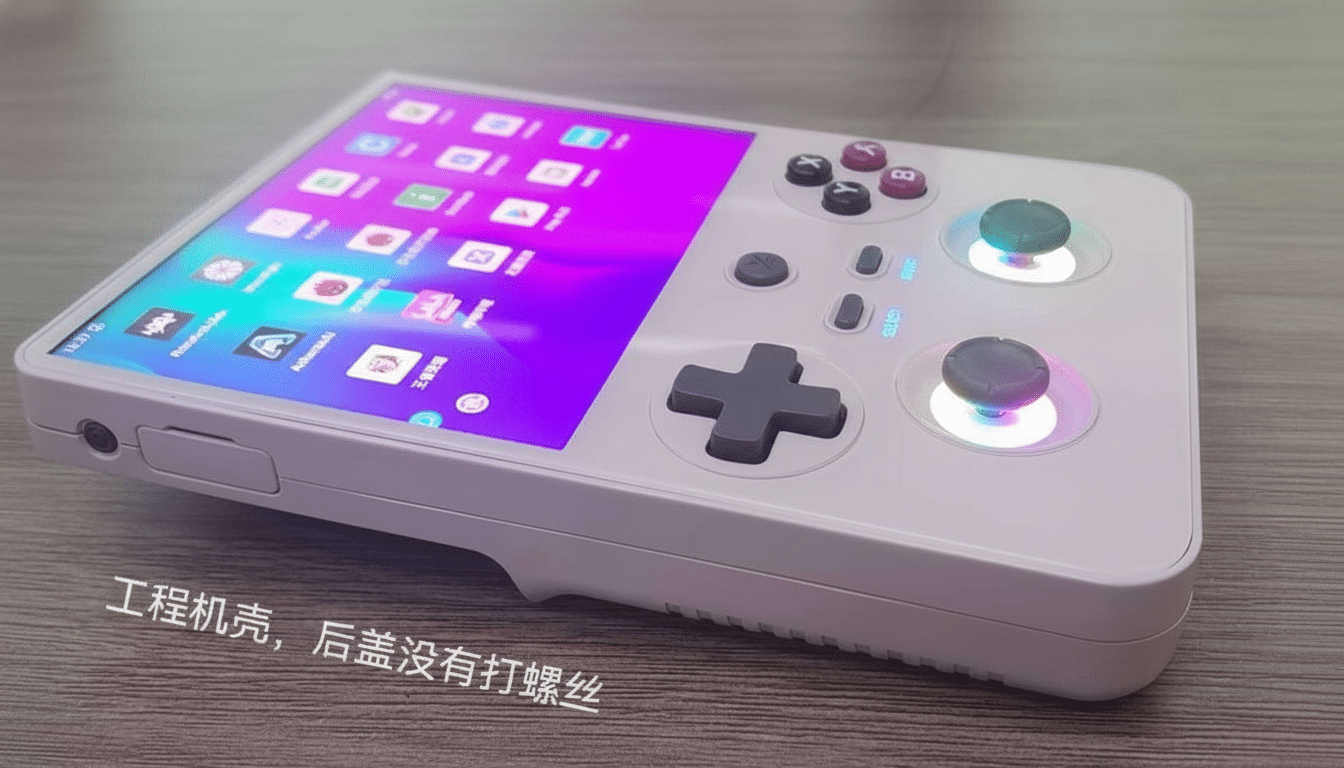
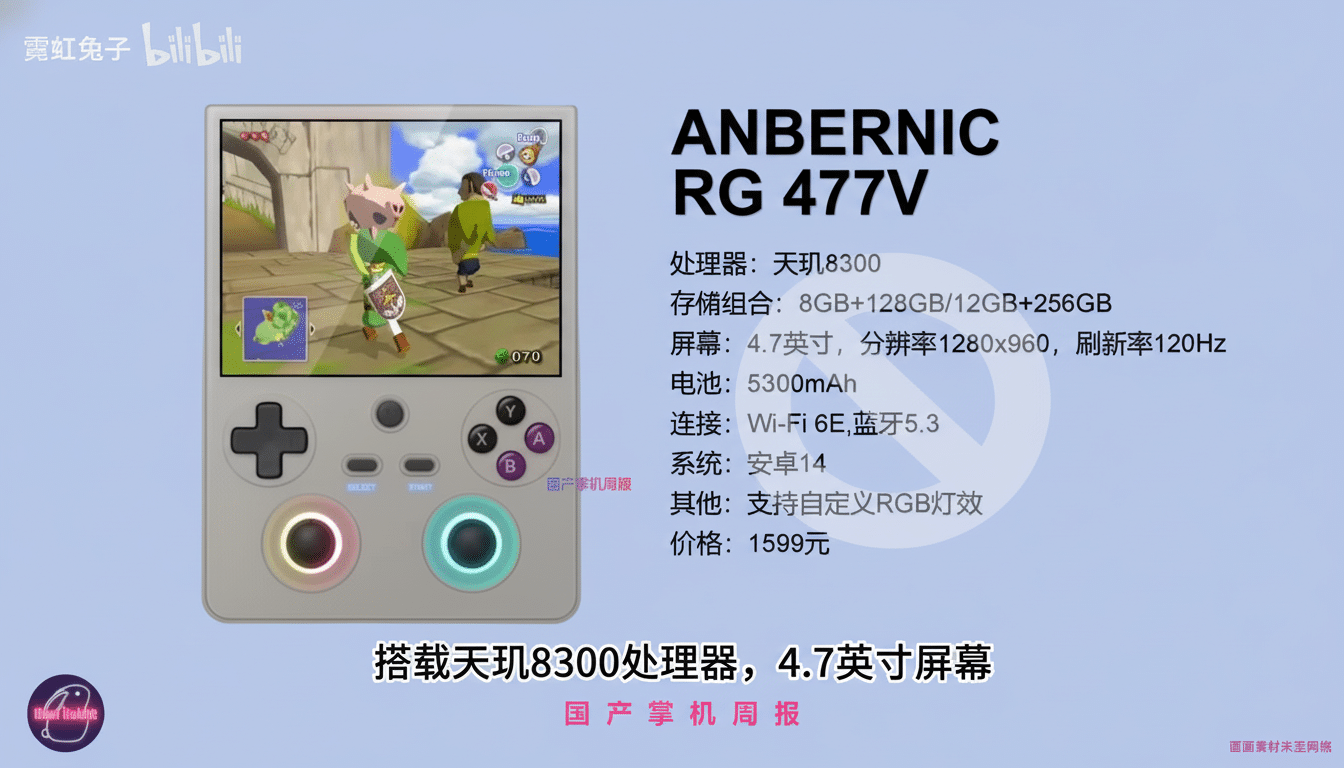
The 4.7-inch screen has some IPS goodness and is clocked at a lofty 120 Hz. Not common among vertical handhelds, this makes scrolling and menu navigation buttery smooth and should give you some breathing room with front ends that like higher refresh rates. This is a big screen for a handheld, but slim bezels are a highlight here, and next to chunkier vertical rivals this looks every bit modern… only held in your hands.
An all-glass front lends a premium faceplate to the device and should also help keep those annoying micro-scratches away that plastic lenses get over time.
Anbernic is offering it in two launch finishes: black and a retro gray — squarely targeting gamers who are looking for a modern device that still tips its cap to the DMG/Pocket era.
Performance for PS2 and beyond with Dimensity 8300
Underneath, the Dimensity 8300 offers a high-efficiency, 4 nm–class CPU cluster and a powerful Mali GPU. On phones with the same platform, community testing in forums like r/EmulationOnAndroid has often had PS2 games running at full speed in most cases (even at higher internal resolutions), though you never know until you try. With the 477V’s reduced thermal envelope, appropriate defaults make more sense for emulation: native resolution or modest upscales of the latest and greatest games, with room to spare for classic systems up to Dreamcast and GameCube.
Driver compatibility for Mali GPUs has seen significant improvement in the past few months thanks to new development updates from vendors and optimization work done by developers on popular Android emulators. It augurs well for the 477V’s aspirations, which include light Switch and PC emulation for some games. No handheld in this size class brute-forces all outliers, but performance-per-watt here is another order of magnitude better for a vertical unit.
Controls and ergonomics for comfort in a vertical shell
There is a full set of controls: an accurate D-pad, two inlaid analog sticks, face buttons, and four shoulder buttons at the rear. The sticks are designed with a symmetrical look to help maintain a neat, pocketable profile. That layout’s slanted toward D-pad-reliant libraries (read: 8-bit, 16-bit, and PS1/PS2 platformers) but is ready to serve when needed for twin-stick shooters or RPGs.
Vertical handhelds live and die based on comfort during lengthy play sessions. Reduced bezels and curved front glass on the 477V should make it easier to hold, while inboard sticks minimize accidental snags. Games that favor face buttons and shoulder triggers should leave less compromise room, with a bit more hand shuffle for newer first-person shooters (which are still best served by horizontal shells).
Battery life expectations and storage configuration options
The leaked specs hint at a 5,300 mAh battery, which should translate into strong real-world endurance when combined with the 4 nm–class SoC. Using that same hardware as a basis, you can probably pull multi-hour sessions:
- 6–8 hours for 16-bit and PS1 workloads
- 4–6 hours for GameCube/Dreamcast workloads
- 3–5 hours depending on clocks, cooling setup, settings, and how those PES games interact with refresh rates
The 120 Hz panel is a nice-to-have, but most people will probably toggle back to 60 Hz for longer sessions.
Configurations are expected to be similar to those of the brand’s recent launches — 8 GB RAM/128 GB storage and 12 GB RAM/256 GB storage.
That’s plenty of space for front ends and a curated library; everything else is handled with microSD expansion. If the software loadout follows what we’ve come to expect from the company, then expect an Android setup with a console-style launcher and wide-ranging emulator support.
Expected pricing and availability timeline for RG 477V
There’s no locked-in official word on pricing just yet, but early rumors are settling around the $225 mark — which would make sense given that it sits between two models in the lineup. Component volatility could push that higher. Available in the coming months, the RG 477V is defined as the brand’s biggest and most powerful vertical handheld to date.
How it compares to the current handheld market
The rise of 5G-enabled compact Android handhelds is a high-water mark, but it’s rare to see a vertical device that combines an ultra-smooth 120 Hz 4:3 panel, powerful modern 4 nm–class silicon, and pocketable ergonomics.
By contrast, the RG 477V feels specifically tailored to bring us back to the glory days of 2D and early 3D — but with enough GPU grunt to ensure that upscaling PS2 content seems more like a routine procedure and less like some sort of science experiment.
If you’ve been longing for a Game Boy–shaped thing that’s not even remotely fazed by the sixth generation of home consoles, keep an eye on this bad boy. The spec sheet is practically a checklist through which open-source community enthusiasts can tick — fast screen, tiny bezels, serious silicon, (relatively) big battery — and might yield the most polished vertical emulation handheld ever.