


An unreleased AMD Ryzen processor has quietly appeared in a logistics database, and the label on the box is the part that matters: Ryzen 9 Pro 9965X3D. The entry, shared by a well-known hardware sleuth on X and corroborated by enthusiast reporting, is the clearest sign yet that AMD is preparing another 3D V-Cache desktop flagship—and this one carries the “Pro” badge.
What The Shipping Manifest Entry Actually Reveals
The shipping note doesn’t list core counts or clocks, but it does include a 170W TDP, aligning with AMD’s top-tier 16-core desktop envelope. That power target suggests a high-performance part akin to the current 16-core stack, potentially an enhanced X3D bin rather than a radical redesign. In AMD’s recent generations, 3D V-Cache chips have typically traded some peak clocks for massive L3, so a 170W figure is notable if AMD is pushing frequency headroom as well as cache capacity.
- What The Shipping Manifest Entry Actually Reveals
- X3D Pedigree And The Current Gaming Performance Stakes
- Will This Be A Dual V-Cache Design Across Both CCDs?
- Why A Pro-Branded X3D Processor Likely Exists Now
- Naming Nuances And The Expected Market Positioning
- What To Watch Next As Rumors Build Toward Launch
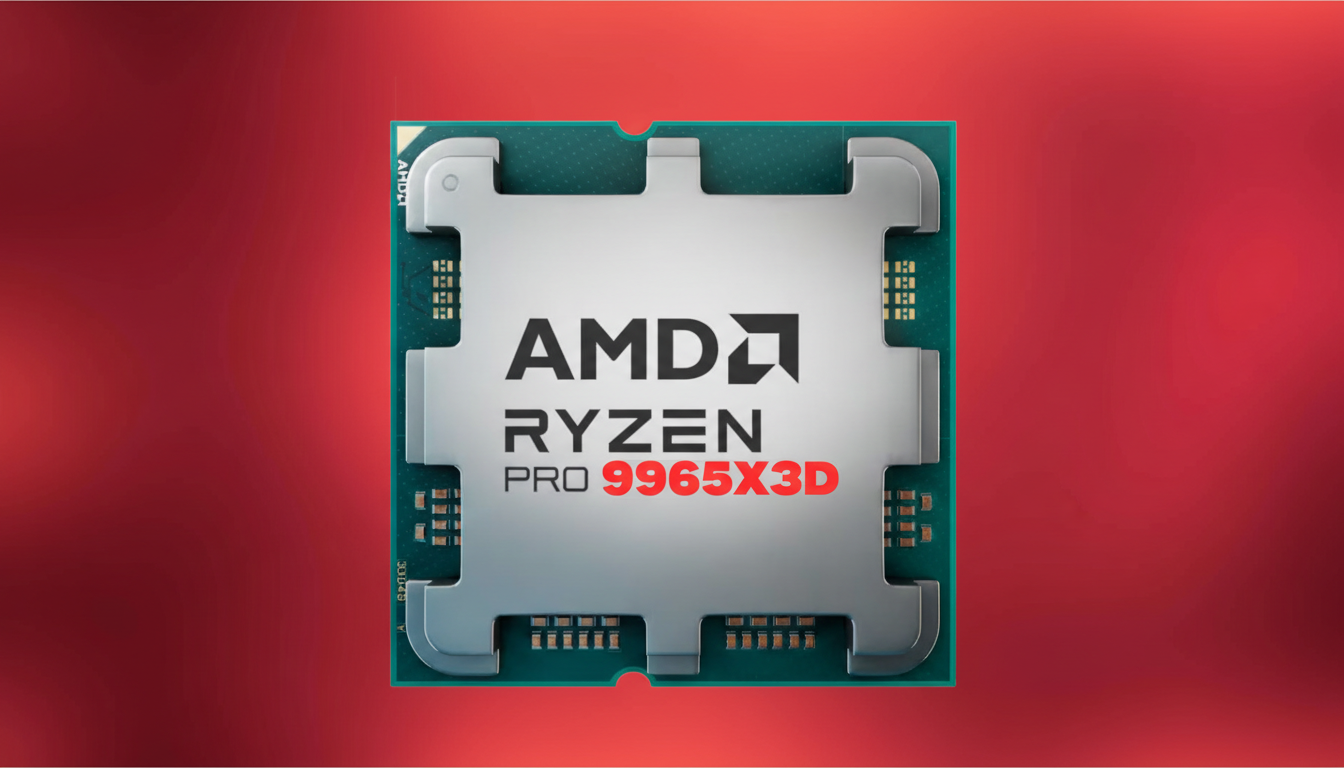
The “Pro” suffix is equally important. AMD’s Pro desktop CPUs are built for managed fleets, adding features like AMD Memory Guard (full system memory encryption), extended availability, and open-standards manageability. Seeing that badge on an X3D SKU points to OEM workstations and enterprise desktops that want gaming-class cache benefits in CAD, EDA, data analysis, and other cache-sensitive workflows.
X3D Pedigree And The Current Gaming Performance Stakes
AMD’s 3D V-Cache designs have consistently dominated gaming charts, thanks to their oversized L3 buffers. The 5800X3D established the template with 96MB of L3, and the 7800X3D pushed that advantage on AM5. In aggregated 1080p gaming tests from outlets like TechSpot and Hardware Unboxed, X3D chips often top the tables by double digits, with the 7800X3D frequently showing a 10–15% lead over rival flagships in CPU-bound scenarios and stronger 1% lows.
On multi-CCD models such as the 7950X3D, AMD’s strategy has been to stack cache on one CCD while leaving the other optimized for clocks. Windows’ scheduler and AMD’s CPPC guidance then steer games to the cache-rich CCD and heavily threaded tasks to the high-clock chiplet. It’s a balancing act that has worked well in mixed-use systems.
Will This Be A Dual V-Cache Design Across Both CCDs?
The label alone can’t answer the biggest question: Is the 9965X3D stacking cache on both CCDs? A true dual V-Cache implementation would likely push total L3 well beyond 128MB and significantly change power and thermal behavior. It would also eliminate the “fast CCD” that current X3D flagships rely on for non-gaming bursts, potentially complicating scheduling priorities for heavy productivity loads.
The 170W TDP listing leans toward a familiar X3D topology—one cache-stacked CCD paired with one high-clock CCD—possibly with tighter binning and higher sustained frequencies. That approach preserves AMD’s established playbook for creators who want workstation throughput and gamers who demand peak frame rates.
Why A Pro-Branded X3D Processor Likely Exists Now
Enterprises increasingly run mixed workloads on the same desktop: code compiles, local AI inference, statistical modeling, and yes, latency-sensitive visualization. X3D’s oversized L3 can accelerate datasets that fit in cache, cutting trips to DRAM and stabilizing frame pacing in engines that hammer the CPU. Combining that with Pro features—such as DASH manageability and long-term image stability—creates a compelling SKU for IT buyers who usually avoid consumer gaming parts.
It also fits AMD’s cadence. With next-generation Zen 6 desktop parts not expected for a while according to industry roadmaps, a Pro-branded X3D refresh gives OEMs a halo option for new enterprise builds without forcing a platform change. Expect compatibility with existing AM5 motherboards after firmware updates, mirroring how prior X3D parts rolled out.
Naming Nuances And The Expected Market Positioning
The “9965X3D” moniker is unconventional for AMD’s X3D lineup and may signal an internal alignment with the broader Ryzen Pro numbering scheme rather than a simple consumer-to-Pro port. It also leaves room for adjacent SKUs—think mid-stack Pro X3D parts aimed at OEM small-form-factor workstations or power-optimized configurations for compact business desktops.
For enthusiasts, the bottom line is straightforward: if this chip follows AMD’s proven X3D formula, it should sit at or near the top of gaming performance charts while delivering strong all-core throughput for creation and analysis. The open question is how much cache and clock tuning AMD is willing to deploy within a 170W envelope.
What To Watch Next As Rumors Build Toward Launch
Keep an eye on motherboard BIOS releases that add new CPU IDs, early benchmark database entries for unusual L3 totals, and OEM workstation announcements highlighting AMD Pro security and manageability. If history is any guide, a logistics sighting like this usually precedes a formal reveal by weeks, not months.
Until AMD confirms specifications, the safest bet is an enterprise-focused, 16-core X3D with one cache-stacked CCD, tuned clocks, and the full Ryzen Pro feature set. If AMD surprises with dual V-Cache, it would be a milestone part—one that could reshape expectations for both gaming and cache-sensitive professional workloads on AM5.