


Amazon is making a small, but significant, change to how its Prime members will be shopping in the future. A new bright blue “Add to Delivery” button now pops up on eligible product pages, allowing users to drop an item into their next scheduled shipment with a single tap, rather than needing to place a separate order. It’s a small adjustment in the checkout flow that may change how Prime households manage everyday purchases — and how Amazon employs its package consolidation throughout the week.
How the One-Tap Add to Delivery shopping flow works
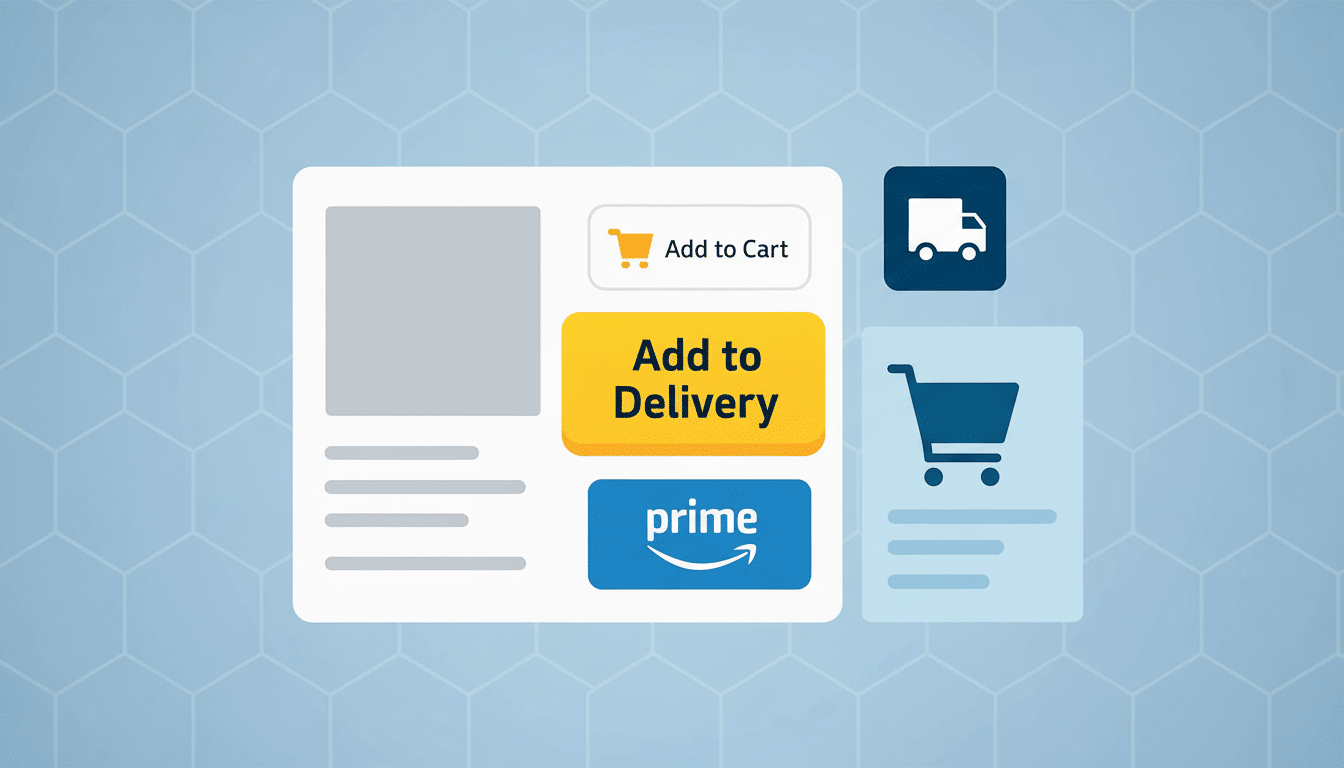
Where available, the “Add to Delivery” button appears just beneath the “Add to Cart” and it supplants the one-click “Buy Now” shortcut. Give it a tap, and that item gets added to your next delivery. Should you quickly have a change of heart, an on-screen “Undo” tooltip prompt lets you erase the item immediately. Amazon says the feature is being made available to U.S. Prime members and will only be displayed on products that can be combined with an upcoming shipment.
- How the One-Tap Add to Delivery shopping flow works
- Why consolidating Amazon Prime orders and deliveries matters
- What Prime members can expect from the one-tap Add to Delivery
- Competitive context and industry signals across retail
- Privacy and control considerations for one-tap orders
- What to watch next as Amazon expands one-tap delivery
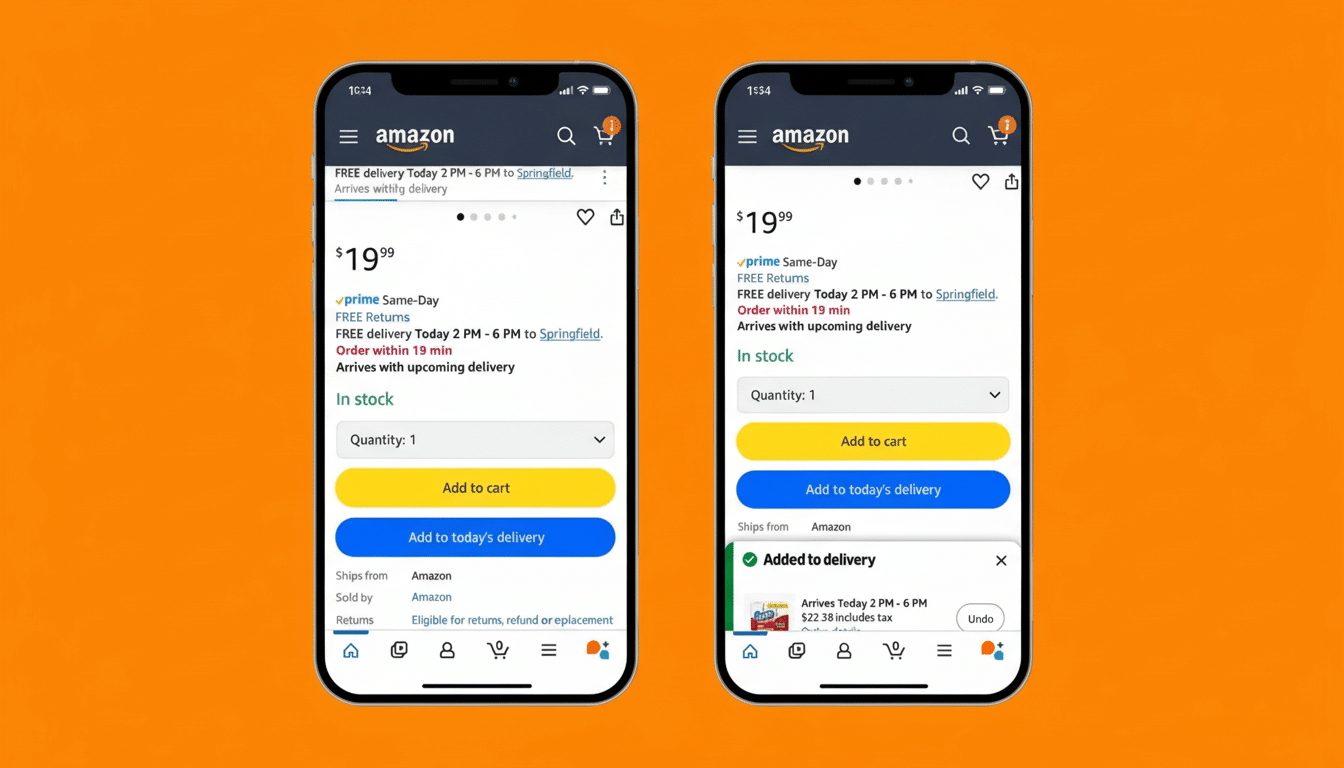
It also reflects how people actually shop on Amazon: they think of an HDMI cable on Tuesday, dog treats on Thursday and a bathroom cleaner on Saturday. And historically that meant single big boxes or multiple small boxes and separate driver stops. Now many of those add-ons can hitch a ride with the next package already on its way.
Why consolidating Amazon Prime orders and deliveries matters
Consolidation isn’t just tidier. The last mile is a component of the e-commerce logistics stack that many consider to be one of the most expensive “slices.” Last-mile delivery typically represents 50% or more of total shipping costs, according to research from the Capgemini Research Institute. Less stopping and fewer boxes mean less handling, packaging materials and miles of driving — and those are benefits that matter as Amazon pushes faster delivery at national scale.
Amazon has spent years prodding customers into making combined shipments with programs like Amazon Day, which allows shoppers to choose a weekly delivery day, and with occasional digital rewards for leaving shipping up to the company’s timing. The new one-tap feature takes friction out of the moment when someone is deciding, increasing the likelihood that a small essential would get appended to a pending box as opposed to inciting an entirely new trip all the way up to that doorstep.
There’s an environmental angle, too. Bulk delivery can reduce the amount of cardboard, plastic mailers and split shipments — categories Amazon has called out in its sustainability reports. While the company hasn’t linked this button to any particular emissions measure, it’s an easy win customers can see — fewer boxes per household.
What Prime members can expect from the one-tap Add to Delivery
Not every product will have the new button right away. It appears only when an item is able to reach the shipping time frame for your next shipment, so if it’s not there, some unwieldy packages or particularly time-sensitive perishables, or those requiring different fulfillment paths could be excluded. There is no increase in Prime pricing, which costs $14.99 a month or $139 a year in the U.S., and this feature is available to users at no extra charge.
For many households, the shift also reflects spending patterns. Consumer Intelligence Research Partners has estimated Prime members in the United States outspend non-Prime shoppers annually, and they order more frequently across categories like home goods and consumables. By seizing those “I’ll add this later” moments in a touch, Amazon looks to increase basket attachment and decrease duplicate deliveries.
Competitive context and industry signals across retail
Rivals have conditioned shoppers to appreciate last-stage flexibility. Walmart allows customers to make changes to many pick-up and delivery orders until a cutoff time, and Instacart enables add-ons if a shopper has not started filling the order yet. Amazon’s version takes that convenience one step further, by applying it beyond groceries to the larger general merchandise catalog — with no need to claim a scheduled slot ahead of time to get your shopping done.
For third-party sellers, more bundled shipments could alter them a little bit when it comes to how many times items on their own get packed versus sold inside a multi-item box out of fulfillment centers. The combined effect — fewer touches and more efficient utilization of trailers — fits with longstanding operational aims across retail logistics.
Privacy and control considerations for one-tap orders
The one-tap design emphasizes simplicity, but it also introduces controls. The “Undo” right away can prevent accidental add-ons, and the customer still has cart, list or standard checkout to depend on if he or she feels strongly about keeping some orders separate. Critically, that doesn’t change return policies or warranty coverage; it simply changes what ends up getting grouped in the bin onto the truck.
What to watch next as Amazon expands one-tap delivery
Anticipate that feature going more mainstream as Amazon tweaks eligibility rules and figures out how frequently customers use it. Combining “Add to Delivery” with Amazon Day, Alexa voice shopping or generative search suggestions would cut approximately 2 seconds off every repeat purchase — detergent, pet food, charging cables — where it was automatically added when you spoke it into the next box.
The overall concept is simple: make it super-easy to maintain a living household list and cut down on the multiple deliveries. If adoption happens to resemble the way Prime members already shop, one tap could be one of the most impactful small buttons that Amazon has deployed in years.