


Big Tech’s AI bet has turned into an infrastructure marathon, and two firms are pulling ahead. Amazon and Google are signaling the largest capital sprees in their histories to lock down the compute, chips, and energy that modern AI demands. The question now is less who is spending and more what they get for staking hundreds of billions of dollars on a future built around training and serving AI models at industrial scale.
The New AI Arms Race in Numbers and Market Totals
Amazon projects $200 billion in 2026 capex across AI, custom chips, robotics, and low Earth orbit connectivity, up from $131.8 billion last year — roughly a 52% jump. Google expects $175–$185 billion, about double 2025 levels. Meta guided to $115–$135 billion. Microsoft hasn’t given a full-year figure but its latest run-rate implies roughly $150 billion if sustained. Oracle, once the loudest bull on AI infrastructure, is pacing at about $50 billion.

These are not vanity numbers. On recent earnings calls and investor days, each company tied spending to a pipeline of data centers, networking gear, and accelerators — from Nvidia GPUs to proprietary silicon — meant to serve swelling AI training and inference demand. Markets have balked, punishing shares as the totals rose, but the strategic logic remains: own the scarce inputs to own the next decade.
What Capex Buys in AI: Chips, Data Centers, Power
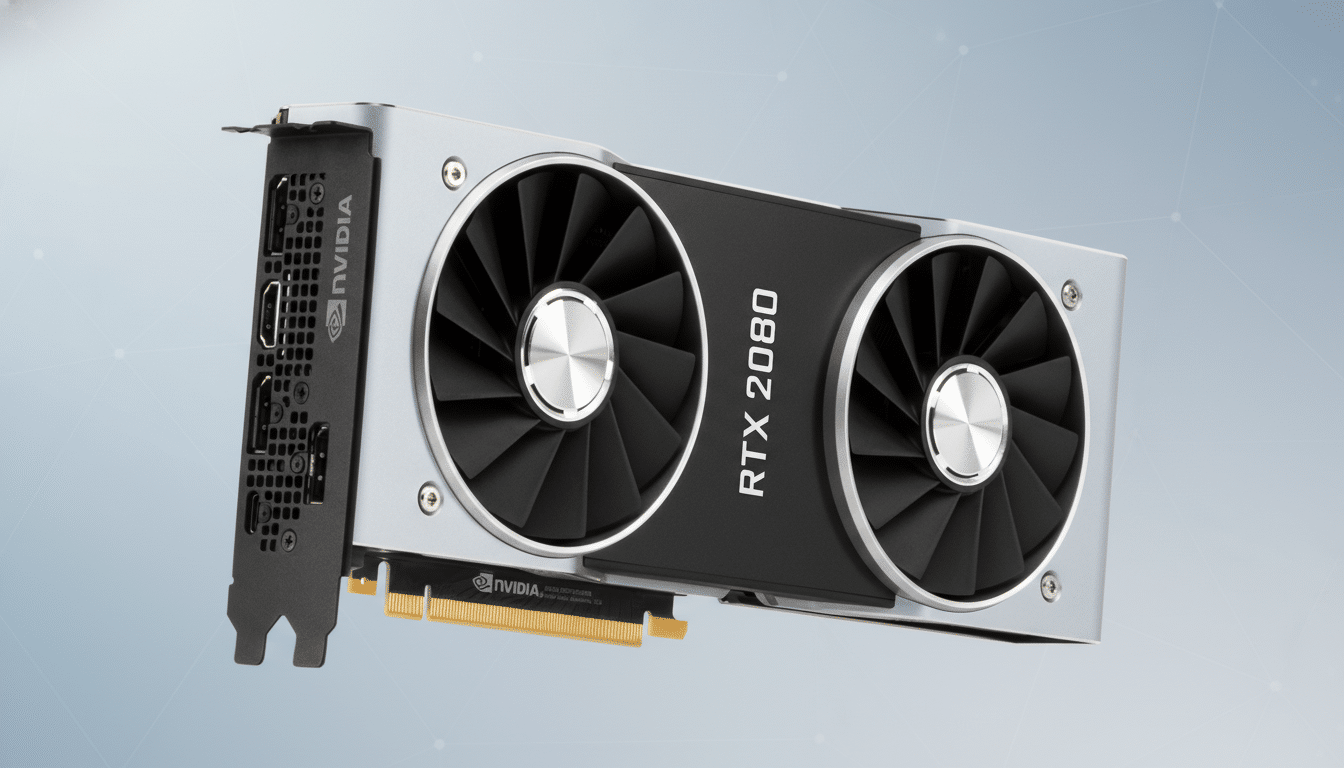
AI capex isn’t just more servers. It’s campus-scale builds with high-density power, liquid cooling, fiber, and proximity to cheap, reliable electricity. It’s also silicon control. Amazon’s Trainium and Inferentia families and Google’s TPU line are designed to reduce reliance on Nvidia, shrink unit costs, and tune stacks for their clouds and services. The more work that runs on in-house chips, the better the gross margins and the tighter the ecosystem lock-in.
Networked together, these investments form an end-to-end AI supply chain: capacity reservations, model hosting, vector databases, orchestration, guardrails, and billing. That’s where cloud platforms convert capex into recurring revenue. AWS Bedrock, Google Vertex AI, and Azure AI Studio don’t just sell compute — they sell convenience, compliance, and scale to enterprises that don’t want to stitch it themselves.
Control of Compute Is the Moat in the AI Economy
In the near term, the prize is preferential access to compute for marquee customers and flagship products. Microsoft’s OpenAI alliance filled Azure regions and pulled enterprise workloads into co-located services like Copilot. Google’s ties to leading model labs and its TPU roadmap anchor demand inside Google Cloud. AWS’s deep enterprise footprint and custom silicon pitch aim to do the same, backed by multi-year commitments from model providers and Fortune 500s modernizing analytics and software stacks.
At scale, the moat is “data gravity” and switching costs. Once an enterprise parks fine-tuned models, embeddings, and data pipelines in a provider’s fabric, moving becomes expensive and risky. That dynamic underwrote cloud’s first decade; AI heightens it because model quality and latency are exquisitely sensitive to co-location, networking, and toolchain integrations.
The Power Problem Everyone Must Solve for AI Scale
Compute isn’t the only constraint; electricity is. Hyperscalers are striking long-dated power purchase agreements, redesigning data halls for liquid cooling, and scouting sites near transmission capacity and renewable generation. Industry research from groups like the International Energy Agency and Uptime Institute has flagged a steep climb in data center power demand, with AI clusters among the hungriest loads.
Whoever scales clean, cheap power the fastest wins on throughput and cost. Expect more on-site generation pilots, grid interconnect investments, and siting in regions with favorable regulatory timelines. Energy strategy has become a first-class input to AI economics, on par with chip procurement.
What Investors Want to See from AI Capex Spending
Wall Street’s skepticism isn’t about AI’s potential; it’s about payback math. Investors want clearer disclosure on AI-driven revenue, utilization rates, and depreciation cycles. They want proof that compute sold for model training today won’t sit idle if architectures get more efficient tomorrow, and that inference growth can offset falling unit costs.
Signals to watch: rising AI attach rates in core cloud contracts, stable or improving gross margins on AI services, and customer cohorts expanding spend quarter after quarter. Independent trackers like Synergy Research and IDC can help corroborate whether market share and workloads are actually following the capex.
So What Is the Prize for Leading the AI Capex Race
If Amazon and Google are right, the reward is durable control over the scarcest resource in the digital economy — low-cost, high-availability AI compute — and the right to set terms for developers, model companies, and enterprises building on top. That translates into sticky cloud revenue, pricing power in platform services, and, for Google and Amazon, downstream monetization in search, advertising, commerce, and logistics enhanced by AI.
The risk is overshoot: a world where efficiency gains, on-device inference, or a slower enterprise ramp leaves capacity underutilized. But the companies leading this race are betting that demand will outrun those headwinds. In that scenario, the headline capex isn’t just a cost — it’s the toll booth on the road to the next era of software.