


Robots don’t just move; they can record. Every camera frame, LiDAR sweep, IMU tick, joint torque and error code can add up fast — sometimes even into terabytes a day for one system. That flood has overwhelmed the spreadsheets, ad hoc scripts and generic data lakes upon which many teams are so dependent. Alloy, based in Sydney, is stepping up with a purpose-built data stack that considers robot data to be a first-class workload, not an awkward afterthought.
Why do robots need a dedicated data backbone
In the industrial and autonomous robotics world, this is a multimodal data stream produced in time synchronization, and it was never the intention of enterprise systems to handle it.
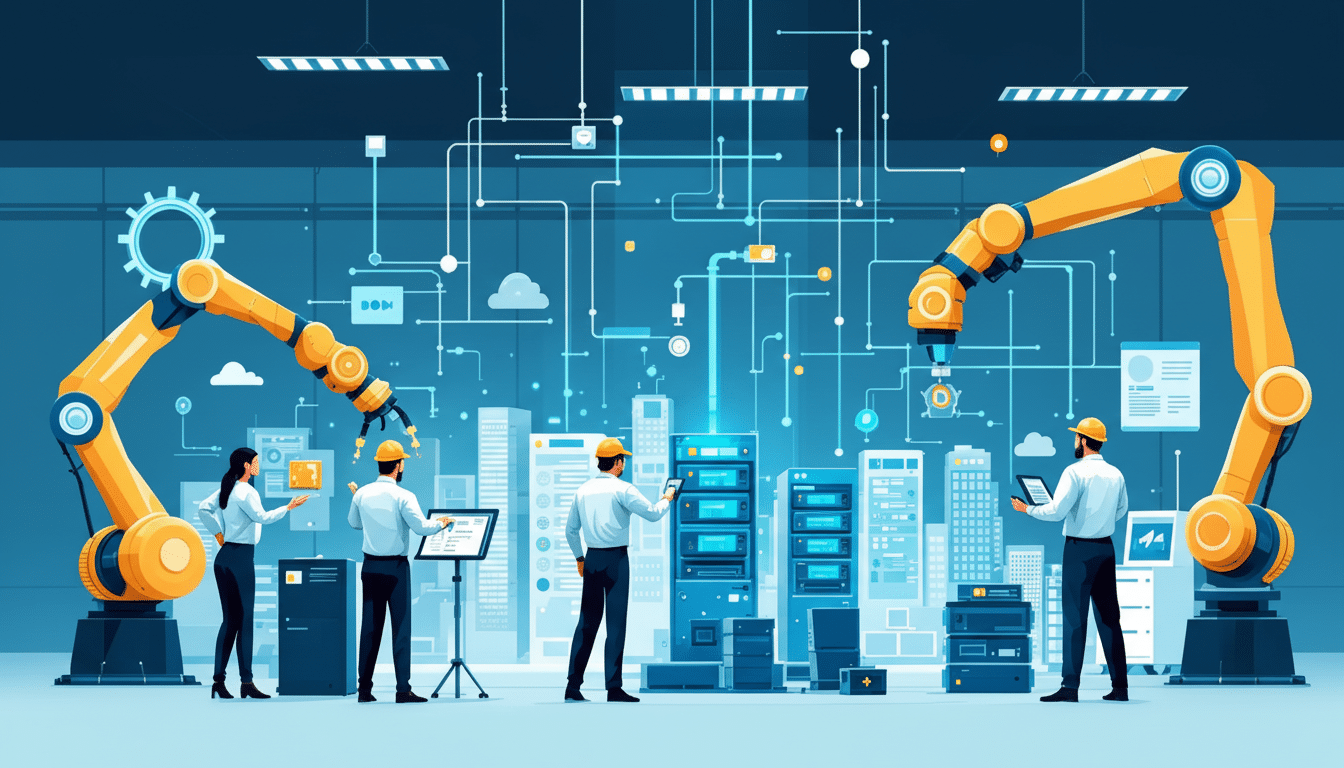
Recently, the IFR reported that the world’s stock of industrial robots came to more than 3.9 million units, and annual installations have been smashing records. Each deployment makes this data-management challenge worse — and, for safety, reliability and machine learning, more difficult below the surface as well.
Unlike regular SaaS telemetry, robotics data mixes high-bandwidth vision with sparse but vitally important sensor and control software signals. It has to be time-aligned and annotated by context (what happened), content (what’s in the scene) and causality (why it went wrong). Imagine teams who duct-tape ROS bag files, object stores and generic analytics platforms together finding out that they don’t have lineage, fine-grained search or replay at scale… the hard way.
This is not just a developer-interest problem. Regulators and clients demand more auditability. The EU’s AI Act focuses on data governance for high-risk systems. Insurers want defensible incident analysis. And as labs are using foundation models for robotics, the quality of training data — and the ability to trace it back — creates a moat against others. McKinsey has observed that data infrastructure is a critical constraining factor in AI deployment for heavy industry; robotics certainly feels that one.
Inside Alloy’s platform for multimodal robot data
Alloy’s fundamental pitch is easy to understand: Provide robotics teams with a single system for ingesting, structuring, labeling and querying their data. Under the hood, what that means is connectors for ROS and ROS 2, schema-aware ingestion from both cameras and sensors as well as automatic time synchronization in pixels across all channels, along with a catalog tracking provenance and versioning so engineers can trust what they’re analyzing.
The platform encodes video and point clouds with embeddings to facilitate semantic and vector search — think “nighttime rainy docking failures” across months of logs when asked for a natural language prompt. On top, there’s a rules engine to catch common problems and alert before they snowball, taking cues from software observability but adapted for mechatronic systems. Think of it as Databricks meets Datadog, but re-envisioned for robots that live partially offline and at the edge.
Alloy also doubles down on the train–validate–deploy loop. Curated slices can be exported for labeling or model retraining, while low-level metadata ensures that experiments are reproducible. As simulation becomes more regular practice, the system can keep track of synthetic versus real-world data and aid teams in quantifying sim-to-real gaps — a limiting factor that labs like MIT CSAIL and Toyota Research Institute have mentioned when scaling manipulation and mobility.
Early traction and funding for Alloy’s data stack
The company formed with a few design partners in Australia, working on logistics, agriculture and inspection — industries where robots put in many hours of work and create enormous telemetry logs. It has its sights set on the U.S., and is well-positioned for scaling in a market where demand for fleet-scale data operations has taken off with growth in such sectors as autonomous mobile robots, warehouse automation and outdoor autonomy.
Investors are wagering the category is in its early days. Alloy has closed a pre-seed funding round of just over AUD 4.5 million led by Blackbird Ventures, with support from AirTree Ventures, Xtal Ventures, Skip Capital and robotics-focused angels. Supporters say that teams would rather purchase a unified data layer than maintain brittle in-house pipelines — especially as fleets scale from pilots to hundreds of units.
How it fits with existing tools in robotics stacks
Today’s teams repurpose cloud data warehouses or time-series databases, and stitch in visualization tools. That is sufficient until volumes of video and point cloud consume storage and compute, or teams desire semantic search pulling from heterogeneous logs. Specialist vendors are cropping up—Formant for fleet telemetry and operations; Foxglove is getting broad adoption in visualization and debugging. What differentiates Alloy is a lower level of data management built for multimodal indexing, labeling and provenance.
The competitive landscape will expand as general-purpose AI data platforms start to encroach on unstructured, high-throughput streams. But robotics is constrained by real-time deadlines, bandwidth limitations and safety concerns that are best addressed using domain-native systems. Edge-aware compression, loss-aware downsampling, deterministic replay… these are not optional; they are table stakes for when an out-of-sync timestamp could bury the real trouble.
Why this matters now for robotics and AI teams
Robotic foundational models — from RT-2, RT-X to large-scale manipulation datasets — are starving for high-quality, well-labeled and discoverable data. Companies who capture field data with strong metadata and clear lineage will iterate faster and ship safer autonomy. Conversely, organizations lacking this plumbing cannot adequately diagnose edge cases, retrain effectively or satisfy audits.
If Alloy fulfills its promise, engineers might spend less time hunting down ROS bags and more time iterating on behaviors and reliability. With the amount of data being generated by robots and the swelling installed base, we’re starting to arrive at a place where having a dedicated layer for managing all of it ceases to look like just a good idea and becomes more like core infrastructure for modern robotics.