


Commercial trucking keeps Alabama’s economy moving by transporting goods across local highways and interstate corridors. Every commercial driver operating within the state must meet strict qualification standards and comply with both federal and state regulations designed to improve road safety. These requirements protect truck drivers, employers, and the traveling public while reducing the likelihood of serious accidents involving large commercial vehicles.
Understanding Alabama Trucker Qualifications and Regulations is essential whether you’re pursuing a commercial driving career, managing a trucking company, or simply seeking to understand the legal standards that govern the trucking industry. Compliance goes far beyond obtaining a Commercial Driver’s License (CDL). Drivers must maintain medical fitness, follow hours-of-service rules, complete required training, and keep accurate documentation throughout their careers.
- Why Alabama Places Strict Standards on Commercial Truck Drivers
- Commercial Driver’s License Requirements in Alabama
- Medical Qualifications Every Commercial Driver Must Meet
- Hours-of-Service Rules That Help Prevent Driver Fatigue
- Vehicle Inspection and Maintenance Responsibilities
- Drug and Alcohol Testing Requirements for Alabama Truck Drivers
- Driver Qualification Files: Why Proper Documentation Matters
- Cargo Securement Rules That Protect Everyone on Alabama Roads
- Common Violations That Lead to Regulatory Penalties
- Federal and Alabama Regulations Work Together
- Federal vs. Alabama Commercial Trucking Requirements
- How Compliance Reduces Accident Risk
- Conclusion
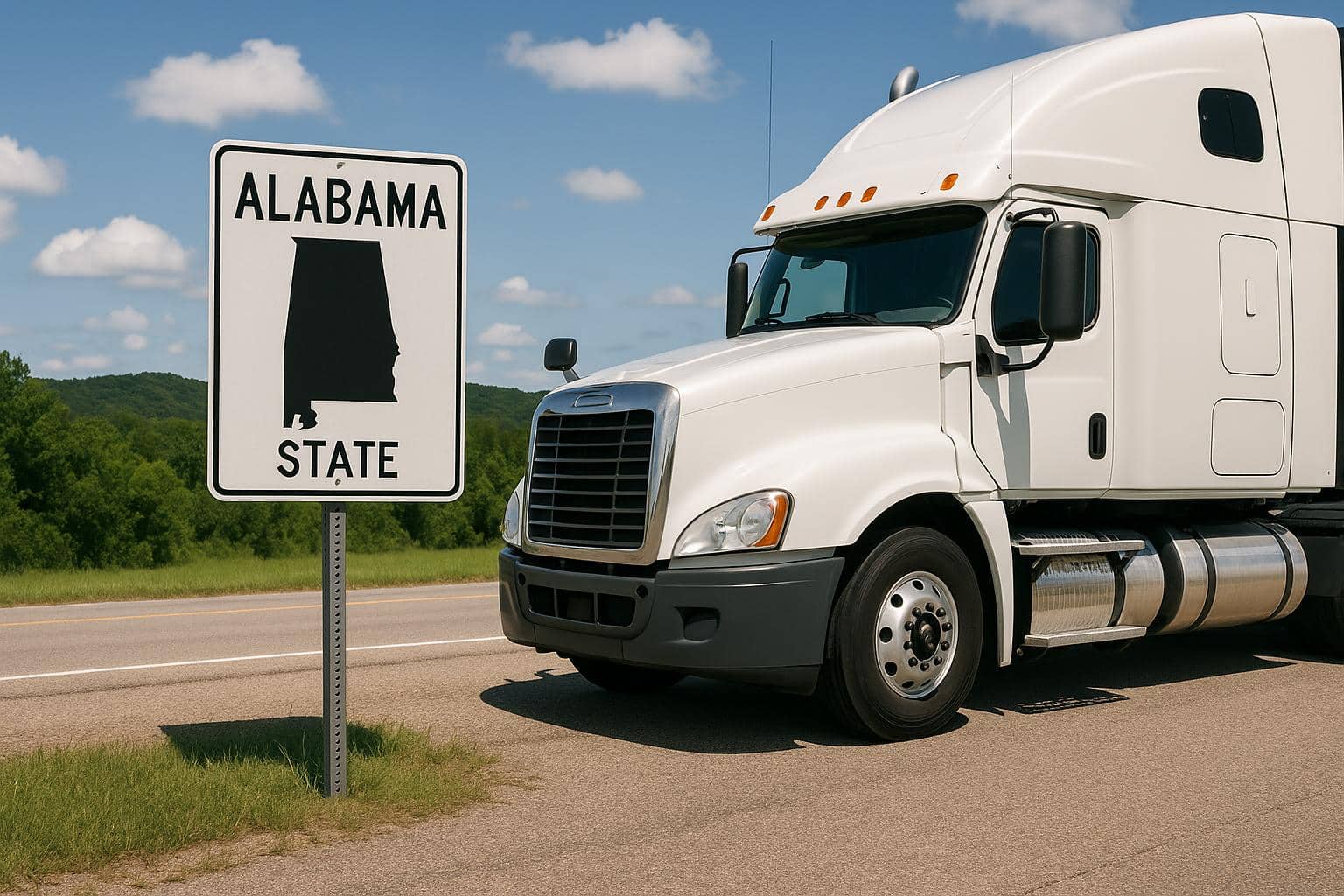
Why Alabama Places Strict Standards on Commercial Truck Drivers
Operating a commercial truck requires far greater responsibility than driving a passenger vehicle. Tractor-trailers can weigh up to 80,000 pounds, require significantly longer stopping distances, and present unique safety challenges during lane changes, turns, and emergency maneuvers. Because of these risks, Alabama enforces regulations that align with federal trucking standards established for interstate commerce.
Qualification requirements help ensure that commercial drivers possess the knowledge, physical ability, and professional judgment necessary to safely operate heavy vehicles. Employers also benefit from these standards because properly qualified drivers reduce liability, improve fleet safety, and support compliance during government inspections and audits.
Commercial Driver’s License Requirements in Alabama
A Commercial Driver’s License serves as the foundation of every professional trucking career. Alabama requires individuals operating qualifying commercial motor vehicles to obtain the appropriate CDL classification based on the size of the vehicle, cargo type, and intended operation.
Applicants must satisfy age requirements, provide proof of identity and residency, successfully complete written knowledge examinations, pass a skills test, and meet medical certification standards. Certain endorsements are also required for specialized operations involving hazardous materials, passenger transportation, school buses, double or triple trailers, and tanker vehicles.
Maintaining a CDL involves continuous compliance with state and federal regulations. Serious traffic violations, impaired driving convictions, or repeated safety infractions may result in license suspension or permanent disqualification from commercial driving.
Medical Qualifications Every Commercial Driver Must Meet
Physical fitness plays a critical role in commercial transportation safety. Before operating a qualifying commercial vehicle, drivers must successfully complete a medical examination performed by a certified medical examiner listed on the National Registry.
The examination evaluates vision, hearing, cardiovascular health, respiratory function, neurological conditions, diabetes management, blood pressure, mobility, and overall physical ability to safely operate commercial equipment. Medical certificates typically require periodic renewal depending on the driver’s health status and any underlying medical conditions.
Drivers must also notify employers of significant medical changes that could affect their ability to safely perform job duties. Maintaining accurate medical documentation is an essential part of ongoing regulatory compliance.
Hours-of-Service Rules That Help Prevent Driver Fatigue
Driver fatigue remains one of the leading contributors to serious commercial truck crashes. To reduce exhaustion-related accidents, Alabama follows federal Hours-of-Service regulations that limit driving time and require mandatory rest periods.
These regulations establish maximum driving hours, on-duty limits, required off-duty periods, sleeper berth provisions, and weekly cumulative driving restrictions. Electronic Logging Devices (ELDs) now play an important role by automatically recording driving activity and helping ensure compliance with federal recordkeeping requirements.
Failure to comply with Hours-of-Service rules may expose both drivers and trucking companies to substantial penalties, increased liability following accidents, and heightened scrutiny during roadside inspections.
Vehicle Inspection and Maintenance Responsibilities
Commercial truck safety depends not only on qualified drivers but also on properly maintained equipment. Federal and Alabama regulations require systematic inspection, repair, and maintenance programs that address every safety-related component of a commercial vehicle.
Drivers are expected to conduct thorough pre-trip inspections before beginning each route and post-trip inspections after completing their workday. These inspections help identify brake issues, steering defects, tire damage, lighting problems, suspension concerns, coupling equipment deficiencies, and cargo securement issues before they create dangerous situations on the roadway.
Trucking companies must maintain maintenance records, repair documentation, and inspection reports demonstrating continued compliance with applicable safety standards. Poor maintenance practices frequently become a major factor in commercial vehicle accident investigations.
Drug and Alcohol Testing Requirements for Alabama Truck Drivers
Commercial drivers are held to strict standards regarding drug and alcohol use because impairment significantly increases the risk of catastrophic collisions. Federal regulations require mandatory testing at several stages of a driver’s employment, including pre-employment screening, random testing, post-accident testing, reasonable suspicion testing, return-to-duty evaluations, and follow-up monitoring after certain violations.
Drivers who fail drug or alcohol testing cannot simply return to work immediately. They must complete the required return-to-duty process, satisfy evaluation and treatment requirements when applicable, and demonstrate continued compliance before resuming safety-sensitive responsibilities. Employers are equally responsible for maintaining compliant testing programs and keeping accurate records to satisfy regulatory requirements.
Driver Qualification Files: Why Proper Documentation Matters
Every motor carrier operating in Alabama must maintain a complete Driver Qualification (DQ) File for each commercial driver. These records demonstrate that the driver meets federal hiring and safety standards. During audits or accident investigations, missing or outdated documentation can expose a trucking company to significant legal and financial consequences.
A properly maintained Driver Qualification File generally includes:
- Commercial Driver’s License (CDL) copies
- Medical Examiner’s Certificate
- Employment application
- Motor Vehicle Record (MVR)
- Previous employer safety history
- Annual driving record review
- Road test certificate or equivalent qualification
- Drug and alcohol testing records
- Safety performance documentation
Keeping these files current helps employers demonstrate regulatory compliance while ensuring only qualified individuals operate commercial vehicles.
Cargo Securement Rules That Protect Everyone on Alabama Roads
Improperly secured cargo creates serious hazards for motorists and commercial drivers alike. Alabama follows the Federal Motor Carrier Safety Administration (FMCSA) cargo securement standards, which establish detailed requirements based on the type, weight, and dimensions of the freight being transported.
Commercial carriers should always ensure that:
- Cargo is evenly distributed to maintain vehicle stability.
- Tie-downs meet federal strength requirements.
- Equipment is inspected before every trip.
- Heavy machinery, steel, lumber, and oversized loads use approved securement methods.
- Cargo inspections continue throughout long-distance trips whenever required.
- Damaged straps, chains, or binders are replaced immediately.
Failure to follow cargo securement regulations may result in cargo loss, rollover accidents, civil penalties, and increased liability after a crash.
Common Violations That Lead to Regulatory Penalties
Regulatory agencies routinely inspect commercial vehicles traveling through Alabama. Violations may result in fines, out-of-service orders, safety rating reductions, and increased insurance costs. Repeated non-compliance can significantly affect a trucking company’s reputation and operating authority.
Some of the most common violations include driver fatigue, inaccurate logbooks, expired medical certificates, overloaded vehicles, brake defects, tire violations, lighting failures, inadequate maintenance records, and operating without the proper endorsements. Addressing these issues through routine training and preventive maintenance helps carriers avoid costly enforcement actions.
Federal and Alabama Regulations Work Together
Although Alabama Trucker Qualifications and Regulations enforces its own commercial transportation laws, many trucking requirements originate from the Federal Motor Carrier Safety Administration (FMCSA). Interstate carriers must comply with federal regulations, while intrastate operations may also be subject to additional state-specific requirements.
This coordinated regulatory system creates consistency across state lines while allowing Alabama to enforce safety standards through inspections, licensing requirements, and commercial vehicle enforcement programs. Drivers who understand both state and federal responsibilities are better prepared to maintain compliance throughout their careers.
Federal vs. Alabama Commercial Trucking Requirements
| Requirement | Federal Standard | Alabama Application |
|---|---|---|
| Commercial Driver’s License | Required for qualifying CMVs | Required through Alabama CDL program |
| Medical Certification | Mandatory | Enforced statewide |
| Hours of Service | FMCSA regulations | Fully adopted |
| Electronic Logging Devices | Required for qualifying carriers | Required where applicable |
| Drug & Alcohol Testing | Mandatory | Enforced for commercial employers |
| Vehicle Inspections | Federal inspection standards | State roadside enforcement |
How Compliance Reduces Accident Risk
Compliance is more than meeting legal requirements it directly improves highway safety. Qualified drivers who receive proper training, operate well-maintained vehicles, and follow fatigue-management rules are less likely to be involved in preventable crashes.For trucking companies, investing in compliance programs often leads to lower insurance premiums, stronger safety ratings, improved employee retention, and reduced exposure to lawsuits following serious accidents. Consistent safety practices also strengthen public confidence in the commercial transportation industry.
Conclusion
Alabama’s trucking industry operates under a comprehensive framework of state and federal regulations designed to promote safety, professionalism, and accountability. From Commercial Driver’s License requirements and medical certifications to hours-of-service compliance, cargo securement, vehicle inspections, and employer recordkeeping, every regulation serves an important role in reducing roadway risks.
Drivers who understand these standards and employers who prioritize compliance create safer highways for everyone. Maintaining proper qualifications, following operational rules, and documenting compliance not only satisfies legal obligations but also strengthens careers, protects businesses, and helps prevent devastating commercial truck accidents.