


Quality assurance has always been about confidence. Confidence that features work as expected, that updates do not break existing functionality, and that users experience the product the way teams intended. For years, that confidence was built largely through manual test cases and static checklists.
AI-driven software has changed the equation.
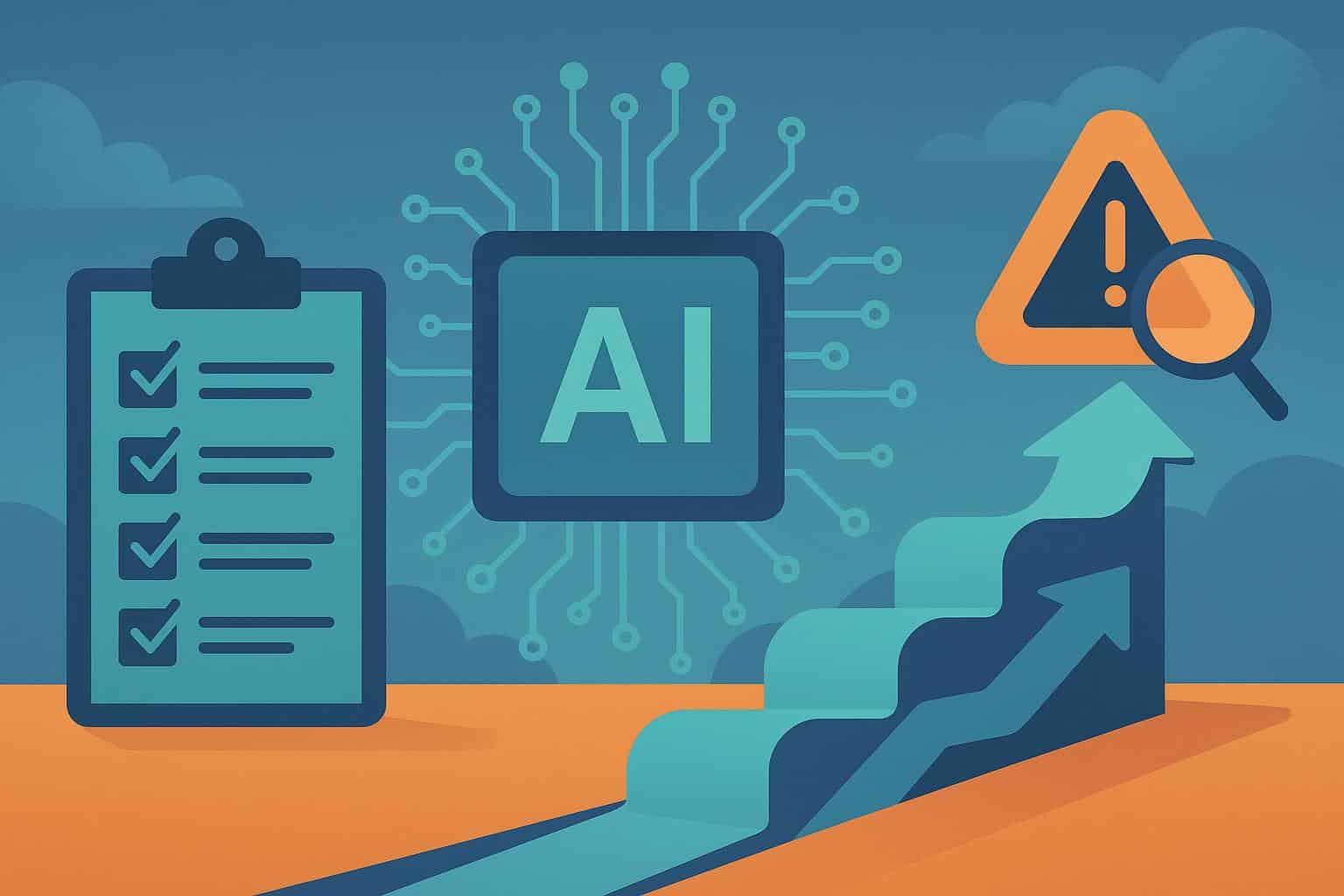
As artificial intelligence becomes embedded in search, recommendations, customer support, and decision-making systems, the number of possible behaviors increases dramatically. Outputs can vary based on data, models, and context. Releases happen more frequently. Integrations stretch across APIs, third-party services, and cloud platforms. In this environment, traditional checklist-driven QA struggles to keep up.
To adapt, many teams are shifting toward risk-based testing, a strategy that focuses effort where failures would have the greatest impact.
Why Manual Checklists Are Breaking Down
Manual checklists worked best in predictable systems. When requirements were stable, and application behavior followed clear rules, testers could define a fixed set of scenarios and execute them release after release.
AI introduces variability that makes this approach less effective.
Machine learning models evolve over time. Inputs change. Edge cases multiply. Even when the code does not change, model updates or data shifts can alter outcomes. According to research published by McKinsey, organizations deploying AI at scale face significantly higher operational complexity than traditional software teams, especially in testing and validation processes.
Source: McKinsey on scaling AI responsibly
In this environment, attempting to test everything manually is unrealistic. Checklists grow longer, execution takes more time, and coverage still falls short. QA teams end up spending valuable effort validating low-risk scenarios while high-impact failures slip through.
What Risk-Based Testing Actually Means
Risk-based testing does not mean testing less. It means testing smarter.
Instead of treating all features and flows as equally important, teams assess risk across several dimensions:
- How critical is the feature to the user experience or revenue
- How frequently the feature is used
- How complex the underlying logic or AI model is
- How often does the area change between releases
- What would the impact be if the feature failed in production
High-risk areas receive deeper, more frequent testing. Low-risk areas may receive lighter coverage or rely more heavily on automation.
This approach aligns closely with how modern products evolve. As releases accelerate, QA teams must make informed decisions about where human judgment matters most and where repeatable checks can be automated.
AI Complexity Forces Prioritization
AI systems amplify the need for prioritization because they introduce uncertainty.
A recommendation engine might behave correctly in most cases but fail spectacularly for a specific user segment. A chatbot may answer common questions perfectly while mishandling edge cases that create legal or reputational risk. These are not failures that simple functional tests always catch.
The World Economic Forum has highlighted the importance of robust testing and validation as AI systems become more deeply integrated into consumer-facing products, noting that trust depends on consistent and reliable behavior across scenarios.
For readers who want to better understand why these risks emerge in real AI systems and how teams approach them in practice, platforms like NeuroBits AI break down how AI models behave, where uncertainty comes from, and what it takes to test them responsibly.
Risk-based testing helps teams identify where AI uncertainty intersects with business impact, allowing them to focus on scenarios that truly matter.
Turning Risk Into Repeatable Coverage
Once risks are identified, the challenge becomes maintaining coverage without slowing development.
This is where automation plays a central role. High-risk user flows that are repeatable can be validated continuously, while exploratory and judgment-based testing focuses on new or unpredictable behavior.
Many teams centralize this effort with test automation tools, using them to scale regression testing and ensure that critical paths remain stable even as AI models, data sources, and integrations evolve. By automating checks around high-risk flows, QA teams reduce manual repetition and gain faster feedback during development cycles.
Automation does not replace human testers. It frees them to focus on risk assessment, exploratory testing, and evaluating AI behavior that cannot be reduced to simple pass or fail outcomes.
The Role of QA in AI-Driven Teams Is Expanding
As QA becomes more risk-focused, its role within organizations changes.
Testers are increasingly involved earlier in the development process. They participate in design discussions, review model updates, and help define acceptance criteria based on user impact rather than technical completeness. This shift aligns QA more closely with product and engineering leadership.
Instead of being the final gate before release, QA becomes a continuous partner in managing uncertainty.
This evolution mirrors broader trends in software delivery. Continuous integration and deployment demand rapid feedback. Risk-based testing provides a framework that supports speed without sacrificing quality.
Balancing Speed and Stability
One of the biggest concerns for teams adopting AI is maintaining stability while moving quickly.
Users expect frequent improvements, but they are far less forgiving of failures, especially when AI is involved. Unexpected behavior can erode trust faster than traditional bugs. A single high-profile failure can outweigh dozens of successful updates.
By focusing testing effort on high-impact scenarios, teams create guardrails that protect the user experience while allowing innovation to continue. Automation ensures that known risks are checked consistently, while human testers concentrate on new and emerging threats.
Preparing for the Future of QA
AI-driven complexity is not going away. As models become more capable and systems more interconnected, QA strategies must continue to evolve.
Risk-based testing provides a scalable approach that aligns with how modern software is built and released. It encourages teams to think critically about impact, prioritize intelligently, and use automation where it delivers the most value.
The shift away from rigid checklists is not a rejection of discipline. It is an acknowledgment that quality, in an AI-powered world, depends on understanding risk as much as executing tests.
For organizations navigating this transition, the goal remains the same as it has always been. Deliver reliable experiences, protect user trust, and enable teams to move forward with confidence.