


Technical debt has become a tax on innovation. IDC estimates unmanaged debt consumes 20% to 40% of development time, constraining digital initiatives and delaying AI adoption. The fastest-moving enterprises aren’t waiting to finish massive replatforming projects. They’re using AI itself to decode, refactor, and extend the systems that still run the business.
This is no longer theoretical. From mainframes to aging .NET and Java stacks, teams are applying AI to reveal hidden business rules, automate refactoring, and reduce risk during modernization. Below are five pragmatic ways to put AI to work on legacy systems now.
Use AI To Map And Explain The Code You Inherited
Before you replace anything, you need to understand what you have. AI agents can ingest sprawling codebases, cross-reference database calls, and produce plain-language explanations of business logic. Think of it as an always-on analyst that never tires of reading COBOL copybooks or AS/400 RPG programs.
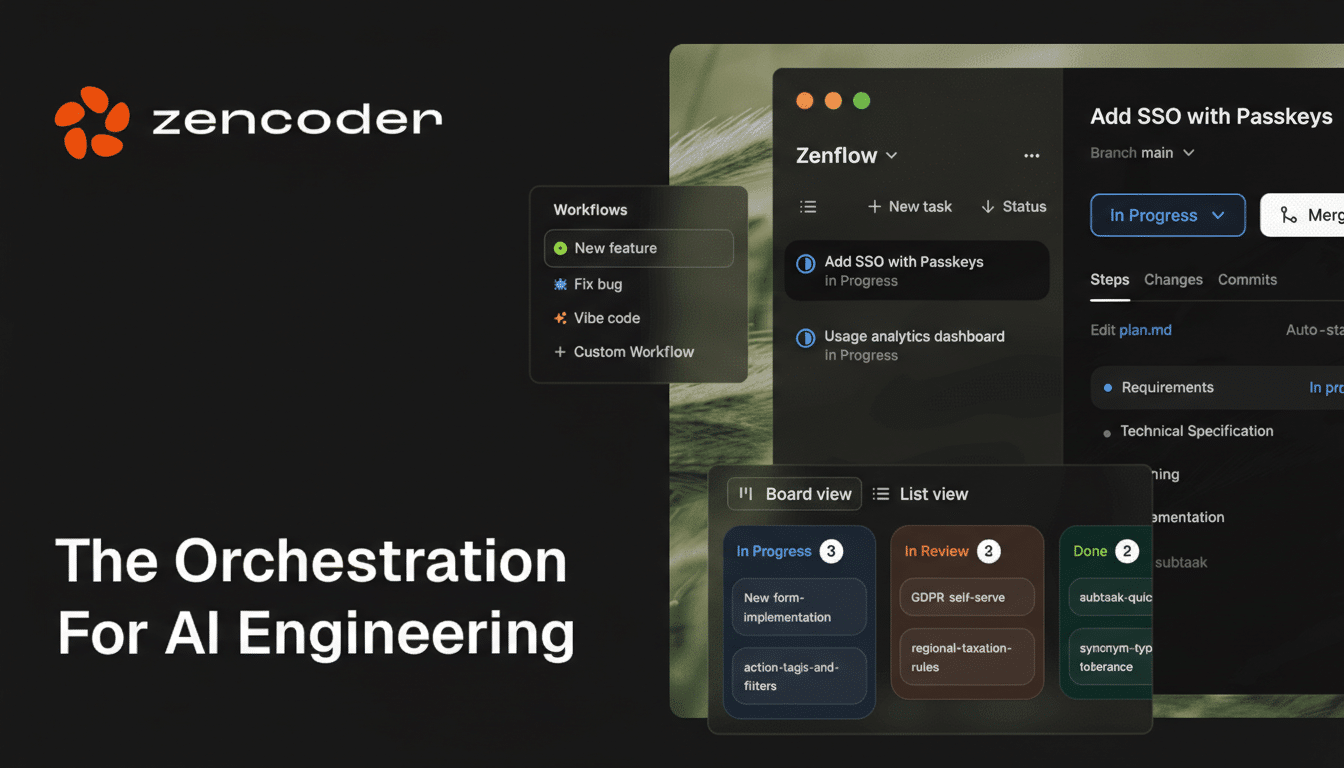
At the Professional Rodeo Cowboys Association, the technology team applied an agentic platform called Zencoder to document decades of intertwined logic on legacy systems. By generating a living wiki of rules, data access patterns, and workflows, the team cut onboarding time and accelerated requirement gathering. The CTO reports roughly a 50% reduction in development time on modernization work, freeing engineers to build new digital services rather than reverse-engineer old code.
Tip: Point agents at source repositories, schemas, and job schedules. Ask for business-rule summaries, dependency graphs, and change-impact analysis to guide carve-outs and risk ranking.
Refactor And Wrap Legacy Apps With AI Assistance
Generative AI accelerates the tedious parts of modernization: extracting modules from monoliths, generating REST or event-driven interfaces, and translating repetitive patterns. While full auto-refactoring remains aspirational for complex estates, AI copilots can draft service stubs, convert boilerplate, and suggest safer abstractions at scale.
McKinsey’s research on AI-assisted software development found productivity uplifts of 20% to 45% for common coding tasks. In practice, that means faster delivery of API wrappers around stable legacy functions, enabling teams to modernize front ends and workflows without immediately replacing system-of-record components.
Tip: Use AI to propose strangler-fig patterns, identify seams for microservice extraction, and generate migration playbooks—then validate with architects and domain experts.
Automate Data Discovery And Interoperability
Legacy systems often fail modern needs not because of compute limits, but because data is opaque. AI can scan tables, screens, and batch jobs to build catalogs, infer schema relationships, and propose transformation logic. Pair this with vector search and retrieval-augmented generation to unify scattered docs, ETL notes, and tribal knowledge.
Gartner highlights data fabric and active metadata management as key trends for modernization. AI brings those concepts within reach by automating lineage mapping, suggesting canonical models, and generating connectors to cloud analytics platforms—without destabilizing core transaction systems.
Tip: Start by cataloging high-value entities—customers, orders, assets—and use AI to recommend standardized definitions and quality rules before you replicate or stream data.
Supercharge Testing And Quality For Safer Releases
Modernization dies without trust. AI can generate unit tests from business rules, author regression suites from change diffs, and create synthetic data to exercise edge cases. This shifts testing left and reduces the blast radius when you swap components or expose new APIs.
GitHub’s research on AI coding assistants showed developers completing tasks up to 55% faster, with strong gains in test creation. Organizations modernizing legacy stacks report similar benefits: as rules are extracted and codified, AI-generated tests protect behavior while teams re-platform. The rodeo example above used agents to embed acceptance criteria directly into test harnesses, catching defects before production.
Tip: Require tests as artifacts of every AI-generated change. Use coverage and mutation testing to verify that business-critical paths are preserved.
Augment Operations And Knowledge Transfer With AI
Legacy expertise is scarce. AI copilots trained on code, runbooks, and ticket history can answer how jobs run, why certain batch windows exist, or where to tune performance—reducing escalations and speeding root-cause analysis. Pair that with anomaly detection to flag unusual I/O, latency, or abends before customers feel pain.
IBM’s Global AI Adoption Index reports 35% of companies are using AI today, with another 42% exploring it—momentum that extends to operations. Turning tacit institutional knowledge into searchable, contextual assistance shortens onboarding and de-risks retirements, a critical factor for platforms measured in decades.
Tip: Build a secured knowledge base that blends code summaries, ops logs, and architectural diagrams, and expose it through a governed assistant to your support teams.
Start Small With Guardrails To Realize ROI
Pick one system, one domain, and one measurable outcome—faster change lead time, fewer defects, or a stable API that unlocks a new digital channel. Establish data governance early, define human-in-the-loop checkpoints, and track cost savings against technical-debt burn-down.
Modernization used to mean multi-year, all-or-nothing bets. With AI, you can peel back complexity iteratively—understanding, protecting, and improving the legacy you depend on while you build the future in parallel.