


If you’ve ever wished you could slide onto a piano bench and steal the room, an AI-powered learning app is aiming to make that party moment a reality. Skoove, a popular piano training platform, uses machine listening and adaptive lessons to fast‑track beginners from first notes to recognizable songs, without leaving the living room.
The pitch is simple: real-time feedback on what you play, a catalog that ranges from Beatles to Beethoven, and a structured path that fits around a busy schedule. A lifetime premium plan currently unlocks 400+ step-by-step lessons and thousands of videos, plus optional one‑on‑one instructor support when you hit a snag.
How the AI Listens and Teaches Your Hands to Play
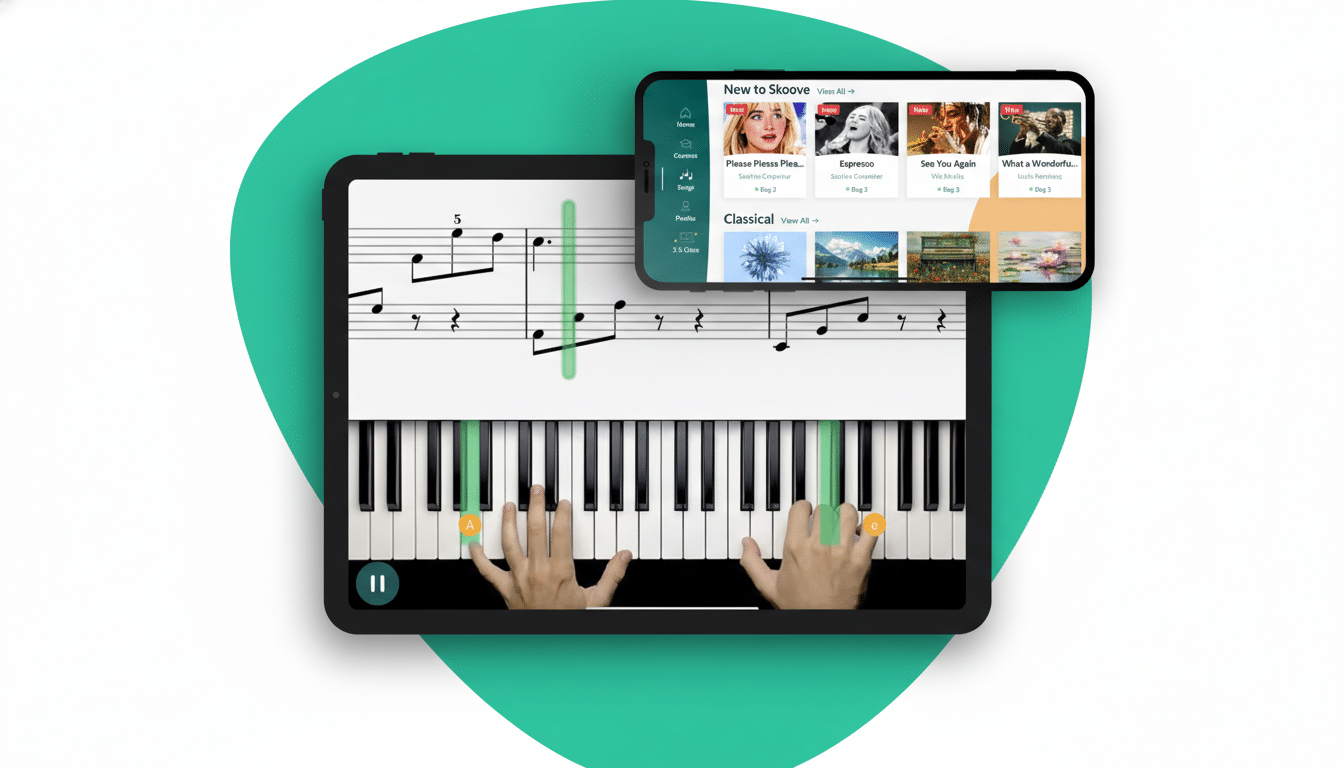
Skoove listens through your device’s microphone or a direct MIDI connection from your keyboard. The system analyzes pitch and timing to flag missed notes, late entries, and uneven rhythms, then prompts targeted fixes—slowing tricky passages, looping short bars, or splitting hands to isolate the problem.
Beyond simple note-checking, the app layers in dynamics, articulation, and fingering cues so you develop musicality alongside accuracy. This mirrors the feedback loop prized in deliberate practice research popularized by psychologist Anders Ericsson: frequent, specific feedback accelerates skill acquisition far more than unguided repetition.
For best results, a MIDI‑enabled keyboard provides near‑perfect detection, but the mic mode works well for acoustic pianos. Headphones reduce latency and ambient noise, and a metronome with gradual tempo ramps helps lock in timing as pieces get performance‑ready.
What You Need to Get Started with an AI Piano App
You can learn on any piano, though an 88‑key digital with weighted action feels closest to an acoustic. If you’re buying a first instrument, look for full‑size keys, built‑in metronome, sustain pedal support, and USB‑MIDI. A 61‑key keyboard is fine for early lessons if space is tight.
The app runs on phone, tablet, or laptop, making it easy to practice wherever the keyboard lives. A stable stand, adjustable bench, and a lamp you can aim at sheet music reduce fatigue—small ergonomics that matter when you’re putting in daily 15‑ to 20‑minute sessions.
Learn Hits Fast Without Picking Up Bad Habits
Skoove’s song-first approach gets you playing recognizable music early, then sneaks in theory and technique as you go. Expect left‑hand patterns, chord inversions, and independence drills to appear right when you need them for a piece. This scaffolding roughly echoes the graded benchmarks used by organizations like ABRSM, but in a more modern, playlist‑driven format.
If your goal is to impress at a party, a practical path is the four‑chord route. Mastering the I–V–vi–IV progression in a few keys unlocks dozens of hits, letting you stitch together a set that sounds bigger than your current skill level. The app’s looping and tempo tools are ideal for smoothing transitions and keeping your right hand melodic lines singing over steady chords.
For classical bite‑sized wins, pieces like Beethoven’s “Ode to Joy” or Bach minuets build coordination without overwhelming you. Add pedal sparingly in a lively room; clarity beats wash when you’re competing with conversation and clinking glasses.
How It Compares on Cost, Coaching, and Convenience
Traditional lessons in many U.S. cities run roughly $40 to $80 per hour. That one‑to‑one time is invaluable for advanced technique and interpretation, but it adds up quickly at beginner levels where repetition, not explanation, drives progress. An app-led track flips the economics: low cost for high-frequency practice, with optional human check‑ins only when you truly need them.
The lifetime premium tier sits around the price of one or two months of private lessons and includes ongoing content updates. Industry groups such as NAMM have noted surging interest in at‑home music making in recent years, and the hybrid model—apps for daily practice, teachers for periodic guidance—has become a common path for adult learners returning to instruments.
A Four-Week Plan to Be Party-Ready on the Piano
Week 1: Learn hand posture, middle C position, and simple rhythms. Use Skoove’s beginner modules to read notes in small chunks. Aim for two short sessions a day rather than one long one to leverage spaced learning.
Week 2: Add left‑hand chords and a steady accompaniment pattern. Start on a four‑chord pop progression and layer a melody from the song library at a slow tempo.
Week 3: Tackle a full piece like “Let It Be” or a simplified classical theme. Work in loops, bring the metronome up in 5 BPM steps, and record yourself to spot timing drifts the app flags.
Week 4: Polish dynamics and transitions. Memorize the opening and closing so you can start and finish confidently, then keep a lead sheet nearby as a safety net. Do a mock performance at home with ambient noise to simulate party conditions.
The bottom line: With smart feedback, bite‑sized lessons, and a song list people actually want to hear, an AI piano app can turn a casual goal into a crowd‑pleasing skill. Show up with two polished pieces and a handful of four‑chord favorites, and you’ll own the next sing‑along.